History-making music group for UMM - morris mn

History-making music group for UMM - morris mn
The UMM men's chorus opened the Minnesota Day program at the 1962 Seattle World's Fair (Century 21 Exposition).

Monday, August 22, 2016

Movie "Capricorn One" (1977) bathes in conspiracy

Boomers grew up thinking space was "the final frontier." William Shatner intoned that theme of course. "Star Trek" was just a TV show. Such stories spring from our imagination. The real exploration of space is pretty halting and limited. All those Apollo flights with Walter Cronkite's dramatic voice got us thinking that space exploration was going to be this far-reaching future endeavor. It seems remote in a time capsule now.
Speaking of time capsules, remember Watergate? I have suggested in the past that young people be spared a study of Watergate. It's too embarrassing. We have an impulse to laugh about it: that incredibly complex web of deceit, misdirection, mendacity etc.
There are dots to be connected between the U.S. space program and the dysfunction of government. If we can't trust government, can we trust what we're told about our space efforts?
Remember the Apollo 11 moon landing? It was an event of spectacular importance. There were almost no witnesses. The only verification of it all was from a TV camera. TV is an extension of Hollywood in the sense it's a dream factory. TV can create a world we want to believe. It's an elixir taking us away from our mundane concerns/worries.
We watched as television news never really conveyed the horrors and folly of the Viet Nam war in its early, escalating stages. The media did the bidding of government. Up to a point. We came to our senses belatedly.
TV gave us lots of simulations about what was happening with a particular space mission. Peter Hyams watched these stories and began to wonder: what would happen if someone faked a whole story? Hyams began developing the script for the movie "Capricorn One" in the mid-1970s.
It was 1974 when Richard Nixon resigned the presidency. We had been dragged through endless headlines about the unraveling Nixon administration. Why couldn't someone "in the know" have just come forward and disclosed everything? Democracy has its weaknesses. Nixon was not commander in chief at the end. Had he tried to issue some sort of military directives, such directives would have to go through other parties. And yet we put such effort into electing a "commander in chief."
We wonder if Donald Trump would be allowed to issue military directives directly. Nixon could not have deployed nuclear weapons on his own - he would have had to go to Henry Kissinger. We wonder if any president really has his/her finger on the proverbial nuclear button. And if not, are the most significant military decisions really in the hands of unelected people? Government stooges? People who engage in turf protection as a primary aim?
We learn that the Challenger disaster (which happened on my birthday, incidentally) happened because NASA was nervous and impatient due to competition with the Defense Department for future contracts.
Maybe in light of all this, an elaborate, notorious conspiracy is really not such a reach. So here is how I introduce Peter Hyams' movie "Capricorn One." This movie sprang right from the loins of Watergate. We have to shrug helplessly as government pursues all its shady machinations.
"Capricorn One" is the first manned mission to Mars, in this cinematic story. The three-man crew includes a guy played by O.J. Simpson. Simpson does his job fine despite our impulse to diss his acting. Simpson plays "Walker." James Brolin plays "Brubaker" and Sam Waterston plays "Willis."
"Capricorn One" is on the launch pad. The bewildered crew gets removed and whisked to an abandoned desert base. NASA has determined that a faulty life-support system would have killed the astronauts. The crew is now asked to help counterfeit the television footage. They balk. But they are threatened that their families would be harmed, make that killed! The three guys fake the Mars landing from a studio at the base. A mere handful of government officials are pulling the strings in this quintessential conspiracy.
A technician gets suspicious. He disappears. In the meantime, he has shared shreds of evidence with - you guessed it - a newspaper reporter in the mold of Woodward and Bernstein. The two famous Watergate expose reporters were really just stenographers for "Deep Throat" Mark Felt, the FBI guy who was motivated by turf battles and jealousy in government. The heroic reporter in "Capricorn One" is played by the ubiquitous (at that time) Elliott Gould.
I didn't find Gould's character really credible. "He protests too much," or something like that. As motivated as Woodward and Bernstein were, they were consummate professionals throughout, never getting invested on a purely personal level. The Gould character gets earnest in a purely personal way. Reporters realize that facts are the only impressive weapons, certainly not one's emotions. Gould's character is named "Robert Caulfield." He starts getting attacked.
Our story continues with the three astronauts getting put on a plane, apparently to be taken to a spacecraft, but the plane turns around. They get a whiff of what is about to happen: they'll be killed. Any evidence of their survival would reveal the hoax. They're able to escape in a plane which soon runs out of fuel, so our heroes are out in the desert, where their adversary now is two government helicopters pursuing them. They walk in three directions.
Only "Brubaker" survives. The reporter's investigation leads him to the desert. He finds evidence of the astronauts' presence. He comes upon a crop-dusting pilot - a precursor to "Independence Day" LOL - and a search of the desert is undertaken. Brubaker is rescued from those sinister guys in the helicopter. I increasingly got irritated by those faceless, anonymous, automaton-type government people who so relentlessly did devious things. Did Watergate really depress our standards so far, in terms of what we can expect of government behavior?
Our standards in music had been taken over by disco in the year of this movie: 1977.
Speaking of ubiquitous, there was Telly Savalas as the crop-dusting pilot. Those government helicopters chase Savalas' plane but. . .they're blinded by crop spray! Randy Quaid couldn't have done any better.
Triumph at the end: Caulfield and Brubaker arrive at the astronauts' memorial service, a la Tom Sawyer. The conspiracy is revealed! Government fails to pull the blinders over us! But it's depressing to realize the depths to which government people will go, and I'm talking about Watergate.
- Brian Williams - morris mn minnesota - bwilly73@yahoo.com

Monday, August 15, 2016

NDSU's short-lived media rights rules: crass

Dean Bresciani, NDSU president
Historical background for NDSU mess
Chris Matthews bemoans the time when so many young people started feeling they had to major in "business." I think that was about when I was in college. Previous to that, students were attracted to fields where they did truly deep thinking. They might probe theology or history. My generation was the altruistic one, the one that felt it essential to crusade on matters related to our general well-being, i.e. stomp out war, poverty and racism.
And yet the seeds were being planted for the ethos of today. The ethos of today is one of greed and self-centerdness. Now that I've said this, fingers get pointed: I'm naive and unrealistic about life. If we don't get paid a certain amount for every bit of labor we expend on something, we're foolish and unrealistic.
Bernie Sanders challenges on this. Why can't the broad public make sure that young people attend college without picking up an unreasonable debt burden? Why not eliminate the college debt completely? Oh, but we're not expected to get something for nothing. It is immature to suggest that the contrary could be true, it is said.
"Business majors" started taking over the world. These are young people who have wrapped their arms around systems that maximize profit. Of course, maximizing profit can mean learning how to take advantage of people (i.e. screw people). We have the exhibit of the 2008 financial crisis. We seem to have learned little from that.
My generation seems to have largely taken credit for the "tea party." I knew that term would be discarded in due time. It was. Our self-centered and materialistic ethos caused our impulses to degenerate so far, we now have Donald Trump as the candidate of one of our two major parties. It used to be that Republicans were conservative but also believed in governing. Governing means reaching compromise and consensus with your fellow lawmakers sometimes. Those who fashion themselves as conservatives just want to throw bricks around now. Thomas Frank calls this "the wrecking crew," the name of a book he wrote about what happens when conservatives get enough power to really hold forth.
 
North Dakota State gives us case study
There's a nice current case study of what happens when business majors are allowed to assert themselves. It comes to us from North Dakota State University, that bastion of academia in the vast barren reaches of North Dakota. Actually it has a football program that can beat our U of M Gophers. So does University of South Dakota in Madison. I couldn't have imagined this when I was a kid. NDSU feels its oats by being able to come to the Twin Cities in Minnesota and vanquish our "beloved rodents," as Patrick Reusse refers to our Gophers.
NDSU has developed a sense of really needing to market its product or its "brand." Beware of these whipper-snappers who come into an organization talking about "brand" and "branding." It's another buzzword like "tea party."
Remember when our U of M-Morris had a football program that really impressed people with its "brand?" That was before we would have used the word "brand." UMM reached the heights at one time. Then things unraveled. We remedied that by joining a bottom-tier conference. Seriously, I think everyone is happy with UMM athletics now. But it's not a product with marketing potential. NDSU indeed feels its oats and it protects a product that presents real value. It's just that those business major types have gotten carried away.
A recent episode in Bison country can be viewed as Exhibit 'A' of our excessively materialistic contemporary ethos. Everything has a price. A news article dated July 29 announced that NDSU was putting new restrictions on media access for Bison athletics. The official spokesman for this was a guy whose title is director of sales and broadcasting. "Brrrr, scary," Count Floyd of the old SCTV would say.
We've got a sales specialist calling the shots. This guy, Jeremy Jorgenson, has the proper jargon down on what he was attempting to foist on North Dakotans: "We're just trying to protect our rights holders and protect ourselves," he continued, dropping the 'B' word: "We've grown so much that we need to protect our brand."
The news report went on to list a whole bunch of dispiriting restrictions imposed on media outlets that do not have NDSU broadcast rights agreements (i.e. outlets that didn't fork over the money to the school). My, those deprived outlets wouldn't even be allowed to do one-on-one interviews with the head football or basketball coaches on radio, TV or Internet in season without the written consent of NDSU! Media outlets must request all interviews with these coaches and all players 24 hours in advance, the guidelines stated.
 
Hold up a mirror, maybe?
Maybe we, the public, are at fault, going to the trough to relish the sport of football so much. We are waiting for our attitudes to change about this, just as we waited patiently for the day when smoking would be disallowed in all public places.
It is amazing that NDSU has risen to the level where it could show such chutzpah. My generation when young paid attention to the U of M Gophers. We could not have cared less about what happened in places like Fargo and Grand Forks. If we were to even play those schools, it would be as faux scrimmages in pre-season. Now we can lose to them, while at the same time our U falls into scandal after scandal and fritters away what appears to be huge amounts of money. What's wrong? Doesn't the U of M have "business majors" watching over things?
Well, our financial crisis of 2008 happened in spite of more than one generation of "business majors" having crept into the world. These are guys who master "the deal." They are also forced in many cases to take "ethics classes." Why are formal studies in ethics needed? You should just grow up with a proper grasp of right versus wrong. You should just go to church. Go to church potlucks and have red Jello.
The July 29 news report from Fargo shared that "limiting some media opportunities to their media rights holders allows NDSU the opportunity to earn more money in return."
 
A very prompt reversal
On August 2 there was another news report. Hoo boy, I would have loved to be a fly on the wall as all this transpired. We can be relieved that good triumphed over evil (or stupidity). In other words, those "business majors" got put in their place. Let's hear it for theology and history majors. Let's hear it for non-smokers.
NDSU cut to the chase in the first sentence: "North Dakota State University athletics' controversial rules that would have limited access for media outlets that didn't have a deal with the university will be rescinded." Those "deals" will be buried and light will be let in.
NDSU President Dean Bresciani directed the athletics department to ditch the guidelines it issued days earlier. He wasn't informed in advance of the guidelines, the university said. Holy mackerel. We have a little institutional dysfunction here. Certain people aren't going to be on speaking terms for a while. The head of the university with his basic sense of wisdom, outside of business classes on the campus, hesitated not a bit asserting his judgment.
Bresciani said "I was profoundly disappointed when I learned the facts about this issue. This is not the way NDSU treats local journalists and our many loyal fans who value the breadth of news coverage NDSU enjoys. As the state's land grant university, out commitment is to access and inclusion in all endeavors."
The athletic director apologized. Matt Larsen said he "regretted the damage this has caused to the administration, institution and university community."
 
The broader question
Maybe the day will come when the public turns away from football, realizing we cannot sacrifice the health of so many young men just for our entertainment. We'll turn our backs, hopefully, the way we finally came down on smoking. As I have written before, maybe a sport that is too dangerous for girls is too dangerous for everyone.
Wouldn't it be wonderful if so few students came out for football this fall, our University of Minnesota-Morris could just eliminate the program? We may not be quite there yet.
- Brian Williams - morris mn minnesota - bwilly73@yahoo.com

Friday, August 5, 2016

Cable TV coverage of campaign simply drones on

The amazing Donald Trump, "performer as politician."
I remember a syndicated cartoon from when the baseball players had their extended strike (or work stoppage) in 1994. One man says to the other: "Think of all the time we've wasted when we could have been watching baseball." You get the point.
Similarly, I have spent many hours consuming cable TV news over the last few months - an outlet that ought to be enriching compared to the alternatives - and am starting to bemoan it all. We get up in the morning and begin consuming more talk about Donald Trump.
It all started as a weird novelty. Jeb Bush proclaimed there was no way Trump would be the Republicans' nominee. Therefore he wouldn't even answer hypothetical questions about it.
We watched perplexed as day after day, this curious carnival barker type named Trump stayed at the forefront of the news. We all became amateur psychologists. We heard talk about "the two Americas."
The tea party was a disturbing novelty. Mitt Romney got taken down by that phenomenon called "the conservative entertainment complex" - term coined by David Frum. Frum wrote a whole E-book about this. If I could find it online and read it for free, I would. That complex appeals to impulses in many older Americans who are having trouble keeping up with changes in our society and world.
Now Trump comes along like a snake oil salesman articulating many of the same fears.
 
Balance or expediency?
Day after day we are inundated by Donald Trump coverage. We see panelists on TV who we sense are going out of their way to be polite to the Trump element in our society. They do this to ensure that they project "balance." After all, so many people voted for Trump in the primaries. His absurd statements and contradictions have not caused his balloon to deflate, at least not much. It hasn't deflated to where we could anticipate his exit from the race soon. If a big enough insurgency develops in his own party, such an exit might be possible, but would the candidate do it willingly? If his poll numbers collapse?
Will it be worse than Goldwater? Barry Goldwater was a reasonably sound politician with a decent mind. Trump seems to have sprung from the vacuous entertainment world. The objectives of entertainment and politics are at different poles.
Part of the problem with the "conservative entertainment complex" is that it is indeed entertainment. It's not constructive journalism. A responsible politician "sells" sound government, putting together a coalition that will keep constituents reasonably satisfied. So what if it's a sausage-making process sometimes? Trump sells his own charisma with a style that is bombastic and appealing to those people who always grumble "throw the bums out." It's a nice little cliche but not helpful.
Trump is a performer as politician. He's quite comparable to George Wallace but without the pure Jim Crow baggage. A former wife of Wallace said "he doesn't want a marriage, he wants an audience." Trump actually isn't given enough credit for his sheer performance abilities. I wonder if this comes naturally to him or if he has worked and been coached in it. Imagine being able to stand up and have an arena audience in the palm of your hand. Jeb Bush would be boring. Jeb is certainly not inferior in terms of intelligence - the opposite is probably true. But he doesn't have the gift of sensational oratory like Trump.
Some say we need a true businessman as president. Nice try, but government has little in common with business. In government you provide services without regard to making a profit. The American people need another Democrat in the White House, a person who believes in the possibilities of government to help people. The Republican Party has enough power across the various states. Republicans have enough power to put the skids on lots of things. Jeb Bush has in fact proclaimed that we need to "abolish Medicare."
 
OK, show your hand. . .
If Republicans get enough power, would they really be willing to see abortion outlawed across the USA? Would they really be willing to follow through on this, or have they just been using anti-abortion rhetoric to keep a certain portion of their base loyal, eating out of their hand? Republicans like to say things that appeal to the so-called evangelicals. I would suggest it's mere posturing, that on most of these issues, the Republicans are really pretty indifferent about whether anything gets done or not.
The only true aims of Republicans are these: lower taxes and fewer regulations. I would suggest that neither of these goals are to be understood at face value. Republicans are expected to brag about lower taxes but they realize that government coffers need money. So they allow fees and fines to shoot up. Governor Tim Pawlenty did this in Minnesota. So we see more and more traffic tickets issued by law enforcement with steadily higher fines, to the point where it's truly onerous and has little to do with public safety anymore.
We have certainly seen this in Morris MN. One might well be tempted to sell your car and walk, but police would then probably find excuses to accost you when you're walking. When I was a kid, police just ensured "order." They used more discretion. They knew who the bad actors were in any community. If you weren't a bad actor, the police were not likely to get unpleasant with you. I remember the cop in the Steve McQueen movie "The Blob." He comes upon some kids out for a lark and instantly he knows who all their parents are. Cops don't think like that anymore. They issue citations. They generate revenue for the state.
Michael Moore has described the Donald Trump candidacy as "the last stand of the angry white man." He says "our male-dominated, 240-year run of the USA is coming to an end." We're likely to see a woman become president, on the heels of a non-white man. Non-white? Obama is half-white. Why do we describe him in terms of his non-white element?
Was Richard Nixon conservative? He campaigned as such. Nixon was really just interested in power. He helped make Title IX reality. That's what opened the door for girls playing sports on equal terms with boys. The Republicans of today who appeal to that "conservative entertainment complex" would never go along with this.
Today we see Beyonce featured at the Super Bowl with her cadre of black women with fists raised. And we're on the cusp of seeing a woman become president. White men have been looking up to a non-white president for eight years - of course he's half-white - and now we're on the doorstep of having a woman president. Trump speaks for the rage of a certain element of older people, male especially, who feel overwhelmed by all the change, e.g. the idea that transgender people should use their bathroom of choice. What would Norman Rockwell think of this?
Day after day I tune in to the same cable TV news programs and the beat goes on, increasingly redundant, increasingly making me feel as though I'm just wasting my time.
 
Watch the financial markets
I would suggest there's one big reason why the Trump balloon keeps sailing: the financial markets have not yet been affected. This is a big wild card in the whole scenario. So is the impulse of many people to just do something illogical or disruptive in the privacy of the voting booth, like us Minnesotans did in electing Jesse Ventura. Trump is walking volatility in terms of his potential effect on the financial markets. We have been yawning and inattentive about how fragile the markets can actually be. Take care.
I'll have to try to withdraw from all the redundant cable TV news coverage of the campaign. I might get more fulfilled watching "Everybody Loves Raymond" re-runs.
- Brian Williams - morris mn minnesota - bwilly73@yahoo.com

Monday, August 1, 2016

Movie "Angels in the Outfield" (1951) a wonderful story

Maybe Earl Weaver should have heard from some angels. Weaver was a rival of our Twins when we were in the Harmon Killebrew era. He could put up such a fuss. Had he not been a rival, I probably would have liked him. He had one of the greatest all-time pitching staffs to work with. Multiple 20-game winners. It was the days before "setup men" and "closers" stepped into their roles, helping ensure that all those guys could preserve their pitching arms.
Did the Orioles have angels helping them for the 1969 and 1970 divisional playoff series? Those were the first two years of the divisional format in baseball. Just look at the kind of roster our Twins had. We were awe-inspiring in the regular season. Rod Carew sprayed hits all over the place. So how come we collapsed so hopelessly in the divisional playoffs? We were swept by the Orioles and Weaver both seasons. There seemed to be utter despair in the air as our Twins attempted to be competitive vs. the Orioles.
Perhaps the Orioles had "angels in the outfield." Weaver was the kind of blustery manager that celestial forces might try to straighten out. Yes, he was temperamental.
"Angels in the Outfield" is the name of a 1951 movie that I have always considered a favorite. It has a light, upbeat and innocently reverent air that characterized many movies in the immediate post-World War II years. A similar movie is "It Happens Every Spring," made two years previous to "Angels."
The movies both had Paul Douglas in a primary role. He played catcher in "It Happens Every Spring," a movie in which a professor uses a special substance to doctor the baseball and make it unhittable. Major league baseball did not cooperate with this movie - after all, it had to do with cheating. If only baseball's problems could stay this minor. I'll assert: "It Happens Every Spring" is a light escapist fantasy, period.
 
A constructive brand of Christianity
Along came the movie "Angels in the Outfield" which had no problem presenting Christian faith and prayer as an antidote to many of our kills. The original "War of the Worlds" movie came out in 1953 and was similarly unabashed. We ought to turn to Christian faith. After all the tragedy of WWII - death on an unspeakable scale - it seemed benign and appropriate to put forth the best of our Christian faith.
We live in a more diverse world today. Hollywood finds it untenable, generally speaking, to put out movies with such a theme today. Christianity on a broad scale seemed more innocent and innocuous in the 1950s. Today we have the so-called "evangelicals" who can seem insulated and bigoted. I'm not sure, frankly, who these "evangelicals" are. Is it just a convenient term for the media? I go to a church with "The Evangelical Lutheran Church of America" (ELCA). But we certainly don't fit the current perception of evangelicals.
It was Ike's favorite movie.
1951's "Angels in the Outfield" stars Janet Leigh along with Paul Douglas. It's based on a story by Richard Conlin. A young female reporter blames the Pittsburgh Pirates' struggling on their Earl Weaver-like manager, "Guffy" McGovern. McGovern begins hearing the voice of an angel who promises to help the team if he changes his ways. I'm touched by the fact that this movie was "Ike" Eisenhower's favorite movie. No one saw more WWII tragedy than "Ike." I'm sure the movie's faith-based optimism was uplifting for him.
The voice of the angel belongs to James Whitmore. (Whitmore always promoted himself as doing the same job as Spencer Tracy only for a cheaper price!)
The angel speaks for the Heavenly Choir Nine, a celestial team of deceased ballplayers. Our Halsey Hall in Minnesota, the iconic voice through the '60s and '70s, would cite the "Celestial All-Stars" when noting the death of a beloved ballplayer.
The Pirates are rescued from their losing ways by the angel and his celestial mates. It's a "miracle." McGovern has his own obligation to meet, if he wishes such good fortune to continue: he must back off from his abrasive and foul-mouthed ways. Hollywood never presented profanities at that time, so the "swearing" comes across as gibberish. Don't we all miss the taboo on swearing sometimes?
 
Through the eyes of an orphan child
The Pirates climb into the pennant race! A charming young female orphan enters the picture. This eight-year-old claims she can see the angels helping out the Pirates. Bridget White is wholly emotionally invested in the Pirates. It was her prayer to the Archangel Gabriel that prompted the angel to visit "Guffy."
Oh, and now we have a newspaper writer enter the picture. This is Jennifer Paige, a "household hints" expert. Paige brings the little girl's claims to the whole public's attention, nationwide! A bad guy broadcaster named Fred Bayles gets woven into the plot. He's played by Keenan Wynn.
The climactic portion of the movie is where the Pirates take the field with the pennant at stake. I was so touched by how McGovern decided to put faith in an old, somewhat washed-up pitcher named Saul Hellman. McGovern has learned from the chief angel that Saul will be signed up soon for the celestial team (i.e. he'd die, of course). As all this develops we see the heroic threesome of McGovern, White and Paige develop a feeling of family. Surely they will live happily ever after.
Hellman hangs on to pitch a complete game and is carried off the field ceremoniously. McGovern looks up, addressing the chief angel, and says "You're gettin' a good man." 
I was amused when the angel finally gets frustrated by the Keenan Wynn character and finally addresses him, pulling Wynn's cap down over his eyes in the process. "Why don't you just shut up." I can just see President Eisenhower smiling.
We see Ty Cobb and Joe DiMaggio interviewed about the angels during the movie. We see Bing Crosby who actually was part-owner of the Pirates (15 percent). We see Barbara Billingsly in her pre-TV fame days. The future June Cleaver plays a hat check girl at a steak house. Billingsly might have gained even greater fame in the movie "Airplane" as the woman who could translate "jive." ("Shit" meant "golly," remember?)
The baseball action shots in "Angels In the Outfield" are quite authentic, most filmed at the real Forbes Field. Baseball had no problem cooperating with this movie. We see the "Kiner's Korner" inner fence in left field. We see the very prominent Pittsburgh Cathedral of Learning in the background.
Bruce Bennett plays Hellman. He never played baseball but he was in the 1926 Rose Bowl and won a silver medal in the shot put in the 1928 Summer Olympics.
 
Put faith in children, indeed
"Angels in the Outfield" is a wonderful story of love and forgiveness in the same vein as "Miracle on 34th Street." We are reminded that young children have more understanding of the spiritual side of life than adults. We have much to gain from listening to children. The characters grow from opening their minds and hearts to the insights of a young girl. Far better than contemplating more war.
McGovern wonders who the angels were in real life. He recites some names of old-timers as of 1951, who by today's standards are super old-timers, those curious guys wearing the baggy uniforms and using the skimpy gloves. We wonder how good those very old-timers were, if they could take the field with players of today. There's no way to know. They didn't have to compete with African-Americans.
Hall of Famer "Pie" Traynor appears in a cameo toward the end of the movie. We see a player wearing No. 4 hitting a home run, and this is none other than Ralph Kiner himself.
McGovern lives in an apartment with the number "316," probably no coincidence since John 3:16 is the most quoted Bible scripture.
 
Earl Weaver, RIP
Earl Weaver has gone to his reward. He's kin with the fictional "Guffy" McGovern. Earl earned his praise. We just wish the Twins could have humbled his Orioles a little. We needed those "angels."
In the '90s we saw a remake of "Angels in the Outfield" but it bore no resemblance to the original, to my disappointment. I won't say it was a bad movie. It had a political correctness angle that chafed at me a little. We see the heroic African-American character who takes kids under his wing, while a deadbeat motorcycle-riding Caucasian dad doesn't give a rip. Anyway, I cherish the original "Angels in the Outfield" as I'm sure many others do.
"Ike," you had good taste.
- Brian Williams - morris mn Minnesota - bwilly73@yahoo.com

Monday, July 25, 2016

"Hail, Caesar!" oversimplifies Cold War Hollywood

"Hail, Caesar!" was promoted in a flurry of ad clips on cable TV. Those clips were tantalizing, making so many of us consider this movie a "must see." We got the impression that the movie was wholly a gesture recognizing the Hollywood of the 1950s. What could go wrong?
The movie is on the whole captivating. Several memorable scenes do evoke the warmest possible memories of that bygone Hollywood. But there were subtle messages separate from that, impossible to put aside. The Cold War has its stamp wholly on this film. I find no nostalgia in connection with the Cold War. The aftermath of World War II set the stage for the most sobering Cold War, a time of seeing boogeymen in various places. Our schools were told to impose vigorous - I would say onerous - academic standards as a way of competing with the Soviets.
The Soviets had been an ally in WWII. How ironic that the Soviet "menace" emerged post-war. "Hail, Caesar!" trivializes the so-called Communist threat in Hollywood. The movie finds levity in this, and ultimately strives to create an air of foolishness around the extreme left-wing folks. That reflects our template of today. Hollywood always reflects the template of today. We're living in a time when, Bernie Sanders' crowds notwithstanding, "lefties" are on the defensive, when throngs admire Donald Trump who has taken the Republican course.
 
Plausibility problem distracts me
The George Clooney character, essentially a clueless boob, gets disabled and unconscious early in "Hail, Caesar!" Something is placed in a beverage he consumes on the movie set. A couple of low-profile actors sneaked a substance into the beverage. There's a plausibility problem here - sorry to insert such an inconvenient thing, but plausibility matters - because, how could the perpetrators know that Clooney's character would pass out when he was alone? The "bad guys" were poised to whisk him away. Clooney indeed ended up alone during a break, whereupon the bad guys take him to this nest of unsavory (but pretty harmless) communists. We see the "Trumbo" types hanging around. We get the feeling these are disgruntled souls, feeling underappreciated. We don't get the sense that ideology means everything to them. It's rather like a faculty lounge.
Clooney becomes quickly sympathetic, not that his mind is ever seriously challenged by anything. One of the commie characters defects to the Soviet Union late in the movie. There's a dramatic scene, with a little attempted humor thrown in, where the defector is rowed out to a submarine.
In real life, communist sympathizers never had any inclination to leave for the Soviet Union. Oh, Lee Harvey Oswald did. But the overwhelming impression of the real Soviet Union was that it was a dark and depressing place, not an authentic representation of how a collectivist-based society could work. Mikhail Gorbachev just shrugged about the term "communism," seeming alien to him, and said it was just evidence of "organized  crime." Whenever leaders aren't democratically elected, you could say it's like organized crime.
Hollywood is portrayed in "Hail, Caesar!" as a place especially desperate to please its audiences, due to the impending threat of the television medium. The year is 1951. Oh, that's the year that gave us "The Day the Earth Stood Still," a wonderful but Cold War-fixated movie. The desperation to please movie fans is suggested as a reason that Tinseltown turned out so much schlock. Silly rabbit, all businesses are desperate to please their customers all the time. Hollywood is "the dream factory" and we wouldn't have it any other way.
Hollywood today is incredibly risk-averse. Thus we see "franchises" of movies, like Batman, getting done over and over. I felt Batman was a stale story by the end of the 1960s (in the comics).
 
All hail robes and sandals
"Hail, Caesar!" is the name of a movie being made within this movie. It's an epic set in ancient Rome and stars "Baird Whitlock," the Clooney character. I have read such movies described as "robes and sandals." They had a lifespan like most genres of movies. The biggest Hollywood $ disaster of all time, "Cleopatra" with Elizabeth Taylor, was robes and sandals. Such was the disaster of "Cleopatra," movie budgets were affected for a rather long time. This is why we didn't see the expensive stop-motion effects in the the movie "The Lost World." Instead they filmed real-life contemporary lizards, (hopefully) made to look like large dinosaurs. I'll bet there was lots of breath-holding when "The Lost World" was first screened. The movie seemed to do OK (with Jill St. John who was a mere 19 years old).
The Cleopatra debacle was also the reason why the movie "State Fair" (the Bobby Darin version) was filmed on location rather than using Hollywood sets. I think that movie was just fine.
How good would the fictional "Hail, Caesar!" have been? We don't know. The Communist cell in the Coen brothers' movie is called "The Future." Members are mostly motion picture writers.
We see Hollywood gossip columnists portrayed in this movie. Were they directly inspired by the "Hedda Hopper" character from "Trumbo?" That movie gave way too much credit to Hopper and John Wayne in terms of pushing Hollywood's dark anti-Communist obsession. We like to see complicated issues simplified.
"Hail, Caesar!" gives us singing Western star "Hobie Doyle" played superbly by Alden Ehrenreich. We see a typical Western scene parodied. I smiled as I saw the old cliche of a bad guy over-exposing himself, standing up from behind a boulder, to get shot by the good guy.
"Hail, Caesar!" strives to get a big dose of humor from the Ehrenreich character getting transplanted into a period drama. Here the character has to answer to posh director "Laurence Laurentz" (Ralph Fiennes). There's some cheap and ineffective humor from attempts to pronounce the director's name correctly, remindful of the confusion over whether it was "The Judean People's Front" or "The People's Front of Judea" in Monty Python's "Life of Brian." It wasn't worth the trouble.
Doyle attends the premiere of one of his westerns with a date. This western had deliberate humor whereas I would suggest such a movie with a major star to be serious. Doyle is disappointed that his one singing scene is depicted in a comedic manner. But he ends up approving when he sees that the audience likes it.
I'm actually not that interested in the movie's major character, "Eddie Mannix" played by Josh Brolin. We're supposed to be amused by Mannix's efforts to cover up scandals for his studio.
The plot limps along with Doyle ending up at a Malibu beach house where that communist nest has its headquarters. Only Whitlock is there, because all the others are rowing out to that Soviet submarine. I much prefer how a Soviet submarine was presented in "The Russians Are Coming!"
Later, Clooney as Whitlock tries to explain his newfound and very shallow communist leanings to Brolin as Mannix. Here the moviemakers make clear an overriding message of "Hail, Caesar!" Left-wing thinking - call it communism to demonize it - is nothing more than a pathological curiosity. Mannix literally slaps up a supine Whitlock. Don't even think about analyzing views to the left of center. Just "do your job" and be thankful for it - in other words, make life easy for the rapacious capitalists, grease their agenda at all times, because by golly, this is America!
Jonah Hill and Scarlett Johansson have roles that would have been more interesting if we had seen them more.
 
The real plum from "Hail, Caesar!"
I absolutely loved how "Hail, Caesar!" had some vignette scenes that seemed pulled directly from 1950s cinema favorites. I loved the "singing sailors" especially, how the whole thing was choreographed with the bartender pulling the tablecloths from under the sailors dancing on tabletops. The cowboy movie scene was fine satire but it was too short.
Westerns of the 1950s were a great setup for satire. In fact, I think a full-length parody movie based on the making of a John Wayne-style western would be terrific. The western genre was satirized nicely in the 1960s Dean Martin movie "Texas Across the River." We don't see that movie anymore because of political correctness issues, I would suggest. In it, the Indians were parodied just like everyone else. I thought the movie was benign and funny. (Peter Graves was the cavalry leader.)
Thanks to our Morris Public Library for having "Hail, Caesar!" available to check out when it was still so fresh. My home is the only place where I watch movies anymore. "Hail, Caesar!" is worth watching. But let's remember that the Cold War was very serious business, very grim. Is that why I had to take algebra (LOL)?
 
Addendum: I give a tip of the hat to "Hail, Caesar!" for how it preserves an old phrase in our culture. It's uttered just once but it made an impression on me. That phrase is "bumming a cigarette." Smoking was once largely popular and cigarettes were cheap. You'd "bum" a cigarette from a friend (or stranger) in a casual way. Today, smoking is largely shunned and cigarettes are prohibitively expensive.
"Got a cigarette?"
It's fascinating that no one smoked in the movie "Pearl Harbor." Political correctness asserts itself.
- Brian Williams - morris mn minnesota - bwilly73@yahoo.com

Wednesday, July 20, 2016

Phil Linz & the notorious harmonica incident of 1964

Utility players can be underestimated. There is much to be said for having versatility among the various baseball positions. Denny Hocking of our Twins was once injured in a post-game celebration and missed the rest of the post-season. I was aghast at this. I sensed most other fans just gave a collective shrug. We lost our next series, to the Angels as I recall.
 
Meet Phil Linz, circa 1964
The New York Yankees had an interesting utility player in the early 1960s. He entered immortality, sort of, as the result of an off-field incident. These were the New York Yankees at the peak of the newspaper era, when the multiple papers of the Big Apple scratched and clawed for stories. This was why Roger Maris' life was made into such a hell as he chased Babe Ruth's record.
Phil Linz became a household name, sort of, in the summer of 1964. I spent part of that summer in New York City, therefore I have some affinity with the Yankees of that time. My parents and I were in New York City for the World's Fair. My father's University of Minnesota-Morris men's chorus performed there. The World's Fair was in Queens, home of the National League New York Mets. Shea Stadium was so close to the fairgrounds, it appeared on fair maps. Our hotel was in Manhattan and we could see the Empire State Building from our window.
It was the summer that brought to a close the Yankees dynasty of that time. And it wasn't easy for the Bronx crew to capture that pennant. The Yankees had aging stars who were not getting readily replaced. But hang on they did. In the hot August of '64 it was far from certain that the Yanks would succeed.
The date was August 20. The team was on their bus en route to O'Hare International Airport, Chicago.The situation seemed grim: the Yanks had been swept in a four-game series by the Chicago White Sox. The older generation of baseball players at that time felt that losing should be accompanied by a grim, panic-stricken disposition. Violating that would be sacrilege. A younger generation was coming up that believed in a more even keel: no crestfallen air. In other words, just try to stay loose and re-focus. A little levity doesn't hurt. Nor does a little music.
 
Linz and his instrument of choice
Music! We're focusing on a quintessential utility player here. I was nine years old at the time. The player's name will never leave my consciousness. It was Phil Linz. His musical instrument: the harmonica!
Linz was to the harmonica what Chuck Mangione was to the flugelhorn. The harmonica is an instrument that deserves a little more attention. Its compactness is a prime attribute. It produces delightful sounds. But would it come across as delightful on the team bus on that August day of 1964? The bus rumbled toward O'Hare with Linz having decided to ply his harmonica skill, albeit limited.
Linz was a bit resentful at not having played more in the disastrous Chicago series. I'll insert here that Chicago had a strongly contending team and could have wrested the pennant easily. They had in their ranks Bill "Moose" Skowron, the former Yankee first baseman in good standing, still in his prime. Skowron's home field was the non-hitter-friendly Comiskey Park. Skowron was a Yankee when Maris hit his 61 home runs in 1961.
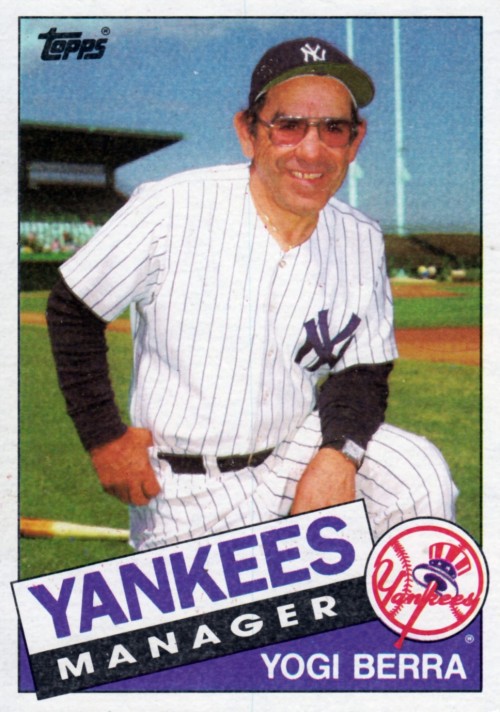
The Yankee skipper in 1964 was Yogi Berra. The man needs no introduction. I guess Berra felt the atmosphere in the team bus ought to be like at a wake. Maybe Berra was thinking about a peculiar jinx: the Yankees had never won the pennant in a year ending with the number '4.' They had won four straight pennants. No one was rolling over for them in '64.
Our Minnesota Twins had a strange summer: we tied for sixth even though our roster was fundamentally the same as when we won the pennant the following year. Baseball can be tough for analysis. Apparently all we did different in '65 was run a little more. Oh, and Johnny Sain used his coaching genius with the pitchers. Jim Bouton of the 1964 Yankees worshiped Johnny Sain. Bouton was surely the leader of the younger generation that stayed a little more loose, maybe even irreverent, when losing.
 
Mickey Mantle: a man of mischief here
Berra saw Linz's harmonica playing rather as sacrilege. Mickey Mantle could have hosed down this ridiculous little confrontation. Linz initially had trouble hearing Berra's reprimand, legend has it. Linz appealed to Mantle for help discerning what Berra said. The legend continues with Mantle claiming that Berra wanted Linz to play louder. Mantle was never the totally serious team leader. Certainly his lifestyle set no example.
I remember Jim Bouton recalling the whole incident in his groundbreaking book of the time: "Ball Four." Bouton recalled that Linz didn't believe Mantle. At the same time, the utility player did not stop playing his little instrument. The Yankees were four and a half games out of first place. Berra was in his first year as manager. He had been tapped as Yankees manager so the Yanks could have their own "character" in the post to match their crosstown rival, the New York Mets with Casey Stengel. Stengel had been removed as Yankee skipper because he was too old. Ralph Houk, very capable, was considered too boring.
Let's remember that Stengel's job literally was to provide entertainment while his Mets were "lovable losers." Berra by contrast was expected to win the pennant, albeit with an aging and challenged team. The Yankees predictably did not have a rosy path. Berra came under pressure. Several players had issues with Berra and complained to Houk who was now general manager.
Houk wasn't quick to get into Berra's corner. After the final loss in that four-game sweep suffered at the hands of Chicago, the Yankee bus got stuck in a big traffic jam. Linz had recently acquired his harmonica. It came with a little booklet, of course, and in it were some simple songs for starting out, such as "Mary Had a Little Lamb." Linz decided to pull out his harmonica and "toot away."
Berra was simmering in the front seat. The press reported him saying to Linz "put that thing in your pocket." Team members had a slightly different version, with Berra suggesting that Linz put the harmonica someplace else. Mantle then made his historic quip about how Berra wanted to hear the music louder. Bouton wrote that "Linz didn't believe that, but he didn't stop playing either." Linz would later say he didn't realize that Yogi was so upset.
Berra left his seat and stormed back. "I'd never seem him that mad before," Linz said. The legend continues: Linz tossed the harmonica to Berra but Berra slapped it aside. It struck Joe Pepitone in the knee. Bouton wrote that Pepitone, a character, went into his act called "Ooooh, you hurt my little knee!" Pepitone actually fell to the floor in mock agony, shouting "corpsman, corpsman."
What a goofy group. These guys were seared into the consciousness of young boomer-age fans like yours truly and Billy Crystal. Berra stood over Linz and raised his arm. Linz feared he was about to be struck. Berra backed off and stomped back to the front. But the incident wasn't done, as Linz stood up and shouted about how he wasn't deserving of such stern discipline, as he felt he was giving 100 percent. The implication was that maybe some other Yankees were not.
The boys in the back of the bus thought this whole episode was hysterical. The irreverent Mantle suggested Linz could be third base coach and give signals on the harmonica. Coach Frank Crosetti reflected the older generation, exuding no humor at all.
It should be noted that media behavior was in flux, that silly and unbecoming incidents like this were not likely to be withheld from public knowledge anymore, not like in the old days when a drunk pitcher Ryne Duren fought with coach Ralph Houk on a train in 1958. That incident hardly saw the light of day.
Bouton rolled up his sleeves to write about incidents and peccadilloes like that. The old writers like Jim Ogle were a quickly-fading breed.
Linz and Berra dominated NYC sports sections for several days, which meant of course that the whole city became aware of this quite trivial episode. Sales of harmonicas obviously spiked. Linz got a $5000 endorsement contract from Hohner Harmonica. Houk for his part was amused by the incident. Top Yankee brass hired Berra in the first place to adjust the team's "haughty" image. Gone was the old school general manager George Weiss. A new era had set in.
Linz was fined $200 but it was no matter considering his contract with Hohner. Pepitone joked that Linz should have brought a piano on the bus - Linz could have made more money!
 
Think of some "winning" music!
It's more than a footnote that the Yankees began playing better right after the incident. In the five and a half weeks of the regular season that remained, they shot past the Orioles and White Sox. They won eleven straight games at one point. Hear in your head the upbeat music from the movie "The Natural."
The Yankees won the American League pennant. All because of "Mary Had a Little Lamb?" What a story. Had the clash brought the Yankees closer together? Actually, pitcher Mel Stottlemyre came on the scene in August. Reliever Pedro Ramos put on the pinstripes in September. Mantle came off the injured list. It was much more fun suggesting that Linz and his harmonica gave the boost!
The Yankees stretched out the World Series to seven games vs. St. Louis, but New York came up shy. Amazingly, Berra was fired after his one year. By 1966 the Yankees had fallen all the way to last place in the ten-team American League. Our Twins won the pennant in '65 of course.
Linz improved his harmonica technique over the years. My family was in New York City in 1964 because of music: the wonderful sounds of our UMM men's chorus. How ironic that music was the unlikely element helping make the 1964 New York Yankees so memorable. The harmonica deserved its newfound attention.
 
Addendum: I have personal memories of O'Hare Airport. It was 1972 and I was en route back to Minnesota, trying to use a "student standby" ticket which I discovered wasn't worth the paper it was printed on. So my parents wired me some money so I could buy a ticket upgrade. Had the situation not been remedied, I could have ended up as a skeleton in a chair there. There was a group of about five of us that were instructed to catch a shuttle bus to Midway Airport. One was a military man in full uniform, a nice guy just as anxious to keep traveling as I was. I remember that the driver of the shuttle bus was a trainee, getting side-by-side instruction from a supervisor. Finally we all ended up where we needed to go! I hope that military guy has had a nice life.
  
- Brian Williams - morris mn Minnesota - bwilly73@yahoo.com

Tuesday, July 12, 2016

Tom Tresh: a New York Yankee worth remembering

Tom Tresh was an All-American boy. He earned nine high school letters in the high-profile sports of football, basketball and baseball. He gravitated toward baseball and played shortstop at Central Michigan University his freshman year. Central Michigan has that "Chippewas" nickname that has been on the edge of controversy. Central Michigan is who our Minnesota Gophers played in their bowl game last season. It's a Mid-American Conference school.
Athletics were instilled in Tom, the culture and all, from when he was an infant. His father Mike had been a major league catcher with the White Sox and Indians. Family home movies show a two-year-old Tom throwing a ball around.
Some multi-sport superstars in high school can be jerks, projecting an air of superiority and entitlement. Reading about Tom Tresh, I'm certain he was the opposite type.
Why am I interested in Tom Tresh? Well, I'm 62 years old. As a boy in elementary school, baseball captivated me at a time when the New York Yankees were in rarefied air. The Yankees had the most storied history of all the big league teams. Their dynasty of the late 1950s and early '60s continued a long pattern of accomplishment. The early '60s team took on a distinct air of appeal. I think it was because of my fellow boomers and I. Billy Crystal felt the love. His movie "61*" which focused on Roger Maris, was really an exhibit of reverence toward the Yankees of that time.
I'm not sure the team had more characters than they ever had. The media had burgeoned. Post-WWII prosperity enabled the broad public to take in more entertainment. Newspapers were king. They proliferated in New York City and scratched and clawed for stories. Those Yankees gave them fodder. Mickey Mantle was way up there as a superstar. So was pitcher Whitey Ford, a.k.a. "the chairman of the board." Maris had incredible, meteoric fame that would place him in the pantheon forever, even though his '61 season was rather an anomaly. It was a strange season that had Detroit Tiger Norm Cash batting .361, the most anomalous batting average of all time. Something odd was going on that summer.
The Yankees were king of the hill. Tresh was one of their non-superstar players, but he was a member of good standing. Fans all knew who he was.
Bring on 1962. Tresh achieved his dream, making the starting lineup of the American League champion Yankees. The '62 World Series was a matchup of the Yankees and San Francisco Giants. The teams were tied at two wins each for the October 10 game. Game 5 was a showdown of pitchers Jack Sanford and Ralph Terry. Sanford was a 24-game winter. He had a skein of 16 wins.
Game 5 developed into a 2-2 tie. Those were the days when major league baseball as a matter of principle felt World Series games should be played during the day, not under the lights. It's quaint to reflect. Adults coming home from work and kids coming home from school would find out who won. Some might play hooky - very tempting. Today, the baseball playoffs are played in a manner described humorously by Dave Barry, as happening "after everyone has gone to bed."
I love reflecting on baseball of the 1960s. I barely pay attention today. It's true the players didn't have enough leverage with their careers in the bygone time. Too many got injured and were forced out of the game, primarily pitchers in the age before the pitch count. We ought to regret all that. But we couldn't help but love baseball.
We loved the Yankees of the early '60s, even the reserve players whose names stay etched in our minds.
 
The ecstacy and the agony
Tom Tresh had a career that covered both the dynasty and post-dynasty. In '62 the Yankees were boffo. In that Game 5 World Series matchup, Tresh would shine. He came up to bat in the eighth inning after Tony Kubek and Bobby Richardson singled. There was one out. He had already doubled off Sanford in the fourth. In the eighth he achieved Fall Classic stardom with a three-run home run to right. The Yankee Stadium crowd went wild.
Keep in mind that 1962 was the peak of our concern over the Cold War. We wondered if our days might be numbered. The World Series was needed escapist entertainment. Tresh's home run produced a 5-2 lead and the final score was 5-3. The Giants were not down for the count in this Series. The Willie Mays crew won Game 6. Terry and Sanford took to the mound again for Game 7. The Yankees fought to cling to a 1-0 lead in the seventh. Mays hit a low liner to the left field corner. Tresh sped to his right and hauled in the liner with a fingertip catch. Willie McCovey then came up to bat and tripled with the bases empty. Tresh and his mates won this game at Candlestick Park, against the team that used to be known as the New York Giants. The score: 1-0.
In '62 the New York Mets were born, meaning that NYC was back to having multiple teams after a short period of monopoly for the Yankees. The Yankee dynasty of that time had its last year in '64. After that they were quite decisively knocked off their perch. It was sad to see so many of those familiar names now associated with a struggling team. The Yankees fell to pedestrian status in 1965.
 
World Series homer off Bob Gibson
Tresh hit two home runs in the 1964 World Series vs. the Cardinals. One was off the overpowering righthanded hurler Bob Gibson in Game 5. Yogi Berra managed the Yankees in that last year of Yankee glory, '64. Johnny Keane became the manager in '65, moving over from the Cardinals. Tresh played all three outfield positions.
Like Mantle, Tresh was a switch-hitter. Tresh was awarded a Gold Glove for his fielding. Offensively he had impact too in '65, as he batted .279 with 26 home runs and 74 RBIs. The Yankee decline wasn't all that evident in early-season. June 6 saw the Yankees thump the White Sox 12-0 as Tresh hit home runs in his first three plate appearances! The first of those blasts came right-handed, the next two lefthanded. Mantle was fading, plagued by physical problems. He needed to rest a lot.
Tresh was often called upon to bat cleanup. Tresh did fine in '65 but the Yankee luster was gone. The real knockout blow was applied by our Twins just before the All-Star break. Harmon Killebrew hit a hugely dramatic home run to send our Met Stadium crowd into a frenzy.
Injuries were a factor as the Yankees were presented with adversity. Reading about this makes me realize the frailty of so many pro athletes. As kids we didn't have adequate appreciation. We'd read about a player being out with injury for a certain period of time. We didn't realize that so many of the injuries would have long-lasting effects. Kubek had to retire because of a neck injury. His replacement, Ruben Amaro, was injured early in '66 when he and Tresh collided. Amaro was out for the season with a knee injury. Keane got the ax in mid-season which was a very unusual move for the Yankees. But the days of glory were clearly over for that generation of Yankee players.
New manager Ralph Houk moved Tresh to third base. Tresh had played shortstop when he won Rookie of the Year. Tresh showed power at the plate but languished with his average. The Yankees finished last in '66 with a record of 70-89. Then in 1967, the specter of injury loomed for Tresh. It happened in spring training: his right knee failed him. He writhed on the ground in pain, having just made a throw across his body. Initially a mere strain was diagnosed, but no, it was more serious. It was a case of loose cartilage.
Tresh tried playing with the injury. The injury became aggravated. Tresh became a shadow of his former self as a hitter. Mickey Mantle retired. The aura of the early '60s Yanks was lost in history. Tresh left the game at age 32.
Non-superstar players in those days did not get independently wealthy. So Tresh did the common type of things to stay financially solvent. He operated a Kentucky Fried Chicken franchise in his home state of Michigan. Later he joined his alma mater of Central Michigan as an administrator in the alumni and placement offices. He was assistant baseball coach at CMU for 14 years. He participated in Yankee fantasy camps.
Tresh left us for that baseball diamond in the sky, becoming one of those "Angels in the Outfield" in 2008. A heart attack felled him. He was survived by four children. His was a blessed life and blessed baseball career. Think back to the 1962 World Series. It doesn't get any better than that. Tom Tresh, RIP.
- Brian Williams - morris mn Minnesota - bwilly73@yahoo.com