History-making music group for UMM - morris mn

History-making music group for UMM - morris mn
The UMM men's chorus opened the Minnesota Day program at the 1962 Seattle World's Fair (Century 21 Exposition).

Monday, July 25, 2016

"Hail, Caesar!" oversimplifies Cold War Hollywood

"Hail, Caesar!" was promoted in a flurry of ad clips on cable TV. Those clips were tantalizing, making so many of us consider this movie a "must see." We got the impression that the movie was wholly a gesture recognizing the Hollywood of the 1950s. What could go wrong?
The movie is on the whole captivating. Several memorable scenes do evoke the warmest possible memories of that bygone Hollywood. But there were subtle messages separate from that, impossible to put aside. The Cold War has its stamp wholly on this film. I find no nostalgia in connection with the Cold War. The aftermath of World War II set the stage for the most sobering Cold War, a time of seeing boogeymen in various places. Our schools were told to impose vigorous - I would say onerous - academic standards as a way of competing with the Soviets.
The Soviets had been an ally in WWII. How ironic that the Soviet "menace" emerged post-war. "Hail, Caesar!" trivializes the so-called Communist threat in Hollywood. The movie finds levity in this, and ultimately strives to create an air of foolishness around the extreme left-wing folks. That reflects our template of today. Hollywood always reflects the template of today. We're living in a time when, Bernie Sanders' crowds notwithstanding, "lefties" are on the defensive, when throngs admire Donald Trump who has taken the Republican course.
 
Plausibility problem distracts me
The George Clooney character, essentially a clueless boob, gets disabled and unconscious early in "Hail, Caesar!" Something is placed in a beverage he consumes on the movie set. A couple of low-profile actors sneaked a substance into the beverage. There's a plausibility problem here - sorry to insert such an inconvenient thing, but plausibility matters - because, how could the perpetrators know that Clooney's character would pass out when he was alone? The "bad guys" were poised to whisk him away. Clooney indeed ended up alone during a break, whereupon the bad guys take him to this nest of unsavory (but pretty harmless) communists. We see the "Trumbo" types hanging around. We get the feeling these are disgruntled souls, feeling underappreciated. We don't get the sense that ideology means everything to them. It's rather like a faculty lounge.
Clooney becomes quickly sympathetic, not that his mind is ever seriously challenged by anything. One of the commie characters defects to the Soviet Union late in the movie. There's a dramatic scene, with a little attempted humor thrown in, where the defector is rowed out to a submarine.
In real life, communist sympathizers never had any inclination to leave for the Soviet Union. Oh, Lee Harvey Oswald did. But the overwhelming impression of the real Soviet Union was that it was a dark and depressing place, not an authentic representation of how a collectivist-based society could work. Mikhail Gorbachev just shrugged about the term "communism," seeming alien to him, and said it was just evidence of "organized  crime." Whenever leaders aren't democratically elected, you could say it's like organized crime.
Hollywood is portrayed in "Hail, Caesar!" as a place especially desperate to please its audiences, due to the impending threat of the television medium. The year is 1951. Oh, that's the year that gave us "The Day the Earth Stood Still," a wonderful but Cold War-fixated movie. The desperation to please movie fans is suggested as a reason that Tinseltown turned out so much schlock. Silly rabbit, all businesses are desperate to please their customers all the time. Hollywood is "the dream factory" and we wouldn't have it any other way.
Hollywood today is incredibly risk-averse. Thus we see "franchises" of movies, like Batman, getting done over and over. I felt Batman was a stale story by the end of the 1960s (in the comics).
 
All hail robes and sandals
"Hail, Caesar!" is the name of a movie being made within this movie. It's an epic set in ancient Rome and stars "Baird Whitlock," the Clooney character. I have read such movies described as "robes and sandals." They had a lifespan like most genres of movies. The biggest Hollywood $ disaster of all time, "Cleopatra" with Elizabeth Taylor, was robes and sandals. Such was the disaster of "Cleopatra," movie budgets were affected for a rather long time. This is why we didn't see the expensive stop-motion effects in the the movie "The Lost World." Instead they filmed real-life contemporary lizards, (hopefully) made to look like large dinosaurs. I'll bet there was lots of breath-holding when "The Lost World" was first screened. The movie seemed to do OK (with Jill St. John who was a mere 19 years old).
The Cleopatra debacle was also the reason why the movie "State Fair" (the Bobby Darin version) was filmed on location rather than using Hollywood sets. I think that movie was just fine.
How good would the fictional "Hail, Caesar!" have been? We don't know. The Communist cell in the Coen brothers' movie is called "The Future." Members are mostly motion picture writers.
We see Hollywood gossip columnists portrayed in this movie. Were they directly inspired by the "Hedda Hopper" character from "Trumbo?" That movie gave way too much credit to Hopper and John Wayne in terms of pushing Hollywood's dark anti-Communist obsession. We like to see complicated issues simplified.
"Hail, Caesar!" gives us singing Western star "Hobie Doyle" played superbly by Alden Ehrenreich. We see a typical Western scene parodied. I smiled as I saw the old cliche of a bad guy over-exposing himself, standing up from behind a boulder, to get shot by the good guy.
"Hail, Caesar!" strives to get a big dose of humor from the Ehrenreich character getting transplanted into a period drama. Here the character has to answer to posh director "Laurence Laurentz" (Ralph Fiennes). There's some cheap and ineffective humor from attempts to pronounce the director's name correctly, remindful of the confusion over whether it was "The Judean People's Front" or "The People's Front of Judea" in Monty Python's "Life of Brian." It wasn't worth the trouble.
Doyle attends the premiere of one of his westerns with a date. This western had deliberate humor whereas I would suggest such a movie with a major star to be serious. Doyle is disappointed that his one singing scene is depicted in a comedic manner. But he ends up approving when he sees that the audience likes it.
I'm actually not that interested in the movie's major character, "Eddie Mannix" played by Josh Brolin. We're supposed to be amused by Mannix's efforts to cover up scandals for his studio.
The plot limps along with Doyle ending up at a Malibu beach house where that communist nest has its headquarters. Only Whitlock is there, because all the others are rowing out to that Soviet submarine. I much prefer how a Soviet submarine was presented in "The Russians Are Coming!"
Later, Clooney as Whitlock tries to explain his newfound and very shallow communist leanings to Brolin as Mannix. Here the moviemakers make clear an overriding message of "Hail, Caesar!" Left-wing thinking - call it communism to demonize it - is nothing more than a pathological curiosity. Mannix literally slaps up a supine Whitlock. Don't even think about analyzing views to the left of center. Just "do your job" and be thankful for it - in other words, make life easy for the rapacious capitalists, grease their agenda at all times, because by golly, this is America!
Jonah Hill and Scarlett Johansson have roles that would have been more interesting if we had seen them more.
 
The real plum from "Hail, Caesar!"
I absolutely loved how "Hail, Caesar!" had some vignette scenes that seemed pulled directly from 1950s cinema favorites. I loved the "singing sailors" especially, how the whole thing was choreographed with the bartender pulling the tablecloths from under the sailors dancing on tabletops. The cowboy movie scene was fine satire but it was too short.
Westerns of the 1950s were a great setup for satire. In fact, I think a full-length parody movie based on the making of a John Wayne-style western would be terrific. The western genre was satirized nicely in the 1960s Dean Martin movie "Texas Across the River." We don't see that movie anymore because of political correctness issues, I would suggest. In it, the Indians were parodied just like everyone else. I thought the movie was benign and funny. (Peter Graves was the cavalry leader.)
Thanks to our Morris Public Library for having "Hail, Caesar!" available to check out when it was still so fresh. My home is the only place where I watch movies anymore. "Hail, Caesar!" is worth watching. But let's remember that the Cold War was very serious business, very grim. Is that why I had to take algebra (LOL)?
 
Addendum: I give a tip of the hat to "Hail, Caesar!" for how it preserves an old phrase in our culture. It's uttered just once but it made an impression on me. That phrase is "bumming a cigarette." Smoking was once largely popular and cigarettes were cheap. You'd "bum" a cigarette from a friend (or stranger) in a casual way. Today, smoking is largely shunned and cigarettes are prohibitively expensive.
"Got a cigarette?"
It's fascinating that no one smoked in the movie "Pearl Harbor." Political correctness asserts itself.
- Brian Williams - morris mn minnesota - bwilly73@yahoo.com

Wednesday, July 20, 2016

Phil Linz & the notorious harmonica incident of 1964

Utility players can be underestimated. There is much to be said for having versatility among the various baseball positions. Denny Hocking of our Twins was once injured in a post-game celebration and missed the rest of the post-season. I was aghast at this. I sensed most other fans just gave a collective shrug. We lost our next series, to the Angels as I recall.
 
Meet Phil Linz, circa 1964
The New York Yankees had an interesting utility player in the early 1960s. He entered immortality, sort of, as the result of an off-field incident. These were the New York Yankees at the peak of the newspaper era, when the multiple papers of the Big Apple scratched and clawed for stories. This was why Roger Maris' life was made into such a hell as he chased Babe Ruth's record.
Phil Linz became a household name, sort of, in the summer of 1964. I spent part of that summer in New York City, therefore I have some affinity with the Yankees of that time. My parents and I were in New York City for the World's Fair. My father's University of Minnesota-Morris men's chorus performed there. The World's Fair was in Queens, home of the National League New York Mets. Shea Stadium was so close to the fairgrounds, it appeared on fair maps. Our hotel was in Manhattan and we could see the Empire State Building from our window.
It was the summer that brought to a close the Yankees dynasty of that time. And it wasn't easy for the Bronx crew to capture that pennant. The Yankees had aging stars who were not getting readily replaced. But hang on they did. In the hot August of '64 it was far from certain that the Yanks would succeed.
The date was August 20. The team was on their bus en route to O'Hare International Airport, Chicago.The situation seemed grim: the Yanks had been swept in a four-game series by the Chicago White Sox. The older generation of baseball players at that time felt that losing should be accompanied by a grim, panic-stricken disposition. Violating that would be sacrilege. A younger generation was coming up that believed in a more even keel: no crestfallen air. In other words, just try to stay loose and re-focus. A little levity doesn't hurt. Nor does a little music.
 
Linz and his instrument of choice
Music! We're focusing on a quintessential utility player here. I was nine years old at the time. The player's name will never leave my consciousness. It was Phil Linz. His musical instrument: the harmonica!
Linz was to the harmonica what Chuck Mangione was to the flugelhorn. The harmonica is an instrument that deserves a little more attention. Its compactness is a prime attribute. It produces delightful sounds. But would it come across as delightful on the team bus on that August day of 1964? The bus rumbled toward O'Hare with Linz having decided to ply his harmonica skill, albeit limited.
Linz was a bit resentful at not having played more in the disastrous Chicago series. I'll insert here that Chicago had a strongly contending team and could have wrested the pennant easily. They had in their ranks Bill "Moose" Skowron, the former Yankee first baseman in good standing, still in his prime. Skowron's home field was the non-hitter-friendly Comiskey Park. Skowron was a Yankee when Maris hit his 61 home runs in 1961.
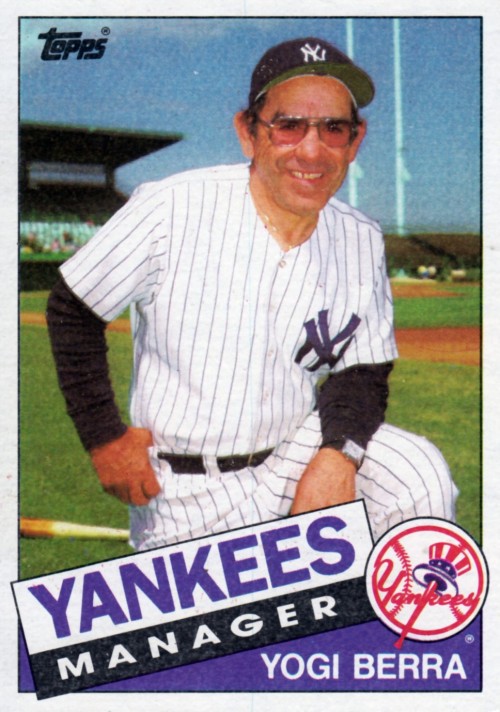
The Yankee skipper in 1964 was Yogi Berra. The man needs no introduction. I guess Berra felt the atmosphere in the team bus ought to be like at a wake. Maybe Berra was thinking about a peculiar jinx: the Yankees had never won the pennant in a year ending with the number '4.' They had won four straight pennants. No one was rolling over for them in '64.
Our Minnesota Twins had a strange summer: we tied for sixth even though our roster was fundamentally the same as when we won the pennant the following year. Baseball can be tough for analysis. Apparently all we did different in '65 was run a little more. Oh, and Johnny Sain used his coaching genius with the pitchers. Jim Bouton of the 1964 Yankees worshiped Johnny Sain. Bouton was surely the leader of the younger generation that stayed a little more loose, maybe even irreverent, when losing.
 
Mickey Mantle: a man of mischief here
Berra saw Linz's harmonica playing rather as sacrilege. Mickey Mantle could have hosed down this ridiculous little confrontation. Linz initially had trouble hearing Berra's reprimand, legend has it. Linz appealed to Mantle for help discerning what Berra said. The legend continues with Mantle claiming that Berra wanted Linz to play louder. Mantle was never the totally serious team leader. Certainly his lifestyle set no example.
I remember Jim Bouton recalling the whole incident in his groundbreaking book of the time: "Ball Four." Bouton recalled that Linz didn't believe Mantle. At the same time, the utility player did not stop playing his little instrument. The Yankees were four and a half games out of first place. Berra was in his first year as manager. He had been tapped as Yankees manager so the Yanks could have their own "character" in the post to match their crosstown rival, the New York Mets with Casey Stengel. Stengel had been removed as Yankee skipper because he was too old. Ralph Houk, very capable, was considered too boring.
Let's remember that Stengel's job literally was to provide entertainment while his Mets were "lovable losers." Berra by contrast was expected to win the pennant, albeit with an aging and challenged team. The Yankees predictably did not have a rosy path. Berra came under pressure. Several players had issues with Berra and complained to Houk who was now general manager.
Houk wasn't quick to get into Berra's corner. After the final loss in that four-game sweep suffered at the hands of Chicago, the Yankee bus got stuck in a big traffic jam. Linz had recently acquired his harmonica. It came with a little booklet, of course, and in it were some simple songs for starting out, such as "Mary Had a Little Lamb." Linz decided to pull out his harmonica and "toot away."
Berra was simmering in the front seat. The press reported him saying to Linz "put that thing in your pocket." Team members had a slightly different version, with Berra suggesting that Linz put the harmonica someplace else. Mantle then made his historic quip about how Berra wanted to hear the music louder. Bouton wrote that "Linz didn't believe that, but he didn't stop playing either." Linz would later say he didn't realize that Yogi was so upset.
Berra left his seat and stormed back. "I'd never seem him that mad before," Linz said. The legend continues: Linz tossed the harmonica to Berra but Berra slapped it aside. It struck Joe Pepitone in the knee. Bouton wrote that Pepitone, a character, went into his act called "Ooooh, you hurt my little knee!" Pepitone actually fell to the floor in mock agony, shouting "corpsman, corpsman."
What a goofy group. These guys were seared into the consciousness of young boomer-age fans like yours truly and Billy Crystal. Berra stood over Linz and raised his arm. Linz feared he was about to be struck. Berra backed off and stomped back to the front. But the incident wasn't done, as Linz stood up and shouted about how he wasn't deserving of such stern discipline, as he felt he was giving 100 percent. The implication was that maybe some other Yankees were not.
The boys in the back of the bus thought this whole episode was hysterical. The irreverent Mantle suggested Linz could be third base coach and give signals on the harmonica. Coach Frank Crosetti reflected the older generation, exuding no humor at all.
It should be noted that media behavior was in flux, that silly and unbecoming incidents like this were not likely to be withheld from public knowledge anymore, not like in the old days when a drunk pitcher Ryne Duren fought with coach Ralph Houk on a train in 1958. That incident hardly saw the light of day.
Bouton rolled up his sleeves to write about incidents and peccadilloes like that. The old writers like Jim Ogle were a quickly-fading breed.
Linz and Berra dominated NYC sports sections for several days, which meant of course that the whole city became aware of this quite trivial episode. Sales of harmonicas obviously spiked. Linz got a $5000 endorsement contract from Hohner Harmonica. Houk for his part was amused by the incident. Top Yankee brass hired Berra in the first place to adjust the team's "haughty" image. Gone was the old school general manager George Weiss. A new era had set in.
Linz was fined $200 but it was no matter considering his contract with Hohner. Pepitone joked that Linz should have brought a piano on the bus - Linz could have made more money!
 
Think of some "winning" music!
It's more than a footnote that the Yankees began playing better right after the incident. In the five and a half weeks of the regular season that remained, they shot past the Orioles and White Sox. They won eleven straight games at one point. Hear in your head the upbeat music from the movie "The Natural."
The Yankees won the American League pennant. All because of "Mary Had a Little Lamb?" What a story. Had the clash brought the Yankees closer together? Actually, pitcher Mel Stottlemyre came on the scene in August. Reliever Pedro Ramos put on the pinstripes in September. Mantle came off the injured list. It was much more fun suggesting that Linz and his harmonica gave the boost!
The Yankees stretched out the World Series to seven games vs. St. Louis, but New York came up shy. Amazingly, Berra was fired after his one year. By 1966 the Yankees had fallen all the way to last place in the ten-team American League. Our Twins won the pennant in '65 of course.
Linz improved his harmonica technique over the years. My family was in New York City in 1964 because of music: the wonderful sounds of our UMM men's chorus. How ironic that music was the unlikely element helping make the 1964 New York Yankees so memorable. The harmonica deserved its newfound attention.
 
Addendum: I have personal memories of O'Hare Airport. It was 1972 and I was en route back to Minnesota, trying to use a "student standby" ticket which I discovered wasn't worth the paper it was printed on. So my parents wired me some money so I could buy a ticket upgrade. Had the situation not been remedied, I could have ended up as a skeleton in a chair there. There was a group of about five of us that were instructed to catch a shuttle bus to Midway Airport. One was a military man in full uniform, a nice guy just as anxious to keep traveling as I was. I remember that the driver of the shuttle bus was a trainee, getting side-by-side instruction from a supervisor. Finally we all ended up where we needed to go! I hope that military guy has had a nice life.
  
- Brian Williams - morris mn Minnesota - bwilly73@yahoo.com

Tuesday, July 12, 2016

Tom Tresh: a New York Yankee worth remembering

Tom Tresh was an All-American boy. He earned nine high school letters in the high-profile sports of football, basketball and baseball. He gravitated toward baseball and played shortstop at Central Michigan University his freshman year. Central Michigan has that "Chippewas" nickname that has been on the edge of controversy. Central Michigan is who our Minnesota Gophers played in their bowl game last season. It's a Mid-American Conference school.
Athletics were instilled in Tom, the culture and all, from when he was an infant. His father Mike had been a major league catcher with the White Sox and Indians. Family home movies show a two-year-old Tom throwing a ball around.
Some multi-sport superstars in high school can be jerks, projecting an air of superiority and entitlement. Reading about Tom Tresh, I'm certain he was the opposite type.
Why am I interested in Tom Tresh? Well, I'm 62 years old. As a boy in elementary school, baseball captivated me at a time when the New York Yankees were in rarefied air. The Yankees had the most storied history of all the big league teams. Their dynasty of the late 1950s and early '60s continued a long pattern of accomplishment. The early '60s team took on a distinct air of appeal. I think it was because of my fellow boomers and I. Billy Crystal felt the love. His movie "61*" which focused on Roger Maris, was really an exhibit of reverence toward the Yankees of that time.
I'm not sure the team had more characters than they ever had. The media had burgeoned. Post-WWII prosperity enabled the broad public to take in more entertainment. Newspapers were king. They proliferated in New York City and scratched and clawed for stories. Those Yankees gave them fodder. Mickey Mantle was way up there as a superstar. So was pitcher Whitey Ford, a.k.a. "the chairman of the board." Maris had incredible, meteoric fame that would place him in the pantheon forever, even though his '61 season was rather an anomaly. It was a strange season that had Detroit Tiger Norm Cash batting .361, the most anomalous batting average of all time. Something odd was going on that summer.
The Yankees were king of the hill. Tresh was one of their non-superstar players, but he was a member of good standing. Fans all knew who he was.
Bring on 1962. Tresh achieved his dream, making the starting lineup of the American League champion Yankees. The '62 World Series was a matchup of the Yankees and San Francisco Giants. The teams were tied at two wins each for the October 10 game. Game 5 was a showdown of pitchers Jack Sanford and Ralph Terry. Sanford was a 24-game winter. He had a skein of 16 wins.
Game 5 developed into a 2-2 tie. Those were the days when major league baseball as a matter of principle felt World Series games should be played during the day, not under the lights. It's quaint to reflect. Adults coming home from work and kids coming home from school would find out who won. Some might play hooky - very tempting. Today, the baseball playoffs are played in a manner described humorously by Dave Barry, as happening "after everyone has gone to bed."
I love reflecting on baseball of the 1960s. I barely pay attention today. It's true the players didn't have enough leverage with their careers in the bygone time. Too many got injured and were forced out of the game, primarily pitchers in the age before the pitch count. We ought to regret all that. But we couldn't help but love baseball.
We loved the Yankees of the early '60s, even the reserve players whose names stay etched in our minds.
 
The ecstacy and the agony
Tom Tresh had a career that covered both the dynasty and post-dynasty. In '62 the Yankees were boffo. In that Game 5 World Series matchup, Tresh would shine. He came up to bat in the eighth inning after Tony Kubek and Bobby Richardson singled. There was one out. He had already doubled off Sanford in the fourth. In the eighth he achieved Fall Classic stardom with a three-run home run to right. The Yankee Stadium crowd went wild.
Keep in mind that 1962 was the peak of our concern over the Cold War. We wondered if our days might be numbered. The World Series was needed escapist entertainment. Tresh's home run produced a 5-2 lead and the final score was 5-3. The Giants were not down for the count in this Series. The Willie Mays crew won Game 6. Terry and Sanford took to the mound again for Game 7. The Yankees fought to cling to a 1-0 lead in the seventh. Mays hit a low liner to the left field corner. Tresh sped to his right and hauled in the liner with a fingertip catch. Willie McCovey then came up to bat and tripled with the bases empty. Tresh and his mates won this game at Candlestick Park, against the team that used to be known as the New York Giants. The score: 1-0.
In '62 the New York Mets were born, meaning that NYC was back to having multiple teams after a short period of monopoly for the Yankees. The Yankee dynasty of that time had its last year in '64. After that they were quite decisively knocked off their perch. It was sad to see so many of those familiar names now associated with a struggling team. The Yankees fell to pedestrian status in 1965.
 
World Series homer off Bob Gibson
Tresh hit two home runs in the 1964 World Series vs. the Cardinals. One was off the overpowering righthanded hurler Bob Gibson in Game 5. Yogi Berra managed the Yankees in that last year of Yankee glory, '64. Johnny Keane became the manager in '65, moving over from the Cardinals. Tresh played all three outfield positions.
Like Mantle, Tresh was a switch-hitter. Tresh was awarded a Gold Glove for his fielding. Offensively he had impact too in '65, as he batted .279 with 26 home runs and 74 RBIs. The Yankee decline wasn't all that evident in early-season. June 6 saw the Yankees thump the White Sox 12-0 as Tresh hit home runs in his first three plate appearances! The first of those blasts came right-handed, the next two lefthanded. Mantle was fading, plagued by physical problems. He needed to rest a lot.
Tresh was often called upon to bat cleanup. Tresh did fine in '65 but the Yankee luster was gone. The real knockout blow was applied by our Twins just before the All-Star break. Harmon Killebrew hit a hugely dramatic home run to send our Met Stadium crowd into a frenzy.
Injuries were a factor as the Yankees were presented with adversity. Reading about this makes me realize the frailty of so many pro athletes. As kids we didn't have adequate appreciation. We'd read about a player being out with injury for a certain period of time. We didn't realize that so many of the injuries would have long-lasting effects. Kubek had to retire because of a neck injury. His replacement, Ruben Amaro, was injured early in '66 when he and Tresh collided. Amaro was out for the season with a knee injury. Keane got the ax in mid-season which was a very unusual move for the Yankees. But the days of glory were clearly over for that generation of Yankee players.
New manager Ralph Houk moved Tresh to third base. Tresh had played shortstop when he won Rookie of the Year. Tresh showed power at the plate but languished with his average. The Yankees finished last in '66 with a record of 70-89. Then in 1967, the specter of injury loomed for Tresh. It happened in spring training: his right knee failed him. He writhed on the ground in pain, having just made a throw across his body. Initially a mere strain was diagnosed, but no, it was more serious. It was a case of loose cartilage.
Tresh tried playing with the injury. The injury became aggravated. Tresh became a shadow of his former self as a hitter. Mickey Mantle retired. The aura of the early '60s Yanks was lost in history. Tresh left the game at age 32.
Non-superstar players in those days did not get independently wealthy. So Tresh did the common type of things to stay financially solvent. He operated a Kentucky Fried Chicken franchise in his home state of Michigan. Later he joined his alma mater of Central Michigan as an administrator in the alumni and placement offices. He was assistant baseball coach at CMU for 14 years. He participated in Yankee fantasy camps.
Tresh left us for that baseball diamond in the sky, becoming one of those "Angels in the Outfield" in 2008. A heart attack felled him. He was survived by four children. His was a blessed life and blessed baseball career. Think back to the 1962 World Series. It doesn't get any better than that. Tom Tresh, RIP.
- Brian Williams - morris mn Minnesota - bwilly73@yahoo.com

Thursday, June 30, 2016

Bobby Richardson, exemplary INF hero from my youth

Bobby Richardson was the player who really got me appreciating the skills of the infield positions. He was the masterful second baseman for the New York Yankees. He plied his skills up through the end of the Yankee dynasty of that time. That means he was a fixture up through 1964.
I remember having a packet of black and white photos of the Yankees of the early 1960s. I read about Bobby Richardson on baseball cards. He was a straight-laced and reliable person. No eccentricities to deal with or overcome. And he played infield: a most rigorous challenge where you're dealing with screaming liners and ground balls.
I wish someone had told him to smile for his baseball card photos!
He wore the uniform number "1" for most of his career, up through his rather premature retirement. Could it be that the end of the Yankee dynasty broke his heart? The Yankees lost their glorious luster after 1964. The likes of Mickey Mantle no longer presented that dominating quality. Our Minnesota Twins may have dealt the most decisive blow. A Harmon Killebrew home run just before the All-Star break in 1965 seemed symbolic: a changing of the guard that had the Yankee pinstripes fading and our Midwestern newcomers coming on strong.
Bobby retired at the end of the 1966 season. There were no physical factors holding him back, according to what I've read. He had come into the major league fold in 1955. In 1966 he was only 30 years old. He could have helped our Twins in1965. We had Jerry Kindall in 1965, an all-field, no-hit guy. We did win the American League pennant in '65. We came up just shy in the World Series. Sandy Koufax dashed our dreams. Koufax became a great pitcher when umpires decided to start calling the high fastball a strike.
Koufax could seem suspicious with his dominating nature. How did he do it? He struck out Richardson three times in Game 1 of the 1963 World Series. This was phenomenal: It was the only game in Richardson's career in which he fanned three times. He played 1448 total games. The Dodgers swept the Yankees in the '63 Fall Classic. Koufax had 15 strikeouts in Game 1. Too bad that day wasn't a Jewish holiday (LOL).
The regular season of 1963 saw Richardson strike out just 22 times in 630 at-bats. He didn't strike out more than once in a game, the sole exception being that Game 1 of the World Series.
In 1964 the Yankees achieved their last pennant of that era, and Richardson had mighty impact with his bat in the Series. Their opponent was the St. Louis Cardinals who were destined to win the Series. St. Louis had a young Lou Brock who had come up with a stint in St. Cloud MN. Richardson stroked 13 hits in the '64 World Series. He set a new standard with that stat. Brock equaled it in the '68 Series, and Marty Barrett came along to do it in 1986.
Stellar fielder though he was, he was imperfect in the '64 Series. Game 4 saw him falter on a potential double play ball hit by Dick Groat. A clean play would have kept St. Louis from scoring. As it turned out, the error opened the door for Ken Boyer hitting a grand slam. The final score? St. Louis had four runs, the Yankees three. Then in Game 5, Richardson failed to handle cleanly a potential double play ball hit by Curt Flood. (This post is full of names that should take you down memory lane.) Again, a clean play would have set the Cardinals down with no runs scored. But St. Louis plated two runs, keeping them alive for when Tim McCarver hit a three-run home run in extra innings.
It's sad that the brilliant fielder Richardson broke down under the World Series spotlight. He fashioned a superlative reputation with the glove. I was about nine years old when I got my parents to buy me a paperback bio of Richardson: "The Bobby Richardson Story." I still have it.
Richardson is the only player ever to be chosen World Series MVP from the losing team! I'm not even sure that's proper. The winning team really ought to have that distinction as a matter of course, IMHO. But congrats to Bobby who must have made a heckuva impression in the 1960 World Series. He batted .367 with 12 RBIs in the '60 Fall Classic.
A fabled moment from his career came in the '62 Series when he caught that screaming line drive off the bat of Willie McCovey, ending the Series and thwarting the very good bid the Giants made for victory. Baseball history would have changed if McCovey had hit the liner two or three feet higher. Richardson's best year was probably 1962: He batted .302 with the league-leading 209 hits. Never a power merchant, he hit eight homers that season. He won his second Gold Glove and was No. 2 in MVP voting behind Mickey Mantle.
Bobby struck out only 243 times in his 12-year career. He was a workhorse, compiling 692 at-bats in 1962. He was on three World Series-winning teams: 1958, 1961 and 1962. He played in seven total Fall Classics beginning in 1957.
 
Do you need to look it up?
Many of us can remember the whole Yankee infield from the early '60s. You can get a refresher in Billy Crystal's movie "61*" which focused on Roger Maris' 61-homer campaign of 1961. Tony Kubek was the shortstop. At third was Clete Boyer, and "Moose" Skowron handled the throws at first. Skowron gave way to a character name of Joe Pepitone. Kubek went into the broadcast booth for NBC's Game of the Week which I remember well. Kubek worked beside Curt Gowdy who I thought was overrated.
Richardson plunged back into baseball in 1970, coaching in the college ranks. He was head coach of the Gamecocks of South Carolina from 1970 to '76. The Gamecocks progressed spectacularly. His record there: 221-92-1.
Richardson tried his hand at politics in 1976. A Republican, Richardson was edged by Democratic incumbent Kenneth Holland for a Congressional seat. That was the year of Jimmy Carter's rise. I remember the mid-1970s as a time when the Democratic Party felt its oats, and Republicans seemed largely on the defensive. We listened to disco music. Many of Bobby's former teammates endorsed him but not Kubek, a Democrat.
Richardson coached for Liberty University in the 1980s. He also had a stint for Carolina University in South Carolina.
I learned way back in the '60s that a high-profile Christian belief was part of Richardson's image. He built the profile of the Fellowship of Christian Athletes, a group that I frankly never felt too enthused about. Why are athletes any more special than anyone else in terms of building up the faith? Athletes are already treated special enough. Anyway, that's my bias but I don't hold this against Richardson who I always admired 100 percent, so steady with his personality compared to some of his Yankee mates. He was never a prima donna. We might describe him as a breath of fresh air. He officiated at Mickey Mantle's funeral.
 
We'd love him as a Twin
I wish he had played longer, if not with the fading Yankees, then with our Twins. We would have welcomed him with open arms. Could he have made a difference in the '65 World Series? Or would Koufax have stymied him again? That cotton pickin' high fastball.
- Brian Williams - morris mn minnesota - bwilly73@yahoo.com
Monday, June 27, 2016

From "Whiz Kid" to original NY Met: Richie Ashburn

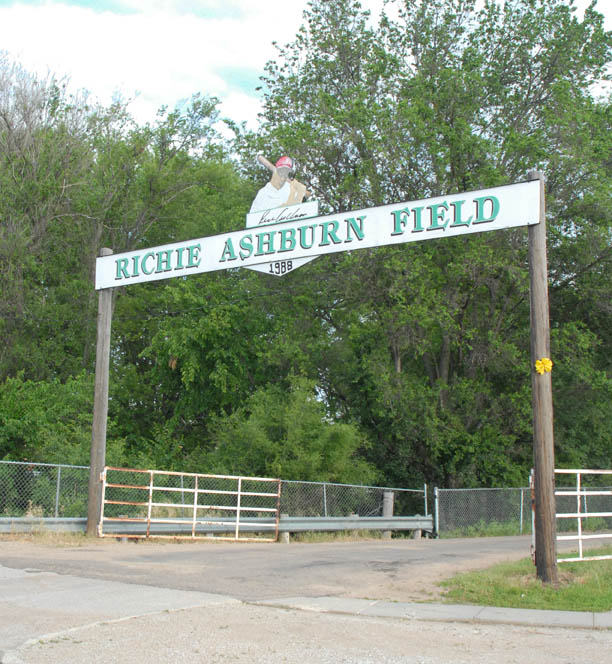
Richie Ashburn Field in Tilden, Nebraska
I have never paid much attention to baseball in the 1950s. I hear names like Bobby Avila and Al Rosen and I don't even know what these guys look like.
Richie Ashburn was at the end of his career when I first started paying attention to baseball. This is a name firmly established within the 1950s. However, he did have a little gas left in the tank as he moved into the '60s. The brand new New York Mets were very fortunate to latch onto this fellow for their inaugural season. It would be Richie's last season. His skills could still be very sharp. We readily learn this when looking at his .306 batting average.
It's true, as Bill James has hammered home for years, that batting average is but one thing to look at. Historically it has been overrated, through the years when it was the first stat you'd consult when evaluating a player. But a .306 batter definitely provided value. The New York Mets lacked value in 1962. They were led by the corny manager Casey Stengel. I guess Stengel had been judged too old to stay with the Yankees.
Stengel led a ragtag group of original New York Mets. The team represented the return to New York City of the National League. They played at the Polo Grounds, previously home to the New York Giants. It was a temporary, stop-gap home, as new digs were being constructed: Shea Stadium.
I eventually read that Richie Ashburn had been a member of the "Whiz Kids" Philadelphia Phillies. That was way back in 1950! A decade came and went before Richie would pull on that light blue Mets cap. He must have had an interesting background. He played center field. He had a background that seemed out of a movie: a farm boy from a small Midwestern town. That town was Tilden, Nebraska. I got out my road atlas, dated 1997, and saw that Tilden was a town of 895 population located on Highway 275 west of Norfolk. It's in between Oakdale and Meadow Grove. Quite the far cry from Queens. A pleasant far cry.
One of Richie's nicknames was "The Tilden Flash." He never lost that Midwestern connection. He lived in his hometown of Tilden in the offseason during his playing career. He officiated high school basketball games throughout Nebraska, staying in prime physical shape in the process. His light-blond hair inspired another nickname: "Whitey." He was one of those famous "Whiz Kids" of the N.L. champion Phillies in 1950.
He was the Phillies' center fielder in 12 of his 15 major league seasons: 1948 through 1959. Let's present Richie as an exhibit for 1950s nostalgia, up there with the movie "Angels in the Outfield."
If you are one of those fans who still puts emphasis on batting average, you'll be impressed by Richie's career .308 mark. He didn't hit for power but he had other strengths. He routinely led the N.L. in fielding percentage.
Looking at his career stats, I wouldn't consider him a slam dunk for the Hall of Fame. He was a singles hitter who sprayed the ball to all fields. He was shy of 3000 hits for his career, the type of marker that would have gotten him into the Hall routinely. He did have the most hits of any batter in the 1950s: 1,875. He made a spectacular catch in the 1951 All-Star game in Detroit. He had eight hits, all singles, in a doubleheader in 1951.
Ashburn was in focus for one of the odder baseball stories of all time. The date was August 17, 1957. Ashburn hit a foul ball into the stands that struck Alice Roth, wife of a Philadelphia sports editor. Alice had her hose broken. She was being carried away on a stretcher when Ashburn hit another foul ball that struck Roth! Happily, the two built a friendship in the wake of this stranger-than-fiction episode.
Richie had the misfortune of playing for poor teams toward the end of his career. The Phillies lost steam. He went from the eighth place Phillies to the seventh place Cubs and then those tenth place Mets. The Mets lost 120 games. The last loss saw Ashburn get retired as part of a triple play executed by the ninth place Cubs.
Ashburn's playing career all by itself might not have gotten him in the Hall of Fame. Like our Bert Blyleven, he kept contributing to the game as a radio and TV color commentator. He served the team for which he gained his chief fame: those Philadelphia Phillies. He planned on making a complete retirement after the end of the 1997 season. A heart attack cut him down after he broadcast a Phillies-Mets game at Shea Stadium.
Richie was elected to the Hall by the Veterans Committee in 1995. A long fan campaign had helped build his chances. Seems to me that if Ashburn can be in the Hall, so can our Tony Oliva. Life is often not fair.
Ashburn understood "the power of the press" (or media). When calling late innings, he'd occasionally ask if the staff of Celebre's Pizza might be listening. Presto, pizza would arrive at the radio booth within 20 minutes! The Phillies requested that "Whitey" quit doing this. Because he was allowed to extend birthday greetings on air, he once said "I'd like to send out a special birthday wish to the Celebre's twins: Plain and Pepperoni!"
I'm glad Ashburn extended his career through 1962 and was willing to be part of the futile but historic New York Mets campaign. He retired after sporting that .306 average with "The Amazin' Mets" under Casey Stengel. He is an iconic figure from baseball's mid-20th Century experience, when it still had many of its quaint older qualities but was on the threshold of much bigger things.
A farm boy from Nebraska who stayed true to his roots: Richie Ashburn, RIP.
- Brian Williams - morris mn Minnesota - bwilly73@yahoo.com

Monday, June 20, 2016

"It Happens Every Spring": essential baseball movie

There is nothing like an old black and white baseball movie to induce a feeling of nostalgia. We see Lloyd Nolan in a movie about the Brooklyn Dodgers. Gary Cooper portrayed Lou Gehrig. In a far less impressive portrayal: William Bendix as Babe Ruth.
The best ever Babe Ruth portrayal was probably by Joe Don Baker whose character was not literally Babe Ruth, but "The Whammer," appearing to all the world like Babe Ruth. Baker's performance, in case you've forgotten, was in "The Natural." Only Robert Redford's famous reputation as a political liberal saved "The Natural" from being ridiculed as a movie that glorified an era when there were no African-Americans in the sport.
And, it's not as if things changed overnight with Jackie Robinson. Baseball movies made after Robinson's entry could hardly be expected to show us African-Americans.
I remember one of the narrators in that great retrospective HBO special "When It Was a Game." The narrator, reflecting on his youth, expressed shame that he never "noticed" the game's segregation and that he never "objected." We watch the old black and white baseball movies today and we probably have to remind ourselves, with considerable effort, that we are admiring an abomination: segregated (or at least color-conscious) baseball.
 
The spirit and tone of post-WWII America
There is a charming old baseball movie that I got familiar with on network TV as a child. This is an airy, happy, fun-filled movie: traits associated with that most relieved time in U.S. history, immediately following World War II. I'm talking about "It Happens Every Spring." In case you think the title is suggestive, you're right. We hear the title song accompanied by drawings of animals frolicking amorously in springtime.
Baseball fans in that age had an intimate relationship with their favorite team. So if you were to make a major scientific breakthrough, how might you apply it? Well, you might wonder if it could help your favorite baseball team! The interests of humanity could wait. This premise builds the charm of "It Happens Every Spring."
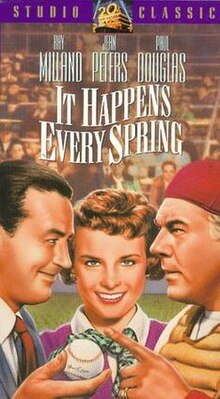
We meet an absent-minded professor from the days before Fred MacMurray. The professor in this movie seems more genuine than in the absurd Walt Disney productions of the 1960s. The actor is Ray Milland. Del Sarlette of Morris told me once that the actor seemed too old for the role. Milland's love interest in the movie, played by Jean Peters, seems too young for him, if you look at the age of the actors. Oh, suspend credulity. That's what Hollywood expects us to do all the time.
 
Again, understand the war background
There is a defense for the selection of the somewhat up-in-years Milland. His character in the movie has had his life's ambitions delayed by service in WWII. Excuse permitted. Think of what Ted Williams did in WWII.
Jean Peters plays Debbie Greenleaf while Milland's character is named Professor Vernon K. Simpson.
The professor teaches chemistry at a Midwestern college that seems much like our UMM in Morris. This is a Midwestern-centric movie. As such it's a nice contrast to all the New York City-based fare. The moviemakers had no aversion to the Midwestern motif which might be seen as less marketable. Maybe they saw the Midwestern setting as endearing in the context of immediate post-WWII America. Amber waves of grain. From sea to shining sea. War is over.
Ray Milland
The professor is determined to finish his doctorate. He needed a good living in order to win the hand of Greenleaf who happens to be the daughter of the college president! The professor is close to his breakthrough accomplishment: a "biophobic" that will keep insects away from wood.
Enter America's pastime. A baseball practice outside the campus building results in a ball coming through the window, shattering the elaborate set of beakers. Various components collect in the lab sink. The ball comes in contact. Simpson retrieves the ball. Hey, the baseball is repelled by wooden objects! Despite the phenomenal possibilities of such a substance, where do Simpson's thoughts gravitate? Of course: trying to win baseball games! This innocent premise gives the movie much of its endearing quality.
Simpson realizes he can be an unhittable big league pitcher. What objective could possibly be more important than this? The masses of (almost exclusively white) baseball fans had practically a symbiotic relationship with their favorite team. They didn't care how much those players got paid. Talk about contracts would have been base and unacceptable. Actually all players back then signed the same three-page contract, and they had no leverage at all until after ten years.
People just loved their favorite team.
Simpson experiments with the help of the college baseball players. A dab of this mysterious solution, hidden in his glove, helps Simpson apply this miraculous attribute. He takes on a new identity: "Kelly" Simpson. His team is the St. Cloud Cardinals. In those days, "a trip west" meant to St. Louis or Chicago. Many of the old baseball movies have train travel scenes and the camaraderie that accompanies them. California had the Pacific Coast League which was technically minor league but had very high-caliber players. Plane travel finally connected the whole country, and not even Lloyd Nolan could keep the Dodgers from leaving Brooklyn and Ebbets Field.
I have an elderly friend in Morris who attended a game at Ebbets Field when he was in the service. He said it was a "dump." Doesn't surprise me. The Polo Grounds were probably likewise. But these were New York City landmarks, worthy of our fascination. The fact that the Dodgers and Giants left NYC indicated it was no bed of roses playing there. The Senators left Washington D.C. to become our Minnesota Twins.
 
Douglas complements Milland
Paul Douglas is an important actor in "It Happens Every Spring." He's the catcher, named Monk Lanigan, and he really nails the role. His character is important because he's assigned to "keep an eye on" this mysterious new player, Simpson.
Despite the far-fetched premise of the movie, the situations really do seem genuine. Milland projects a serious, believable air as professor-turned-pitcher, not like the silly cliche of a character a la Fred MacMurray. MacMurray wasn't to be faulted - he did the role as instructed. Funny thing about the 1960s Disney movies: as I re-watch them as an adult, I find them quite lacking, whereas as a kid I rather enjoyed them.
It's too bad MacMurray had to play a bad guy character in "The Caine Mutiny."
It is important to note that Valentine Davies, who wrote "It Happens Every Spring," also gave us "Miracle on 34th Street." Davies had an innate gift for giving us such soothing "soft" movies. The Christmas "34th" movie is close to reaching the saturation point in holidaytime TV. Other movies flirting with the same kind of problem are "The Karate Kid" and "Happy Gilmore." But it's a testament to their quality.
"It Happens Every Spring" really doesn't appear much anymore on TV. That's a shame. The movie did well at the box office when it was current. The director was Lloyd Bacon.
"Kelly Simpson" is able to pitch the Cardinals to the World Series.
Major League Baseball stayed distant from the movie because it had to do with cheating. Oh my, but just consider the can of worms that came along for baseball with PEDs, Mark McGwire, Barry Bonds etc. Baseball could have easily gone along with "It Happens Every Spring," as merely an escapist fantasy.
Simpson has his two goals: to make enough money to wed Deborah, and to help the Cardinals win the pennant. But which is more important? Rimshot.
Simpson has to disappear as a professor to assume his new role with the Cardinals. Deborah is clueless about this. She wonders if he joined the mob.
Paul Douglas as Monk Lanigan gets most of of the funniest lines and best scenes. He tries Vernon's formula as a hair tonic.
 
Context of the times lifts movie
An online reviewer says "much of what occurs is able to happen because it came from a time when there were no multi-million dollar athletes, no wall-to-wall TV coverage on ESPN and no cynical sports analysts to dissect every play."
Amen and hallelujah. Of course, players weren't rewarded very well, and sports medicine hadn't advanced far. No "pitch count" yet. Scores of young pitchers threw out their arms in the old days. Today these teams have too much of an investment in their young pitchers. A pitcher might be removed from a game when he's 5-6 outs from completing a no-hitter.
In the world of today, Vernon would not be able to hide his identity. You can nitpick the movie. Go ahead, but its basic essence, reflecting the euphoric air of post-WWII America, is 100 percent endearing. Hats off to "It Happens Every Spring." Valentine Davies, you hit it out of the park. Maybe it would be best if this movie is never re-made.
- Brian Williams - morris mn minnesota - bwilly73@yahoo.com

Monday, June 13, 2016

The rise and fall of our early Minnesota Twins

Apologies to William Shirer. . .
We don't think much about it today, but the 1965 summer in Minnesota was magical. The Twins were part of the rapidly expanding vista of entertainment and enrichment for my boomer generation. Typical of us, we took it all for granted. We felt entitled to it. We felt insufficient gratitude.
Flashback to 1960: There are no major league sports in Minnesota.
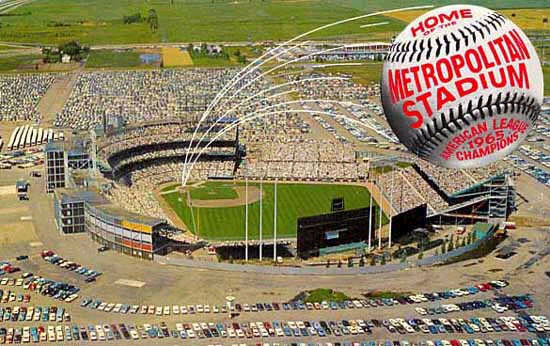
We read histories today of the Millers and Saints, those minor league teams that were really quite impressive fixtures in the Twin Cities. But that was nothing compared to getting ushered into the "big show." The ball got rolling in 1961. You might even go back to 1956 when Metropolitan Stadium opened, a stadium built for the specific purpose of attracting major league baseball. The Millers played at the Met for an excruciatingly long time: five years.
Finally, word came that Calvin Griffith was bringing his Washington Senators to Minnesota. It was part of a trend of some well-established East Coast teams pulling up stakes and heading west. The Dodgers and Giants made the move, then the Senators who came to occupy Met Stadium in 1961. I was enthralled by Met Stadium as a boy. I remember walking up and down those ramps on the side. I remember consuming those Frosty Malts and soft drinks, priced at just a fraction of today.
The Twins did fine commanding our attention in the first four years. We made a run at the Yankees in 1962. Finally along came 1965, our fifth and blessed year, and what would turn out to be the apex of the Met Stadium experience. The All-Star Game was played here. The Beatles came to play their music. Just before the '65 All-Star break, we had the breathtaking thrill of appreciating a Harmon Killebrew home run that was like a virtual knockout punch for the Yankees. The Yankees with their big-time reputation and storied history had succumbed to this new assemblage of players called the Twins.
The Midwest glowed. We got the World Series in the fall. We stretched that Series to seven games, losing in the end to the incredible Sandy Koufax of the Dodgers. These were the old Brooklyn Dodgers with quite the storied history too, having broken the color barrier. Our Twins did fine with players of color. Owner Griffith eventually showed his Neanderthal side in terms of verbiage, making comments for the Waseca Lions Club that were immediately notorious. However, Griffith was a pacesetter, certainly by the standards of the American League, in how he enlisted players of color including several Cubans.
Our Twins won 102 games in 1965. We were seven games up on the second place White Sox. Ironically this was a season when Killebrew was held back by injury. I will not argue with those who say Hammerin' Harmon may have been overrated. Some even wondered if he belonged in the Hall of Fame. I certainly think he belonged in the Hall because of how much his stature as power hitter meant to Minnesota. However, he couldn't do much outside of hitting home runs. I sometimes wondered: Would we have done just as well with a superior-fielding, lefthanded throwing first baseman who had speed and who could hit at least .260?
Well, we had Harmon and we loved him. Just as we loved Tony Oliva. 
 
Sad story of our first shortstop
Zoilo Versalles was a story unto himself. Vic Power called him "crazy." Versalles was 17 years old when he arrived in Key West from Cuba. He didn't speak English. He wasn't sure how to handle our segregated society. But he made it to the Twins when he was age 21, assigned to play the key shortstop spot.
Versalles was the MVP in league when we won the pennant. From that peak he descended sadly. Sportswriter Doug Grow asked Griffith about the cause of the decline. The answer: "drugs." Versalles had taken painkillers for a bad back. He drifted from the correct dosage, often taking too much.
Griffith was not up to date in terms of his philosophy of running an organization. He seemed to know nothing about organizational team building and conflict resolution. I think this was a generational defect. I saw those of his age stripes seem clueless about how to effectively monitor an organization's effectiveness. It's a science today. Back then you just hired "good people" and assumed everything would be fine. What about the back-biting that so often surfaces? So many of the older types had been in military service, I think they mistakenly assumed that younger people would have the same qualities that are instilled with military discipline.
Here's what happened: The Twins of the late 1960s, who broke our heart, got fractured into several cliques. This is reported in a fine SABR post about the Twins.
Ugh. I hate that sort of thing. Many of us have in our background an experience like what I'm alluding to here: dysfunction leading to conflict among individuals, hindering the organization. (IMHO, I worked within the dysfunctional type of model when I was with the Morris Sun Tribune newspaper in the 1980s and '90s.)
 
The fall of the early Twins
I won't review the several specific heartbreaks that us Twins fans experienced in the late '60s. It's too painful. It was a mistake for me to ever develop an emotional bond with this or any other sports team. It was common in the '60s for Minnesota boys to have that bond, to take losses personally.
You set yourself up for nothing but heartbreak when this happens. Why did each league have just one team advance to the post-season? In '67 the heartbreak could have been alleviated if we just could have advanced as some kind of wild card, instead of being edged out at the very end by Boston. Jim Kaat threw his arm out as a result of the desperation we felt trying to surpass the Red Sox.
The heartbreak of '67 stayed with us for a long time.
Baseball instituted its divisional format in 1969. We won the West Division in both '69 and '70 but there was very little optimism both seasons in Minnesota, about whether we could beat Baltimore. Our fatalistic feelings were affirmed when we got swept by Baltimore both seasons. Dave Boswell threw his arm out for good, as a result of the desperation we felt to win a playoff game, a game we lost anyway. It's sickening.
 
Boomers became indifferent
After 1970, the decade to come was anticlimactic compared to the heady days of Met Stadium when the Twins were fresh. My generation no longer felt special excitement about the Twins or the Met. Our parents, when young, had only the Gophers to be excited about, just football really. We had been given so much. Eventually us boomers yawned. We found time for soccer (the "Kicks") but were more interested in the socializing than the game.
If only the Twins could have won the pennant in '67. Maybe there's an alternative dimension where I can watch the Twins win the pennant. Where I can see Ron Kline come through.
Let us never forget the transformational magic the Twins brought in the early 1960s. That Killebrew home run before the All-Star break in 1965 might be the most exciting moment in Minnesota history. The World War II generation was bringing their kids to the ballpark. We had survived the Cold War.
And, those Frosty Malts sure tasted good!
- Brian Williams - morris mn minnesota - bwilly73@yahoo.com