History-making music group for UMM - morris mn

History-making music group for UMM - morris mn
The UMM men's chorus opened the Minnesota Day program at the 1962 Seattle World's Fair (Century 21 Exposition).

Saturday, October 25, 2014

The Todd Hoffner matter, what it signals for parents

Todd Hoffner (MPR News image)
(I wrote the following post for my "I Love Morris" site on August 29, 2012. This was when the charges vs. Todd Hoffner were "breaking news." The news was a signal to parents that common sense vigilance might not be enough. Beware "witch hunts." Hoffner has been cleared and is back to work at Mankato State, but residue of the process continues making news.)
 
What a tangled web we weave when we use video cameras.
Having something on film supposedly provides incontrovertible evidence. Except that it isn't that simple in many cases. People are having to explain things on video which in the past would never have seen the light of day. Like that guy using a strap to apply corporal punishment to his child in the back yard. A neighbor videotaped that over a fence. The strap represented a typical punishment that people my age - the boomers - can remember as being routine in our childhood.
We'd get plopped on a car seat without any special legally-mandated measures for "protecting" us. Somehow we got through all that.
It is fine to show vigilance in protecting the safety of children. But the measures can become onerous. The vast majority of boomers, I would guess, have a photo or two tucked away in an old album showing them without clothes on. Our parents wouldn't have worried for a second taking such photos. Just like they didn't hesitate much spanking us.
Parents were given a fair amount of space in which to show judgment.
Did some bad things happen? Yes I'm sure because we're human beings with human failings. We're told from the pulpit every week we're sinful. We strive to use laws to protect the interests of kids as much as possible. There's an old saying though that "the perfect is the enemy of the good."
It shouldn't be dangerous to have kids. The "old man" on "Pawn Stars" is joking when he says it's "scary" to have kids. But he's hinting at a kernel of truth. It's hard enough raising kids when you try to do everything right. A little lapse in judgment today, though, could cause your kids to be ripped away from you.
All these thoughts are prompted by that curious incident in Mankato, a nice mid-size city nestled in southern Minnesota. It's where Morris native Zach Witt went to play college football.
It's the football coach at Mankato State who is at the vortex of a tempest now. And it all came about because of "family videos" that may or may not turn out to be innocent. Which conclusion you reach thus far, appears to depend on what media report you're reading. One day I'll read a report suggesting the videos are innocent even if out of the mainstream. The next day, the subject appears pushed into more of a gray area.
I haven't read anything yet suggesting it's a slam-dunk for the prosecution. I should attach an asterisk. I'm puzzled by the use of "fondling" in the media reports. It's too vague a word to be used in a reliable news article. If the reporter can't get anything more specific from investigators regarding what is meant by the word, a sentence should be inserted saying so.
Right now I'm giving my benefit of the doubt to the accused party who is, or was, the Mavericks' coach at Minnesota State University-Mankato. It used to be "Mankato State University." And, not long before that, "Mankato State College."
I was a student at St. Cloud State University when it shifted from "college" to "university." I didn't notice any difference.
"Minnesota State" is confusing because both Mankato State and Moorhead State go by this. I remember Zach Witt playing quarterback for the Mavericks. I remember the sad pattern of Mankato losing more than their share of close, high-scoring games. The offense certainly shouldn't be faulted.
Zach was a lefty throwing the football. He's the oldest of the three athletically gifted Witt boys, sons of Jerry and Holly. I covered the Tigers when Jerry first became head coach here. Now he's a total graybeard with the wisdom one expects.
I'm sure Mankato State football is trying to regroup and focus now even with that sensational Todd Hoffner story in the background. I'm sure it's quite the story around the diners and coffeehouses in Mankato.
Hoffner is the coach whose family videos have caused a tempest because of legal charges. In the wake of the Jerry Sandusky mess out east, and because of "mandatory reporting" obligations felt in most places now, there looms the possibility of a witch hunt.
Is the current Hoffner matter an unfortunate consequence of the witch hunt pattern? Or is it a legitimate matter where law enforcement needed to intervene - where something egregious was committed? Of course we don't know for certain yet. If I were to be pressed, I would say the videos were totally uninhibited, rather odd and fun episodes of kids unleashed - acting stupid, whatever. I'm not convinced of any sinister aspect.
I can guess what the teachers in parenting classes are going to start saying: "Don't photograph or videotape your children naked ever, no matter what."
Why do parents want to take such photos of the type I've alluded to in connection to the boomers? There's one of me lying on my tummy on a bed, smiling and with no clothes on. Maybe parents see a special kind of beauty in the human body. Artists see this too. Prurient interests needn't be a part.
The sensational stories as reported by the media perhaps cause us to fear the worst too much. We certainly need to pursue the worst cases of wrongdoing. But this must be done with extreme care because "jumping the gun" can ruin lives.
The investigators in Mankato had better be pretty sure of their suspicions. Actually I don't think they are. They'd probably just argue they're "doing things by the book." That's the danger: that legal obligations will trump caution, restraint and patience in the process of sorting things out.
Would anyone dispute the Hoffners' lives are scarred now?
Just as most boomers were photographed in the buff with not a thought of legal consequences, so too were they occasionally spanked. Yes it could be intense. But there weren't video cameras poking all over the place.
Harsh punishment was a tool of love to get kids straightened out. Its effectiveness might be debated. But our parents didn't fear getting called on by social services.
I remember when I was a kid and our family was at the Del Monico Cafe having supper, I begged them to let me leave the booth briefly to look at some item at the neighboring Messner Drug (Thrifty White Drug today). I was a quite young tyke. I was allowed to make the jaunt. The clerk in the store seemed uncomfortable about me being by myself. I told her my parents were right next door but finally she said: "I think you should go back and be with them." Simple encouragement from the wisdom and caring of an adult - no legal action. Today a store clerk in that situation might call 9-1-1 and social services might make a check, with the specter of me possibly having to be separated from my parents for a time.
So maybe there's in fact more than a kernel of sincerity when the "old man" of "Pawn Stars" says "It's scary raising kids."
We don't want people to be scared of having kids. The human race needs to propagate.
There are three generations on "Pawn Stars." It would be neat to take my old Beatles vinyl albums to their business. I would suggest "Pawn Stars" is more a show about family and friendships than about the pawn business literally.
"The old man" really does believe in family. He sets the example. Now we all need to lighten up.
- Brian Williams - morris mn minnesota - bwilly73@yahoo.com

Thursday, October 23, 2014

"Hey Jude" was more like an anthem than mere song

Is there anything more subjective than the judgment of music? From what spot in the brain does this gift come, of creating melodies that we find appealing?
The actual product seems not very sophisticated. The most basic three-chord format is the foundation for many of our favorite songs.
So, "sophistication" seems not to be a major element.
You don't get good at this through years of school as with becoming a medical practitioner. It is helpful to immerse yourself in music.
I'm thinking of the song "Hey Jude" (1968) and how simple it is. "Jude" was the name of one of the characters in the Beatles homage movie "Across the Universe."
The song "Hey Jude" is really more of an anthem. It may be the prime signature piece from Paul McCartney's career. 
A mere three basic chords are used in the verse: F major, C major and B-flat. The refrain simply presents a modified triangle - simplicity accented all the way. The simplicity is such, there are no real lyrics in the refrain. The song's title pops up but outside of that, it's just the "nah-nah-nah" syllables. It was an invitation for teens to just go crazy singing it.
The Maynard Ferguson big jazz band had an arrangement of "Hey Jude" that was so popular, it was used at the end of concerts as a climax. The irony is that many serious jazz or big band musicians of the time weren't likely to say anything charitable about the Beatles. The Beatles had swept aside so much of the music that the older crowd had lived with and considered the norm. The Beatles even swept aside a lot of the raw-sounding American rock 'n' roll. Beatles music was on a plane above that, refined even with the simple element employed.
"Hey Jude" was a miraculous song that extended to seven minutes-plus. It is a testament to that song's quality, lest there be any doubt, that it was allowed to be released at such length. The tight confines of radio were pretty hard to fight in those days.
 
From restrained to raucous
"Hey Jude" is significant in part because of the mood change through the course of the song. There is a gentle feel at the start. There's just Paul and his tasteful piano accompaniment. Ultimately the song becomes a resonating, forceful musical statement. Instruments increasingly join in, plus backing vocals. We hear a 36-piece orchestra!
Pop artists of the time were not averse to bringing in classical instruments from that realm of music we called "square." Even Jim Morrison of the Doors, total iconoclast that he was, benefited from strings in perhaps his most captivating tune, "Touch Me." Think of what orchestra instruments did for the Beatles' "Eleanor Rigby."
The youth yawned about pure classical music. But they were mesmerized when such music "sneaked in" to add texture with popular tunes. Paul McCartney called in a piccolo trumpet player for the classic "Penny Lane" from "Magical Mystery Tour." The trumpet passage elevates that song considerably higher in the Beatles' pantheon of classics.
The orchestra musicians on "Hey Jude" were encouraged to "get loose," and they laid down their instruments to clap and sing in the refrain.
"Hey Jude" was released as a single with another top-notch Beatles song, "Revolution," on the other side. I may have sympathized with the message in "Revolution" but I never cared for it that much as music. It seemed too restless and subversive - messages that may have had their place, yes, but music is at its best when it's uplifting, reminding us of our better side and better qualities.
Lennon and McCartney competed for the 'A' side of this single release. Paul was crowned the winner with his distinctive "Hey Jude."
Maynard Ferguson sent the members of his trumpet section into the crowd for the extended refrain. It was totally wild. I would consider it needlessly wild today. But us youth went nuts as these trumpet players all sought to show off their "scream" quality in this refrain. We might conclude Glenn Miller would roll over in his grave.
Maynard Ferguson himself started out "Hey Jude" by playing the melody on soprano sax. But of course, scream trumpet was Maynard's forte. As the refrain jumbled into total chaos with trumpet players beginning to "scream" randomly, Maynard finally called all that off so he could simply play his climactic high notes from the stage all by himself. Many of his young fans watched and listened with unbridled reverence as though in church. Indeed, Maynard would eventually record "Gospel John" which became another classic to his fans.
Bandleader Buddy Rich had a hard-charging arrangement of the Beatles' "Norwegian Wood." Exciting as these arrangements were, they of course didn't give us the lyrics. It's a testament to the Beatles' genius, of course, that their melodies were so strong, they could become classic big band arrangements. The big band leaders of the '70s had no problem riding piggy-back on the Fab 4's talent. It's ironic because the rock music that germinated in the 1950s pushed aside the big band era.
Fluidity is a characteristic of music and its evolution. As Brad Pitt said in the movie "Moneyball," playing Billy Beane, "adapt or die."
Maynard Ferguson adapted. He had been through the 1960s which was a dry desert for big band jazz. He was ready to do anything to jump-start his beloved art form. And this he did magnificently beginning in 1970, happily doing covers of the "new breed's" material.
 
Sigh of relief: Ringo stays on board!
The Beatles' "Hey Jude" was released with a televised performance. Not well-known at the time was that drummer Ringo Starr was getting back to work after having quit! The Beatles were no longer the cohesive unit they once were. Starr was getting turned off by the conflicts, for one thing. He also felt his own drumming wasn't going that well. I would argue that without a continuous "live" playing slate, it's very difficult for a musician to stay in his desired groove.
The Beatles had to stop performing live, or at least they felt they had to, because audiences were out of control. It seemed the audiences weren't even reacting to the music anymore - it was mayhem for the sake of mayhem. There was an element of this to Maynard Ferguson's concerts in St. Paul MN in the 1970s. He totally appealed to youth of the baby boom - those kids who could be so out of control with their behavior. I remember Maynard at one point "snapping" and feeling as though he had to assert some control. He got serious and perturbed and proclaimed "cool it!" The audience was starting to get crazy for crazy's sake. I remember being at a Rodney Dangerfield concert at the Minnesota State Fair in about 1980 when the same thing happened. Kids of today: you should know that your parents could be silly and out of control with their behavior. The comedic Dangerfield suddenly started acting like he had had enough.
Ringo's alienation happened at a time when another big disruption came about, that being Yoko Ono's emergence with John.
The Beatles climbed to glory with their interpersonal chemistry. With the "White Album," they had reached a chapter where they could no longer tap that pure camaraderie. Paul grated ever more with his bossy traits. Apple company business was a wedge. The Beatles kept churning out music. It ended too soon for most of the generation that showed an almost unhealthy reverential awe toward them.
Such a phenomenon couldn't happen again. Remember, high-quality recorded music was a rare commodity in that earlier time. The recording industry in England was ahead of its counterpart here. This is well documented (and underrated) as a factor.
The Beatles had everything fall in place for them. Their talent was an essential building block. But there was so much more that had to work. And it all did, for a few short years anyway. "Hey Jude" represents their talent as well as anything. It's a pinnacle. A manifestation of perfection? You can sing the refrain when you're "impaired" in some way. Or play scream trumpet. Let's celebrate such simplicity.
- Brian Williams - morris mn Minnesota - bwilly73@yahoo.com

Friday, October 17, 2014

Hey Morris! Thoughts out and about in crisp 2014 fall

Entering UMM from the north: fine view (B.W. photos)
This post includes items that originally appeared on an addendum basis with recent Tiger sports posts on "I Love Morris." If you don't follow sports, you didn't catch these, and in any case I appreciate all readers!
 
Whither Morris' future?
I can remember the days when we had parking meters in Morris. That was when "downtown" was where you went to buy things and socialize. Men often went to the "pool hall."
Changing of the colors: beautiful fall scene at UMM.
Such was the primacy of the old "main street" in America, cities got revenue from parking meters. I
A view of Morris from the east, from by the river
Les Lindor helped make the WCROC "overlook" possible.
remember photographing an incident outside the Chamber of Commerce office in Morris, located where "Stephanie Foto" is now, where Congressman Arlan Stangeland's vehicle was about to be ticketed. He may have gotten a pass on that, most appropriately.
The Beatles had a song with the lyrics "Lovely Rita, meter maid."
Cartoonist Del Holdgrafer of Donnelly did a cartoon marking the end of that institution of parking meters in Morris. It had to happen. Economic geography was changing. The "Gibson's" store was a shot across the bow for that. I remember an apprehensive main street merchant saying sarcastically "I'm heading to Gibson's to get my 19-cent windshield scraper."
Go ahead and be sarcastic, people were going to be lured to these larger stores. The old main street model with its men's clothing stores and the like, was going to be "gone with the wind." Eventually people were lured not only by Gibson's (later to become Pamida and then Shopko) but to Alexandria, a much more practical destination due to cars being made more durable and reliable.
I chuckle whenever I see a sign outside of a community pointing me to a "business district." That term is a vestige of the old model. What the sign is really saying is, "main street is this way." Really, who cares? Main streets have largely become a quiet collection of businesses not nearly as attuned to the old walk-in model.
As some primary businesses in Morris seek a new location on the outskirts, out north of the highway by McDonald's, we have to wonder if our main street might be on the verge of actual blight. Maybe that term is too strong, so maybe I ought to stick with "quiet." Quiet and peaceful can be pleasant attributes but they don't make cash registers ring.
I have been hearing comments in a vein of levity about whether there are "enough financial services companies" to fill any holes on main street. When I was a kid we were scarcely aware of "financial services companies." People put money in the bank or they simply spent it. The stock market seemed a distant, mysterious and even rather foreboding place. It was a place where rich people played around with their money. Silly rabbit, rich people are never careless with their money. How do you think they got rich?
I have never accepted this new model that has common, middle class people lured into squirreling away money in non-FDIC investments. I have waited years to be vindicated on my thoughts about this, and maybe I still will be. As they say, if you wait long enough, the bears (on Wall Street) are always right.
In the old days in Morris, going downtown was rather a social occasion, especially on that one night of the week when stores agreed to stay open. You'd make your rounds, toting your sacks of items, and seeing your friends/neighbors. You might dine at the Del Monico Cafe, next to Messner Drugstore. That space is now occupied by Thrifty White Drug (on the west side of main street).
The Morris Theater might be abuzz for an Elvis movie. Today the theater survives as a co-op. I'm not sure it's worth the trouble. Some things are best left in the past, like parking meters.
So, Heartland Motors, Thrifty White Drug and Town and Country are re-locating, at least according to "word on the street?" This will bring a sea change unless other interests move into the vacated spots.
What will become of City Center Mall? Hats off to Floyd Schmidgall for his dream of building something classy on main street, and certainly that building is a pleasant place. Stevens County offices seemed to work out quite fine there. Stevens County used Floyd's space while the renovation or new construction of the courthouse was proceeding (a project I'm not sure we needed at all).
I heard positive comments about county offices being at City Center Mall. It was handy and on ground-level - truly "people-friendly." Of course, government doesn't want an image that is too friendly.
I feel rather intimidated entering our courthouse now. If I'm there to pay a bill, I have to use an elevator. Offices that regularly receive checks should be on ground level. I was advised once that parking is available higher up on the building's east side, but the space often fills up. Not only that, you'll see law enforcement vehicles parked there which can be very scary. If some cop comes out of that building and sees your seat belt not on, you're toast.
Reports are coming in from around the USA of cops who can become very irritable and testy even during a seat belt stop which you'd think is trivial. In at least one instance, someone got shot by a cop. I try to keep my distance from these individuals (cops) as much as possible. They can be dangerous. "The system" has created this and there's apparently nothing we can do about it. All those citations bring in revenue to grease the wheels of government.
I expressed my frustrations about a seat belt stop with a city councilman (while we were waiting at McDonald's) and he responded with one word (and a smile): "revenue." I wouldn't smile so readily. At least keep your guns in holsters, guys (or women), and maybe consider not bringing them into restaurants.
If the drugstores vacate Morris' main street, that part of town is going to be challenged attracting "foot traffic." "Foot traffic" is an intangible - it means that the potential for commerce is always around. What will happen to those old drugstore spaces?
What if businesses invest a ton of money to re-locate and then the U.S. is beset by a fallen economy? Look what the stock market has done lately.
Here's a sudden thought: What if we learn after the economy tanks that Jim Cramer actually had all his money in bank CDs? Business news reporting may not be what it appears. I have read that "trading floors" are really only maintained as "a backdrop for the financial networks." Enron had faking trading desks. Don't let the media unduly influence you.
What is to become of the Morris "business district," that place where families would wander on that designated weekday evening with a festive air presiding, toting those sacks? Saying "hi," pausing to chat?
We have ushered out those parking meters long ago. Wasn't Marlene Reineke a "meter maid?" The main street men's clothing store is a museum candidate. Long ago, "hats" were a big part of their business, along with the traditional suits and ties. Today people dress "grubby" to go to church and no one cares.
Time marches on.
 
"Northstar" makes dubious return at UMM
The newsstands labeled "Northstar" were empty for quite a while into the new school year at the University of Minnesota-Morris. I wish that paper could have found the resources to publish a September issue, just as a gesture of "welcome back" or to prevent empty newsstands which seem rather pointless.
The Northstar apparently has its own lawyers who seem to date to be much sharper than the University's own lawyers. Congratulations to them. If UMM had its way, this publication would not have the leverage of its very own newsstands around campus. It doesn't deserve such a standing. Those prickly students could just go online, like we all can, find a platform for their ideas (if you can discern them past all the juvenile venting they do) and build an audience. That would make too much sense.
Instead we have this paper product called "Northstar" bringing attention to itself, to a degree far beyond what it deserves. These students are conservative or libertarian and are resentful. Perusing these papers, one senses they actually resent UMM. Aside from reasons of taste, this could be reason enough to try to shut them down.
Shut them down? But oh my, don't we have a First Amendment? Anyone who spouts about the First Amendment here is misguided, because this argument would only be apt if some sort of criminal conviction was being weighed based on a student's thoughts, ideas or writing. Of course no one is thinking on  those terms.
Journalists and editors can get removed from their positions, and publications can go under, due to the usual vicissitudes of the marketplace. The First Amendment is irrelevant in such cases. An editor of a campus paper could be seen as incompetent or injecting improper values, thus could be removed by whatever designated authority is in place. Maybe it would be the chancellor herself.
Journalists are not spared accountability just because of the First Amendment, which like all amendments can be misunderstood.
I have no doubt these Northstar students have some valid ideas worthy of airing. Have the principles behind affirmative action run their course? Is it time to start drawing the curtain on them? Are students unreasonably burdened by loan debt? This is a prime topic for discussion on college campuses now.
If only the Northstar students could hone in on these arguments in a more rational, level-headed way, we could appreciate their points more. There seems anger behind the so-called "satire" in the Northstar - at least I sense this. It has the effect of putting UMM administration and faculty members on the defensive. It perhaps distracts them from applying their full focus to their jobs. It might have a demoralizing effect. They wouldn't like admitting this. They project an air of indifference, probably.
The Northstar does not deserve to be one of the two on-paper student publications on campus. It almost seems like a classic college gag. It shows chutzpah on its cover, proclaiming that it's "classy (for a change)" and that it's a publication that students actually "talk, read and care about." I suppose people would "talk" about me too if I publicly farted.
Classy? A publication that finds it necessary to refer to Chancellor Jacqueline Johnson's vagina? To assert that "Jacquie Johnson is rape culture?"
Part of the college experience is learning to respect and defer to the people who are paid to lead/teach you. If you feel you do not need this leadership, then maybe you don't belong at UMM or in college at all. Maybe you're too smart to be here. Well then, why not just move along?
 
That curious new fence by McDonald's/Coborn's
Are we seeing "range wars" in Morris? Just kidding, and there's no barbed wire involved, but a fence is piquing curiosity among the local citizenry. That rather odd fence in the Coborn's parking lot - excuse me, Coborn's doesn't exist anymore - is requiring some adjusting.
Of course, that parking lot isn't the beehive it once was. Coborn's and McDonald's together once attracted lots of motorists who filled parking spaces. At that time, in the heyday of that spot in Morris, no one much cared about any property dividing line in the parking lot. Both businesses were doing fine. I guess it's different now.
It seems the property owner for the blighted old Coborn's building wants everyone to know there is indeed a property dividing line. Hey it's just a parking lot! It does have value, though, even with the Coborn's building vacated and tumbleweeds blowing out front. It's nice to have that "breathing space" with the ample paved parking.
There's even an old "no loitering" sign on the lot's edge! We should be so lucky as to have loitering on that end of town. To the extent there was ever any loitering out there, it never bothered me. It's even rather nice to see such activity. People and traffic are what a town is all about, or should be.
Now we see a property owner who apparently sees fit to make a statement about how a certain piece of parking space is theirs. Never mind that those interests don't seem to be serving Morris' interests at all right now. It's just vacated, empty space around a rather embarrassing old building with its sign that proclaims "open 24 hours." That would be nice if it were true. Now we don't have a true 24-hour grocery store.
The "for sale" sign has had the name of Dennis Miller on it. It would be nice if this were Dennis Miller the comedian, so maybe we wouldn't have to take these gestures seriously. One look at the fence and you sense there's a conflict afoot.
I suppose McDonald's has been approached about buying the parking space. Is it a fair price or more of an extortion-type price? Who ever heard of a fence in the middle of a parking lot serving no apparent purpose?
It's common for semis, tour buses and school buses to pull in there. The space is now insufficient for all that.
Really, the City of Morris has an interest in this. And BTW, how come City Manager Blaine Hill hasn't put up any new blog posts for several months? Might he feel pressure to try to explain what happened at the library?
I realize that property brings certain rights - it's an underpinning of our way of life. But there's also such a thing as common sense and civility. We're not in a big city where such principles can be disregarded or blown off. We're Morris. We're a Garrison Keillor-type town. We don't need to resort to lawyers for every little thing, do we?
I do know we have an overly aggressive police department. That's actually rather scary. In these days when news reports of trigger-happy police are surfacing, it's concerning. Those dudes carry guns!
We recently learned of a case where a young guy who pulled into a parking lot and took off his seat belt before coming to a stop, was accosted by a law enforcement person who proceeded to shoot him! That officer has been fired and charged. In Ferguson MO the situation has been more murky.
The way Morris Police give seat belt citations is disgusting. I just hope they keep their guns in their holsters. I'd like to see local restaurants stop serving law enforcement personnel in uniform. That would send a message. Perhaps we need a complete housekeeping from the top down.
Will the Homecoming parade be rescheduled? Let's hope.
 
Passion behind cross country, running
Writing about cross country makes me remember the days when I ran 5Ks and 10Ks. Looking back, the 5K distance would have been entirely adequate for all such events. We sought to "tough it out" for the longer distance.
Running hard for five kilometers will tax your body to the max. If you run ten kilometers, just run slower and enjoy the scenery. Of course, many people become possessed to run the marathon. "Possessed" can be interpreted literally. I think it's a strange lure - this desire to run continually (or nearly continually) for 26.2 miles. That's running from here to Benson.
Now that I have castigated marathon runners, let me hurriedly add that I ran three marathons in my halcyon days. However, I never trained specifically for any of those marathons.
I ran the Twin Cities Marathon three times in the fall of the year. It was after the summer in which I made the rounds for doing 5Ks and 10Ks in our placid rural outstate communities. I remember one year having to beat the train across an intersection doing the 10K for the Elbow Lake Flekkefest - really. I also remember that race fondly for how kids in troll costumes would dash out and "scare" you in various places.
I remember that in Ashby, I went to the concession stand at the softball tournament to ask directions for where the runners were gathering. They laughed because all the runners were coming there to ask directions. I remember that for the Dumont Centennial, there was a breakdown with the stopwatch and so, after sweating hard to do a good 10K, we couldn't even find out our time. Oh, it's no biggie.
I did a run for the Donnelly Threshing Bee during that brief time when the Bee included this event. I handed my camera to Mrs. Spohr who took newspaper photos for me as I ran.
These small-town runs were charming with their very peaceful atmosphere and the camaraderie us runners felt. It was the stuff of a country music song. From that setting I sprang to the Twin Cities Marathon in three different years, where of course the atmosphere was quite different, quite thrilling really. It was neat running amidst that virtual sea of runners at event's start. There would be TV helicopters hovering overhead. We certainly didn't see that at Dumont!
Yes, I ran those marathons without training specifically for them. I just considered them an extension of the summer running season. I firmly believe you do not need to train specifically for very long distances. What you do, is run several 5Ks and 10Ks with maximum intensity and commitment, and then just "tack on" that marathon experience at the end. You'll be ready. In fact, you'll perform better in the marathon with this approach, as opposed to the approach where you simply get ready for the long distance. Just use common sense and pace yourself when you do the marathon.
It's exhilarating in the Twin Cities to have fans cheering you on, the whole way. I remember a band playing at Minnehaha Park. One year I wore a long-sleeve T-shirt that had "New York City Marathon" on the front, and was acknowledged accordingly by all the spectators along the way. I have been to "The Big Apple" twice but have never done the New York City Marathon.
I remember doing a 10K in Fargo where I broke 40 minutes for the first time. I nearly broke three hours in my first Twin Cities Marathon in 1984. Considering my large and somewhat lanky stature, that was a quite excellent time. I failed to do better in my next two Twin Cities Marathons. However, I did enjoy picking up my complimentary package of Pillsbury microwave brownie mix when registering!
I developed injury excuses as the years went on, like all runners. Today I swear I could "do it again," although every time I try, I quickly run out of gas. There was a time when I felt I could impress women by doing this, but I was wrong.
The best runners are very light and wispy. Carrying minimal weight is absolutely essential. We can fail to appreciate how small these people are, because when they're photographed, they're often with each other.
Alan Page gained note for taking up the pastime after his football playing days. Certainly his body didn't seem to lend itself, but he enjoyed. I did a springtime race in western Wisconsin where Page was present. He has been on the Minnesota Supreme Court for a long time. I hope he doesn't show head injury symptoms.
I have a rich tapestry of memories from my running experiences of the 1980s and into the 1990s. A sore right foot caused me to quit. Today I can jog short-term without having that pain re-surface, but if I try taking it a step further, it's no-go. My right foot will feel like an alligator is biting it. So. . .
I congratulate the intrepid cross country runners of Morris Area Chokio Alberta. Stick with it, guys and gals. And don't worry about trolls.
 
Reprise of a fun old story
Here's a favorite humorous story that I believe was originally brought to my attention by Della DeGier, office manager for the Morris Sun Tribune. Della is deceased. She and I had an old-fashioned workplace sense of humor. That kind of irreverence has been getting ushered out. Joe Tetrault, also deceased, used to address Della as "Delilah."
 
There was a young man once with a passion for baked beans, although they had a rather unpleasant side effect with him. He met a young lady and fell in love, whereupon he realized that she would stand for none of this and that once he got married, he'd have to sacrifice the beans. Then one day he was driving home and his car broke down. He parked it and decided to walk, whereupon he passed a diner where the aroma of freshly baked beans overwhelmed him. He figured he could have some and then walk off any ill effects, so he ordered three big servings. He putt-putted his way home, where he was greeted by his wife, who informed him that she had a wonderful surprise awaiting him, but she'd have to blindfold him. She led him into the dining room and sat him down at the table, his blindfold securely on. Then the phone rang and she said she'd be back in a couple minutes. In the privacy of the room, the young man had some unfinished business so he lifted up a leg and "let fire," followed by some other blasts until there was a real "prize winner." He grabbed his napkin and fanned the air to disperse the ill effects. Then his wife returned and said "I have the most wonderful surprise for you tonight." She removed the blindfold, whereupon the man was treated to the sight of several of the couple's closest friends, all seated around the dinner table next to him - guests for dinner that night.
 
- Brian Williams - morris mn minnesota - bwilly73@yahoo.com

Wednesday, October 8, 2014

We need national mandate to invent a new game

Unconscionable to keep supporting this
The Rose Ensemble concert on Thursday, Oct. 2, was on the same night as Vikings football on TV. NFL football on Thursday night? It would have been unthinkable in my youth. Football was a signal that the weekend was on.
The emcee for the Thursday concert acknowledged the football right away in a light vein. He remarked that the televised spectacle might have affected attendance - something like that. I was startled because, frankly, I wasn't aware of the game. Give me a pat on the back for being so detached. We'd all be much better off taking some of our attention away from that infernal game. I congratulate myself.
I have been aiming written barbs at football the last couple years. At the same time, like so many other critics, I have had to admit that detaching completely is going to be a challenge. Many commentators have been observing with chagrin that we have developed this addiction of sorts to football. It is genuinely troubling.
Why this near monopoly on our attention? Why this opiate-like lure? In this age of seemingly limitless TV channels, why does the rest of the TV entertainment universe seem to capitulate to football? Where are the keen entertainment minds that might come up with an alternative?
Why does so much of the TV dial give us sludge, barely varying from one channel to the next? Have you ever noticed how the best entertainment on TV can be those half-hour infomercials for Time-Life music collections? Even if it's one I've seen before, like the one with "Bowser" of Sha-Na-Na, I'll want to watch until the end of the half-hour. And I'm not interested in buying it. Thanks to this show, we can see what Gene Chandler looked like, the guy who gave us that 1962 gem "Duke of Earl."
I also love the infomercial for the "Doo-Wop" Time-Life collection. I'm inclined to think "doo-wop" is an underrated or maligned musical form. It has been called "street corner harmonies." I think it's more sophisticated than that.
But, getting back to the point at hand, why have we allowed this ugly, violent sport of football, a sport that kids unfortunately emulate, to have gotten on such a high perch? Is there something Biblical about this? Are we nearing a judgment day wherein God will mete out some punishment or justice?
Were many of us willing to turn a blind eye toward Adrian Peterson's indiscretions? Were we naive in thinking this was simply a case about corporal punishment? My God, how do we know this wasn't a case of a toddler irritating an adult who then went into an irrational rage? The Vikings simply wanted him on the field. And we would be happy, then? Well, I'd be quite indifferent. I didn't even know the Vikings were playing on that Thursday night.
I'm still waiting for the entertainment industry to solve the problem of football's primacy. It shouldn't be hard. There is lots of money to be made. Certainly there are ambitious people who can come up with ideas. Maybe some sort of national proclamation needs to be made. It would be like when JFK gave us the mandate to "put a man on the moon."
Why is our attention riveted on certain sports - football and baseball primarily - that were invented so long ago? Why do we automatically defer to these sports on an ongoing basis? Baseball is perverse because the act of pitching automatically hurts your arm. There's no avoiding it. Whitey Herzog observed about this in a book. Pitchers are better cared for than when I was young. Teams have too much money invested in them, for one thing. It's not like when Billy Martin in his degenerative phase deliberately (in effect) threw out the arms of some young pitchers just to "win now."
Kids emulate "the bigs" in little league baseball, as American as apple pie, right? I remember being at a Hancock Little League championship game one year and being totally exasperated. I mean, hats off to the kids out there trying to play this game. But the pitchers couldn't throw strikes. There were passed balls. Balls hit with any sort of soundness into fair territory were rare. The right fielders could just as well have been sitting cross-legged and reading a book. There was no meaningful exercise afforded the kids. How vastly superior the experience of soccer would be. But baseball is "America's pastime" or something like that.
All hail baseball and football. Major league baseball is dangerous because of how batters can get hit by a high-velocity pitch. Fights break out over this. It's pathetic. Look what happened to Kirby Puckett.
Football takes such dangers to a much higher plateau. We are learning more about this all the time. A national mandate to devise a new sport would steer us away from the disturbing stuff. We need a sport that can galvanize us without turning the athletes into, in effect, gladiators.
The athletes grow up accepting the dangers because they see the adulation they can get when they do well. In many cases they see no better options. Junior Seau played linebacker in the NFL until his late 30s. And then he eventually took his own life because of the damage done to his brain. Same with Dave Duerson and others.
Is our addiction to televised football so strong, we turn a blind eye to these phenomena? Let's steer our kids to soccer here in Morris. Or, let the boys play volleyball in fall like the girls. I'll raise a toast to that.
Maybe it makes too much sense.
- Brian Williams - morris mn Minnesota - bwilly73@yahoo.com

Friday, October 3, 2014

Was Lennon really issuing cry for "Help!" in song?

The initial rush of "Beatlemania" was past when the group put out "Help!"
The success of "A Hard Day's Night" (with that fascinating Harrison chord on the guitar) meant there would be more cinema. We got the "Help!" movie that was a comedy/adventure. It reflected an odd mix of inspirations. One of them, reportedly, was the Marx Brothers movie "Duck Soup." That never would have occurred to me.
The character of James Bond cast his influence widely. We got "The Man From UNCLE" television series with Robert Vaughn. "Help!" was presented as sort of a satire of the genre.
John Lennon would say several years later that the movie helped set the stage for "Batman" on TV. Yes, that was the campy incarnation of the everlasting character. "Batman" was an odd character because he had no superhuman power. He merely had wile. He was obsessed by the revenge motive. The campy and serious Batman versions seem miles apart. The creative people seem puzzled as to whether we really need "Robin," that lad who does the Sanscrit crossword puzzles.
Anyway, the genius Lennon of the Fab 4 saw "Help!" as a precursor movie of sorts, for Batman and like fare. Lennon had a higher opinion of his movie as the years went by. At first he shrugged and rather dismissed it. He said the group "seemed like extras in our own movie."
Surely there was a more interesting plot in "Help!" than in "A Hard Day's Night." That first movie with its black & white charm captivated us because of how it showed "Beatlemania." Was there any more to its success?
The Beatles had caught lighting in a bottle with how they came on the music scene, remember? To be that successful, everything has to fall in place. And surely it did, for the Fab 4 with their own awesome talent, complemented by all the right resources around them, overwhelmed us. The recording industry in England was quite attuned. Artistic success has a symbiotic relationship with business acumen. England already had the tools in the early '60s. It was no accident. A visiting lecturer at our University of Minnesota-Morris once talked about this.
I remember "Beatlemania" well. I remember those first snippets of video I saw either on the "Today" Show or Jack Paar. Our family only got the NBC network in those days.
We once came upon a street vendor in New York City wearing a Beatles wig ("mop top") that was quite unbefitting him. Everyone got into the act. Kids in Morris collected Beatles trading cards from packs purchased at Stark's Grocery down the hill from the old East Elementary School. There was a Beatles cartoon on TV Saturday mornings. I have to laugh as I recollect how literally the song lyrics were interpreted by the cartoon (e.g. "the head she keeps in the jar by the door," from "Eleanor Rigby"). Trivia: What was the opening theme song from the cartoon? Answer: "Can't Buy Me Love," and we saw a re-creation of a scene from "A Hard Day's Night": the four running down a fire escape.
 
Mid-'60s magic for Fab 4
On came the year 1965. Sometimes I use baseball as a frame of reference for a particular album or tune. Our Minnesota Twins went to spring training on the threshold of their first pennant season. Lennon wrote the song "Help!" in that spring. It became the title track to the Beatles" fifth album and second feature film.
Lennon was rather tired of the whole early Beatles phenomenon. Historians say he was in his "fat Elvis" period. Unhappy? Indeed, what does it take to find happiness? Don't all musicians aspire to the kind of success as demonstrated by the Fab 4?
Artists are brooding and often ruminate. They just can't make it from cradle to grave without having some kind of breakdown. So-called artistic talent is perhaps a reflection of brain dysfunction. In this age when science purports to explain everything, no one can state on scientific terms why some songs are more popular than others. Why do certain melodic patterns captivate us? If there were truly rhyme or reason, a scientifically-based approach would be used to create it. Instead it springs from people who seem off the beaten path, who tap into a well that only they seem conscious of.
Lennon was surely such a soul. The song "Help!" has been described as Lennon venting his discontent. "Autobiographical confession?" In reality, Lennon was given the song title to work from. The movie was already deep into production. The director informed Lennon that "Help!" was to be the title. John wanted to beat Paul McCartney in getting the song written. Paul visited John to hopefully join in a collaboration. It was like their teen years in which they worked on music at each other's homes.
John was nearly done with "Help!" when Paul arrived. John would say it was a fast creation. Paul wasn't about to just shrug and acknowledge this was John's creation. That "initial lead sheet" is often just a starting point. Paul had noticeable value to add, and this he did with the "second vocal" on "Help!" It was sort of a counter-melody. The approach draws us in for wanting to truly understand all the words. It's a turning point song in the Fab 4's history. The words or lyrics were truly coming to the forefront.
The Beatles stood for nothing if not evolution. "Beatlemania" seemed like a fossil by the time their later stuff came out. The lyrics were no longer like candy. The Beatles were now in the footsteps of Bob Dylan.
Lennon at first wanted the song "Help!" to be slower. However, this song was going to open the movie. The song had to have commercial pizazz. Thus the accelerated tempo. Lennon later said he regretted that? Really? Were we to take the Beatles seriously when they criticized their own work? Most musicians would give their right arm to have this kind of commercial success with work they have reservations about.
Did Lennon really hate "It's Only Love?" Legend has it, yes.
"You've Got to Hide Your Love Away" seems a rather cumbersome song title. Less is usually more in pop music. You can't beat the song "Help!" for this.
 
Do songs really spring from feelings?
"Got to Hide Your Love" - I'm abridging it - supposedly reflected Lennon's self-doubt. A disclaimer: I'm always cynical about such song analysis. A songwriter's mood or hidden demons or whatever are always less important than the simple professional skill of songwriting. Like all skills, it takes time and discipline to develop. A songwriter can take a variety of moods or attitudes and write material that reflects those things. He or she is projecting. Their "real" thoughts may be laughably mundane - the same thoughts as we all drag ourselves through our average day. It's not so dramatic at all. Those in the field talk as though it is, to perhaps make us sense some awe about what they do.
Lennon was given "Help!" as a song title. Immediately the wheels started turning as he crafted lyrics that would spring from such a word. It's really a tremendous skill. (What if the title had been "Yikes?")
The Beatles paid dues for a long time honing the skill. They ended up speaking for a generation, even though they themselves weren't baby boomers. They learned how to reach their audience - the most elementary of artistic skills.
If the Beatles ended up imprisoned by their success, one wonders what kind of alternative they really would have preferred.
Some see paranoia in "You've Got to Hide Your Love Away." The psychological analysis probably amused the Beatles.
 
"Yesterday": not even in the movie
McCartney says the song "Yesterday" originated in a dream. Ahem. It's a charming story but one I don't buy. Dreams barely qualify as random patterns of images. I have woken up with certain musical notes in my head but they are meandering and incongruous. We overrate our dreams. We're best off forgetting them.
Perhaps "Yesterday" wasn't written all at once. Perhaps a mere seed was planted initially. Finally the loose ends were worked out. Perhaps a good night's sleep preceded that polishing flourish. Finally McCartney could offer us his restrained gem of a song, a song needing only an acoustic guitar with voice. There's a problem with a woman singing it: "I'm not half the man I used to be."
Do you remember the song "Yesterday" from the movie "Help!"? You don't because it wasn't there. Rather it's on side 2 of the album, just ahead of the wild "Dizzy Miss Lizzy." McCartney wrote the song in January of 1964 but it wasn't recorded until June of '65 (when our Minnesota Twins were headed toward the pennant). The song would have helped the "Beatles for Sale" album, an album I've always thought had a bad rap. Silly rabbit, all those albums had to be good in order to put the Beatles in the pantheon of the great ones. We are notorious for over-analyzing the Beatles' music. They were the quintessential genius professionals. They came to realize that the public expected them to be rather like eccentric philosophers. They "played along."
On their average day, I'm sure they were preoccupied with logistics of life and work that were routine and hardly the stuff of eye-opening biographies. I'm suggesting these guys were more wordsmiths than philosophers.
"Help!" was an essential stepping stone in the Beatles' development. The album far superseded the movie. As I read the plot details for the movie, it seems interesting and with great potential. Maybe the movie was too conflicted in what it was trying to accomplish. Marx Brothers or James Bond? Batman?
I find the movie refreshing because it's in color unlike their first one. "Help!" shows us the Beatles when they were still clinging to their first incarnation, before some of the annoying and distracting idiosyncrasies later emerged - Harrison with his Eastern religion stuff, Lennon in bad taste mode etc.
Yoko came along and seemed to kill the whole caravan. Or, as Paul would say on "Larry King" (CNN): "Wedding bells (were) breaking up that gang of mine."
All hail the Beatles from their too-short history. "Help!" was a very special chapter. The Cold War was ripe. James Bond sprang from the Cold War. "Help!" has those recognizable spots. I was ten years old. We developed amidst that cynical backdrop, i.e. not knowing who you can trust. Today we simply celebrate the Beatles' wondrous music - historical context not always necessary. No "help" needed.
 
Addendum: One of the promotional stills for "Help!" includes Lennon holding up a trumpet. I say "holding up" rather than "playing" because a trumpet player can instantly tell from a photo whether someone is really a trumpet player (or interloper). Alas, Lennon is not. It's a faux trumpet pose, cute nonetheless. McCartney too holds a brass instrument. He looks a wee more genuine. I have always smiled when trying to imagine a biopic about the great trumpet player Maynard Ferguson. Who on earth could come close to looking like him? His handling of the trumpet was demanding and intense. Merely "pretending" those qualities wouldn't work, no matter the actor. The most skilled actor with hours of practice would be nothing short of laughable - sorry - trying to portray the great MF. Maynard never achieved quite enough fame to be subject for a biopic. At the end of the year he died, Del Sarlette and I were a little disappointed he didn't show up in that annual, depressing gallery of photos of people who died that year. I'm sure Maynard was at least a candidate. Would I rather be reincarnated as someone like Lennon or the great MF? I'd choose the latter.
 
- Brian Williams - morris mn Minnesota - bwilly73@yahoo.com

Friday, September 26, 2014

In tribute to the Lhasa Apso breed, and our "Heidi"

Here I am with "Heidi" at Noonan Park.
"Heidi" was the only dog we had whose whole lifespan was within my newspaper career. She helped me try to minimize the stresses. Although I don't have it recorded, I believe her lifespan was from 1980 to 1996. She was a Lhasa Apso. A better dog couldn't be found, unless it was our next dog, "Sandy."
The precise term for dogs and cats today is "companion animals." When I was a kid we just called them "dogs and cats." The rules were more lax. It wasn't essential to clean up after your dog if he was off your property. We didn't hear about "pooper scoopers" until the 1980s, as I recall. We might be mildly annoyed by signs of dog excrement in that bygone time. But there were no hard and fast rules or laws. People might just shrug and clean up this stuff - no big deal, really. Since it's biodegradable, we really just have to wait for rain to do the job.
I remember reading an op-ed once that suggested maybe the old way was better. The writer expressed annoyance at how some people would put dog excrement in a plastic bag, as per the rules, but then just "leave it under a tree" somewhere. It would be preferable to just do nothing and let the stuff degrade naturally.
Of course, we never wanted any of our dogs to do their "business" in a way that would annoy anyone. When Heidi got old, we took her to places to get a change of scenery and get some healthy exercise. We were prepared with the bags which of course we'd dispose of properly. We took her to the park in Starbuck and Noonan Park in Alexandria. Heidi was the reason we installed air conditioning in our home in the early 1990s. We didn't mind the discomfort of heat ourselves, but Heidi needed that tender loving care.
Isn't it amazing, the lengths to which we go for our "companion animals." We pay vet bills that can get pretty substantial. We hope the bills don't reach the point where people would have less desire to keep their pets.
At this point I have to insert a little story from this past summer. We had the quite bittersweet experience of trying to adopt a stray cat. This cat really picked out our house to hang around. He burrowed a little hole under our portico. It was not what you'd call a "feral" cat. It was obvious that this was a typical domestic shorthair. The vet confirmed that. This feline wanderer was estimated to be one and a half years old.
We had many ups and downs trying to live with this cat. It was irresistible to try to offer him some food. I have read that according to the law, an animal is "yours" when you start feeding it. At first I couldn't get ahold of it. Still, he didn't seem totally apprehensive about us, because he would get up on an outside window sill and look in at us. I'd get down on all fours, on the other side of the window, and return the stare, inches from his eyes. But if I went outside he'd run.
I'll never forget the time when, finally, he walked up to me when I extended a bowl with some cat food in it. We took him inside and eventually took him to the vet. I never felt 100 percent comfortable having the cat, but I developed a real affection. Our family had never been "cat people." Dogs were old hat for us - cats were alien. This cat was young, male, strong and hyperactive. But he never resisted me picking him up. He used a litter box from the get-go.
There were some very real positives, but the negatives kept weighing on us. Finally the stresses were wearing me down. I inquired with the so-called Stevens County Humane Society and was turned away - "our kennels are full." Finally I took him to the Lakes Area Humane Society, Alexandria, where I dealt with a very friendly and professional person. I cried, continually, so bad she needed to advise me to drive carefully when I left. I gave them a generous donation. I was so sad but we had to put this experience behind us.
It would be fun to "borrow" this cat for a week each month, but that's just not in the cards. We are fortunate to have such a competent humane society so close to us. What would we do without it? I suspect that back in the 19th Century, a great many unwanted, wild or semi-wild dogs and cats were out and about. People just accepted it. Today you feel nervous if your animal simply goes on someone else's property.
Getting back to the matter of the vet: I'm a little concerned about the cost. People who might want to just "experiment" with taking in a stray animal might be deterred by the vet expense.
It was clear re. our cat, who I named "Toby," that he was going to have to be taken to the vet if he was going to "hang around" for a considerable time. Someone had to do it. This male cat had to be neutered - no doubt about it. We did it and I'm glad. But the cost seems a little steep to me, perhaps from my perspective of being a 59-year-old person (and remembering lower prices for everything). I shudder when I visit the dentist today. I think the government might have to start helping people take care of their teeth.
 
The wonderful Lhasa Apso
I remember that when we first considered buying "Heidi," my mom referred to it as an "Appaloosa," in jest of course. The Appaloosa is a horse. We joked about that for years.
We didn't buy Heidi at a pet store, nor did we get her from a shelter - it was from a family farm close to where we live. Today, pet stores seem rather frowned-upon. Everyone recommends you get your animal from a shelter. I'm sure many fine animals can be gotten from a shelter, but it seems rather restrictive if you're looking for a particular breed or a purebred.
No matter how the system is set up, there will always be more companion animals around, than the people willing to take care of them. It's the way God made our world.
Our Lhasa Apso "Heidi" was the perfect house dog. We learn that the Lhasa has a "keen sense of hearing and a rich, sonorous bark that belies their size." My father said of our Heidi that she had a "cookie bark" when she wanted to "share" some cookies we were snacking on. It was indeed a penetrating but charming bark.
The Lhasa originated in Tibet over 4000 years ago as a small breed of mountain wolf! We were aware of that Tibetan background when we had Heidi. We would tease her about having "come from Tibet." That sounded so exotic, when in fact our dear dog simply came from "the farm down the road." We'd remind her of that.
The Lhasa was domesticated and actively bred perhaps as long ago as 800 B.C. So, it's one of the oldest recognized breeds in the world.
Lhasas in Tibet were never sold - the only way a person could get one was as a gift. Today it's deemed necessary to breed some of the original Tibetan Lhasa Apsos into the Western-bred line, to maintain the Tibetan authenticity of the breed. Our dog Heidi never liked to be out in a strong wind. We joked with her that back in Tibet, the dogs could get on the other side of the mountain, away from the wind!
It's interesting to research the estimated lifespan for various dog breeds. There can be so much variance in these estimates. A lot depends on the particular dog, I guess. Whatever estimate you use, our "Heidi" lived beyond it. She was over age 16 when the very sad day arrived when we had to bring her to the vet for euthanasia. My dad handled that. It was my responsibility when our next dog, our beloved "Sandy," had to be put down. The biggest problem with dogs is that "that day finally comes."
The last year in the life of a very old dog can be very arduous. Heidi and Sandy had their problems. We did everything we could to ease the aging process, like getting air conditioning installed in our house for Heidi.
We could have joked that Heidi was named for a football game. Remember the famous "Heidi game" in football in the late 1960s? When the TV network cut out too early? I have written a blog post about that. Below is the permalink. The network left the football game for an airing of the movie "Heidi."
http://ilovemorris73.blogspot.com/2013/10/tvs-growing-pains-with-heidi-game-1968.html
 
Those walks in Starbuck
The Lhasa is known as an "intelligent and lively" dog. It responds to motivational training. They can develop separation anxiety. They can get "snappish" if surprised or peeved. They really benefit from a nice daily walk, which I did often. Toward the end of her life I took Heidi to the Starbuck park, walked her over behind The Water's Edge and then onto a road that had lake cabins. I got to know a very nice older woman who had a Sheltie (Shetland Sheepdog) that would befriend us.
"Lhasa" is the capital of Tibet. "Apso" is a word in the Tibetan language meaning "bearded." DNA analysis has identified the Lhasa Apso as one of the 14 most ancient dog breeds.
No, our Heidi didn't come from the mountains of Tibet, though we teased her about this, rather she was quite acclimated to our prairie. She is buried on our property.
Today it's not quite as easy for our family to handle a companion animal. My mom is 90 years old. But oh, what memories! I hope there can be a reunion in heaven. If there can't be, then maybe I don't want to go.
- Brian Williams - morris mn minnesota - bwilly73@yahoo.com

Friday, September 19, 2014

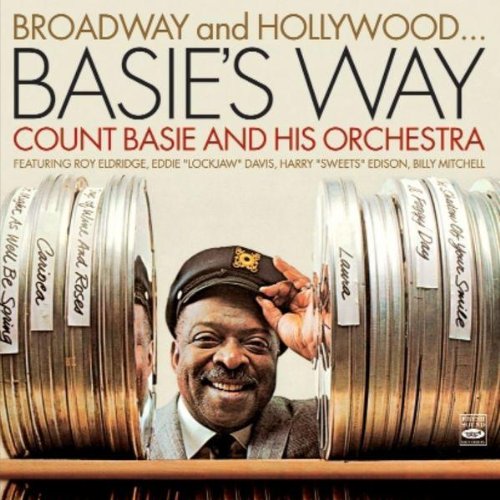
Count Basie gave us that "jumping" big band sound

Bugs Bunny once talked about "The Count of Basie" and "The Satchmo of Armstrong." Being referenced by Bugs Bunny meant of course you were quite in the mainstream of popular culture. And, this was surely no easy feat for the African-American musical icons, emerging in the mid-20th Century when our society was rife with barriers.
When I think of Count Basie, I remember his steady and easy-going temperament. No volatile personality, unlike many music giants. William James "Count" Basie was a king of the big bands. He truly persevered. The apparent end of the big band era caused him to merely adjust. The great pianist tinkled the keys in combos for a time. He triumphantly re-formed the big band in 1952.
The "jukebox era" helped Basie get jump-started. Bebop came along as a wave and he made limited use. He got back into the comfortable pattern of touring and recording.
I had the pleasure of hearing the Basie band in the 1970s. I need to attach one big asterisk here. Basie was not present on the night when I heard the band. He had medical issues. He recovered and lived to age 80, passing away in 1984. I heard the Basie band at St. Cloud State University (MN), at the auditorium which is today named for Kimberly Ritsche.
Basie without Basie? It was very unfortunate we couldn't see and hear this "household name" entertainer. Oh, talented he was, but his own playing was not the kind of attraction as presented by Maynard Ferguson and Buddy Rich. To be blunt, Basie was in fact replaceable. People were pretty easy-going in accepting Basie's absence, as I recall. Surely a ticket-buyer could squawk some. Maybe some did. But it wasn't what you'd call an "issue." I remember the concert being promoted as "Count Basie swings and Joe Williams sings."
Well, the guy who was "swinging" at the keyboard was Nat Pierce. Musically I think he filled "the Count's" shoes fully adequately. I remember the audience enjoying greatly. 
 
Interviewing keyboardist Pierce
I had a chance to visit with Mr. Pierce, a most agreeable fellow, before the concert. I had "press" status on behalf of the campus newspaper, the "Chronicle." He told me he first filled in for an ill "Count" in 1950. I suppose I should mention he was a white man. Unfortunately I use the past tense: I learn that Mr. Pierce left us for that ballroom in the sky in 1992. He died from an abdominal infection, the same affliction that caused Maynard Ferguson to depart for that grand ballroom.
Basie's band was known for being African-American in composition. Ah, but there was no hard and fast rule about this. Basie's allegiance was to music and not skin color. He came up during a time when there was a much greater sense in society that some divisions had to be acknowledged. Basie and Duke Ellington led bands that were African-American in image.
Nat Pierce was a wonderful musician who did a lot of jazz band arranging. He was closely associated with Woody Herman. He was noted for his ability to play piano in Basie style. "Jumping" is a word that comes to mind in terms of that band's style. Basie loved the blues. The band made its mark with the use of two "split" tenor saxes. Basie liked to emphasize the rhythm section. He brought the "riffing" mode to the big band format, with style and appeal.
Musicians of note refined their abilities with the band, this roster including Lester Young (sax), Freddie Green (guitar), Buck Clayton (trumpet) and Harry "Sweets" Edison (trumpet). The great Lin Biviano played trumpet with Basie on the night when I heard them at St. Cloud. Biviano would later come to our University of Minnesota-Morris as clinician for the then-young Jazz Festival.
Again I probably shouldn't mention this but Biviano is white. Let's emphasize that Count Basie had quite the open door to all great musicians regardless of such irrelevant considerations. He got started in a time when separation, whether real or "understood," was a reality. His preference I'm sure was to just rub shoulders with outstanding musicians. If only such generosity and open-mindedness had been exhibited by "the other side of the aisle."
I'm 59 years old so I remember when race was still an identifying badge of sorts. This sense hasn't been totally eradicated I'm sure. Today we have a rainbow of ethnic backgrounds amongst us, that ought to make us just shrug about such matters.
Pierce told me in my interview that Basie's piano playing had a "delicate" quality. That's a compliment, but this word would hardly be apropos for Maynard Ferguson or Buddy Rich. Yes, Basie was much more the complementary player.
Pierce told me the band rejected pressure to conform with all the new musical trends. They were quite fine with the standards they set in the '50s and '60s, he said. Let's make it clear: There would be no "disco" coming from this band!
The '70s pulled musicians in directions that never could have been imagined in the '40s. So-called "jazz-rock fusion" came at us. I say "so-called" because it never seemed to be a comfortable or natural hybrid. It seemed a band would go one way or the other. It would have a rock sound but incorporate a few improvised solos. The great Maynard Ferguson certainly embraced the hybrid model. Bill Chase, an alum of the Woody Herman band, took it further, so much so his band really could be described as just rock.
The older bandleaders incorporated the new stuff rather grudgingly, it seemed to me. When they had a choice, these guys went back to their roots. This we saw with the end of the disco era and the onset of the 1980s. Young people became more accommodating with their tastes. They were getting older! The boys who demanded the testosterone-infused "rock" sound with its intensity were mellowing, thank goodness.
Whereas "jazz" may have been considered "square" once, it was no longer so pigeon-holed. Ferguson comfortably went back to his roots, albeit less "famous" then he was for a time in the 1970s. 
 
Making money vs. making art
I asked Mr. Pierce about the conflicting pulls of art vs. commercial appeal. "One hand washes the other," he told me. "If we don't succeed commercially, we don't eat, and if we don't achieve real artistry, we don't get a chance to do anything commercially. A band like this (Basie's) - people come to see this band for our music, not something else. We could go to Nashville and get some wah-wah pedals and do the whole thing up, but then it wouldn't be Count Basie anymore."
I recall five big bands touring in the 1970s and generating real excitement among my generation. Basie was in there. We loved Maynard, Buddy, Woody and Stan Kenton.
We played in high school "stage bands." The education system was a little averse to the term "jazz" then. Perhaps jazz suggested an underworld of sorts, consistent with how mere "blue jeans" - mere trousers, for crying out loud - somehow had a rebellious air that scared the education establishment. What "uptight" times. Come to think of it, blue jeans feel quite tight to wear. There's no connotations from so-called blue jeans anymore. Jeans and denim jackets seem rather yesterday.
Today schools proudly present "jazz bands" and "jazz programs," having tossed aside the "stage band" term. Any musical group plays on a stage.
I asked Pierce if the Basie band felt direct competitive pressure vs. those four other bands of the '70s I cited. "No," he said. "There's no other band of this type, this is it." He described the Basie band as more "mature" than some of the others, with members of longstanding membership - ten or 20 years. He talked about Don Ellis with "those freaky time signatures - 11/4, 13/12." Big band aficionados will smile with the mention of Ellis. He too has left us for that great ballroom in the sky, even though dancers would surely be stymied by his trademark unconventional time signatures.
"Some of it is interesting but no one can really feel that music," Pierce said. 
I asked Pierce if the explosion of rock 'n' roll in the '50s was any sort of plague in his mind. Surely rock 'n' roll pushed aside the 'big band" in our consciousness. Pierce spoke like a true professional. He said that while the likes of Elvis Presley couldn't fit in his musical environment, he would hardly begrudge Elvis' success. "I'm happy for his success," Pierce chirped. 
Professionals know how hard it is to make it by the bottom line. A musician should allow for generous respect for any artist who "makes it." Meanwhile they can all keep "doing their own thing" as Basie surely did.
"My own personal likes and dislikes are mine," Pierce said. "I don't have to go along with the tide." He did say "the tide" was a real temptation for others in his field. He said there was a trend toward mimicry. Surprise! Really, not so much. Success begets mimicry, and Pierce cited the band "Blood, Sweat and Tears" as a template-setter, as they seemed to spawn about five other like groups. 
 
BS&T had a legacy
Bill Chase certainly developed a style that had similarities to BS&T. It would be unfair to say Chase was engaged in pure mimicry. Chase was a well-schooled and experienced musician having cut his teeth in an environment that Pierce would consider ideal. Perhaps Chase music ended up like BS&T for no other reason than the sound of the male vocalist! Actually it was Kenny Rogers who seemed to create this template for gravelly-voiced, restless-sounding male singers, reflecting the restlessness, I guess, of the 1960s.
Wasn't it Rogers who gave us "Just Stopped in to See What My Condition was in?" Bill Chase had Terry Richards and G.G. Shinn sing. Chase had the big hit "Get It On," remember? With the cascading trumpets?
The group "Chicago" seemed an outgrowth of what BS&T started. Pierce talked about the "bandwagon" effect of a new musical fashion, then said the Basie band didn't need to pay any special attention. In the '70s you occasionally heard the question of whether "the big bands could come back." For the record, Pierce said "no," there would be no true resurrection.
And today, I would assert there's a full musical plate for everyone. You like big bands? There's lots of enriching stuff out there. With the death of the "monoculture," we don't have to be so concerned with who's excelling on those commercial "charts." The charts can be considered a mere curiosity. The digital revolution with all its offshoots has enabled us to consume our own "thing" musically. Maybe we take it for granted.
In the '70s we had to worry about cultural trends burying us, disco being at the top of the list (and, "Smokey and the Bandit" movies high up there too). Ah, the '70s! We loved it and hated it.
The audience loved the Basie band's performance at Kimberly Ritsche Auditorium. Basie without Basie himself! It really didn't matter but it would have been wonderful seeing the iconic leader. He probably would have worn his trademark yachting cap - so in line with his breezy, easy-going nature. He is remembered as being considerate of musicians and their opinions. He was modest, relaxed, fun-loving, dryly witty and so enthusiastic about music. 
 
Ah, the "Blazing Saddles" appearance!
Was there any better scene in the 1974 movie "Blazing Saddles" than where Basie's band appears in the desert? Along comes hero character "Sheriff Bart" (Cleavon Little) on his horse. Cleavon and the Count exchange a high-five. "Blazing Saddles" was the epitome of entertainment appealing to my boomer generation when young. Basie got a terrific career push being in this movie. 
"Blazing Saddles" satirized the racism obscured by the myth-making Hollywood accounts of the American west. The townsfolk demand that the governor appoint a new sheriff. The rest is history. Cleavon Little plays the new African-American sheriff. Remember that guy on the rooftop trying to shout about how the new sheriff was a (insert objectionable racist term)? Remember how a ringing bell obscured that last word? A guy down below misheard and thought the guy said "the sheriff is near." We all have our favorite "Blazing Saddles" scenes. I consider "Blazing Saddles" to be a rather overrated Mel Brooks movie, while "Silent Movie" was underrated.
Way back in 1942, Basie did a spot in the movie "Reveille with Beverly," the patriotic musical film starring Ann Miller. In 1960 we saw Basie appear in the Jerry Lewis film "Cinderfella."
Count Basie had so many endearing qualities. His sheer longevity was impressive. On the piano keyboard he had an understated yet captivating style. He composed the band's signature tune "One O'clock Jump."
It was a radio announcer who, in an impromptu moment, called him "Count," a name that stuck. Honorary but most deserved royalty to be sure, so we can understand ol' Bugs Bunny calling him "The Count of Basie." I haven't been able to learn if there was a particular reason why the radio guy coined the name. Was it that royal angle - an aura of royal class?
 
Addendum: Have you ever felt humbled or powerless when at a bank or in the presence of financial services professionals? Bernie Woods told a story about Count Basie that would appeal to you. This was in his book "When the Music Stopped." Woods was enraptured by the big band era and bemoaned its end. He shared anecdotes about his experiences with many of the big band leaders. He was a music critic for Variety. "The music stopped," in his view, with the downturn for the big bands. Here's his little story about Count Basie:
 
I banked at the Chase Manhattan Radio City branch. On occasion when I went in to put or take I'd see Bill standing near the door. Each time he had a check issued by the Willard Alexander Agency, which handled his bookings. Whether the agency anticipated he would deposit the check elsewhere or had other ways of turning it into cash, I have no idea. Chase officials (squares) didn't know him and would not cash the check. "Base" would just stand near the door and wait for anyone he knew. On a number of occasions I OK'd it and he got his money. I cannot fathom the whole thing to this day. It would have been simple for Alexander to "okay for cash," since the agency must have banked at the same branch. Its offices were across the street.
 
I remember writing a letter in the "old days" (before electronic communications) to the Willard Alexander Agency, thanking them for getting Maynard Ferguson periodically booked in St. Paul. I got a nice little answer, thanking me and saying in effect, "keep the faith." How quaint. A pen-on-paper letter with stamp affixed, going out to a New York City office and prompting a like reply. Today everyone is so snowed under with e-mails, it's nigh impossible to get attention outside your personal circle of friends.
 
A further note re. Bernie Woods: the critic would not be so indifferent about the wave of new popular music of the '50s, not like Nat Pierce who was inclined to simply respect fellow professionals. It's hard work making money in music or with any art form. Woods saw the new stuff as intrusive and rather an abomination, but let me just quote from the final chapter of his book:
 
90 percent of rock music is a crime against the word "music," and 90 percent of the "performers" who feature it commit crimes against the word "talent." Performers and purveyors of this blight on music and song call it entertainment. What sort of entertainment can it be when a member of Blind Melon, a group with a hit record, injects into its performance the "art" of stripping to the skin onstage and urinating, as happened during a recent concert in Vancouver, British Columbia?
And how about that great "performing artist" Madonna?
Or, the world-renowned Michael Jackson, part of whose onstage entertainment is repeatedly stroking his crotch as he works.( His sister, La Toya, does the same thing.)
At this point the modern music world might invent a new word to describe what it puts before the public in the guise of "entertainment." It certainly isn't that. Whatever it is, it is at least partially responsible for the habits and violence of the younger generation.
Author Robert Weaver once wrote that nostalgia isn't when you want to go back. Rather it's when you want to go back and know you can't.
Time, oh time, turn backward in your flight!
 
In the '70s we didn't really have to "go back." We had Count Basie!
Count Basie, RIP. Nat Pierce, RIP. In my dreams I'm a "sideman" with those guys. Buddy Rich is the drummer up there in heaven. Buddy would sometimes say in front of his band "give me an 'A'." And the band was ready with the instant rejoinder "Ayyyye. . ." Jazz band artists have a sense of humor that would be therapeutic for us all.
- Brian Williams - morris mn Minnesota - bwilly73@yahoo.com