History-making music group for UMM - morris mn

History-making music group for UMM - morris mn
The UMM men's chorus opened the Minnesota Day program at the 1962 Seattle World's Fair (Century 21 Exposition).

Monday, January 12, 2015

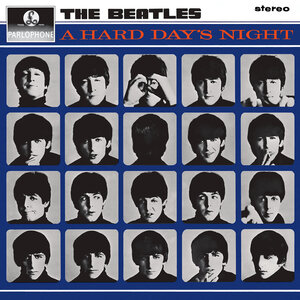
Freshness and energy in "A Hard Day's Night" (1964)

Someone once told Carl Lewis, the great Olympic athlete who at the time was peeved about some minor thing: "It doesn't get better than this." The point was to savor the moment. Savor being at the peak of whatever you're good at. Just savor the smell of fresh-cut grass around the track. Smile.
The Beatles in the mid-1960s reached the plateau they had dreamt of. All the hard work gave them fame and riches. Just watch the movie "A Hard Day's Night." This black and white gem captures the Beatles as the world first discovered and became mesmerized by them. They have boyish energy and enthusiasm. No trace of the psychedelic stuff yet. No harbingers of the counterculture, unless you consider the hair length a tad too long.
The older generation had a hard time accepting the hair length. Those oldsters of Lawrence Welk affiliation should have been relieved that the "moptops" were as restrained as they were. By 1970, even I was getting weary of some of the Beatles' excesses. I so wanted John Lennon to just look like his old self again. George Harrison had gotten creepy-looking, unnecessarily.
"A Hard Day's Night" is like a time capsule preserving the Fab 4 as we loved them the most. Lennon was 23 years old when he wrote the title song. Ringo Starr made a casual remark that gave Lennon the "hook" for the song. The film was actually quite far along before the title was coined. Lennon needed less than 24 hours to produce the song. Days later, the guys departed from their film work to record the song at Abbey Road. They needed only nine takes. I'm always happy to hear about a minimal number of takes to record a song.
The Beatles were great partly because they were never staid. They applied wrinkles that could surprise you. It was never out of pretentiousness. It expanded how the Beatles could reach you with their music, as with the French national anthem as a song's intro, or the entry of a piccolo trumpet. And on the song "It's Been a Hard Day's Night" we have that incredible chord strummed by George Harrison. It bookends the song. Who else could have thought of this? Its novelty is such, a precise description of the chord has proven to be elusive. Is it a variant of F major or G major 7th? Don't ask me.
Harrison's chord reverberates for a couple seconds before John begins his vocal. The chord returns at the end, practically casting a spell.
The "Hard Day's Night" album was the Beatles' first consisting of all original compositions. In fact, it ended up as the only album consisting entirely of Lennon-McCartney compositions. Lennon was still the dominant creative force with the group. McCartney would blossom on "Revolver."
McCartney's potential was more than evident on the album "A Hard Day's Night." He came through with "And I Love Her," "Can't Buy Me Love" and 'Things We Said Today." I'm struck by "Can't Buy Me Love" because it starts out with the chorus!
One can argue that it's pointless "keeping score" with how Lennon and McCartney did versus each other. "Lennon-McCartney" was an attribution affixed for a reason. Monitoring this "rivalry" reduces the fun of listening, I'd suggest.
 
Greater depth with words
The Beatles' lyrics took a step forward with this album. Finally they had stepped beyond the lazy rhymes and sophomoric narratives. "Love Me Do" might actually be presented as a textbook example of lazy or amateurish lyric writing. Of course, the pros always know what they're doing. Some songs take on novelty value precisely because they seem amateurish. The pros can break the rules - no doubt - but you can be sure they know what the rules are. Also, any musician with a track record is going to be taken seriously. Why? Because they know how to make money!
Lennon wrote "I'm Happy Just to Dance With You" for George as George's showcase on the album. I have always wondered to what extent John guided or gave George "boosts" through the years, more than has been documented in known histories. John was so prolific, he could have cast off an occasional song idea.
"Can't Buy Me Love" was the theme song for the Beatles cartoon series which I remember well. We see the animated guys doing the fire escape thing, just like in the movie. Such youthful bodies. Oh, to see the four of them together "on location" again, just walking up/down those steps! The cartoon series was charming with its literal interpretation of so many of the lyrics (e.g. "the face she keeps in the jar by the door").
It was producer George Martin who wanted "Can't Buy Me Love" to start with the chorus. It would never cross my mind to start a song with the chorus. The Beatles had synergy with all the creative influences. It was lightning in a bottle. It could have been snuffed out by "Beatlemania." It is a supreme testament to the Beatles' resilience that their creativity flowered, albeit minus live performance, even after the eruption of "Beatlemania."
The film "A Hard Day's Night" premiered in London in July of 1964. This was the summer when the University of Minnesota-Morris men's chorus went to New York City for the World's Fair. I was along for that trip. I remember seeing evidence of Beatlemania on Manhattan, including a street vendor who wore a Beatle wig not befitting him, but he was charming.
The movie showed what Beatlemania felt like from the inside. The wittiness of the four guys was a defining, endearing element. It's just as charming to watch today, but I'm pained watching John, not only realizing he'd be assassinated, but regretting he let so much of his original personality slip away. Just think if John had lived and eventually gone back to his 1964 appearance.
 
The Beatles come to Minnesota
It was August 21 of 1965 when Beatlemania came to our fair state of Minnesota. Bloomington's Metropolitan Stadium still seemed new. The baseball Twins were in the midst of their pennant-winning season of that era. We'd host the All-Star Game in '65. Met Stadium was nothing short of a jewel. Also in that apex year for the facility, we got the Fab 4!
Oh, to be able to step into a time machine and go back, to soak it all in. Unbelievably, only 30,000 fans were present on that Saturday night. This was the Beatles' second American tour. More than 5000 tickets were sold that evening to a casual crowd. Warm-up acts included King Curtis, Hannibal and the Headhunters and Brenda Holloway.
A stage for the Beatles was built over second base (where Jerry Kindall of the Twins played, an all-field, no-hit ballplayer, remember?). The Fab 4 came forward and launched into their 35-minute set. Unfortunately it was a typical concert of that time with fans screaming to the point of obscuring the music. "Obscuring" is a generous term.
Let's acknowledge Ray Colihan for booking the event. Nicknamed "Reggie," he was associated with Excelsior Amusement Park, and in 1964 he counted 286 present for a Rolling Stones performance. Colihan was downcast over the turnout for the Beatles. He would say "I had the hottest act in the business, and it was like people got more excited if the barn blew over in a storm."
In 1978, the year I graduated from college, the Eagles drew 65,000 to the Met. The difference? Colihan was asked this, and said kids had become "more on their own, not so conservative, not so dependent on their parents."
The Beatles were big in 1964 but the demographics suggested they couldn't make a ton of money just yet. Years later the floodgates would open for money, as the Lawrence Welk generation would give way to the hip generation. The kids of 1964 would finally be endowed with money.
Man, if all four Beatles were alive today and could tour!
I have "A Hard Day's Night" on CD. It is a distinct pleasure to listen to this and other offerings by the Fab 4 up through the mid-1960s. It should be enjoyed purely as music - forget all the other distractions. Close your eyes and listen to the Harrison chord. It transfixes. Digest all that freshness and energy, from before the counterculture began imposing too much of a distraction.
Come back to us, John.
- Brian Williams - morris mn minnesota - bwilly73@yahoo.com

Tuesday, January 6, 2015

MACA girls get win No. 4, here vs. Milbank SD

The MACA girls began the 2015 portion of their slate with an overwhelming win. Let's have a toast to the Tigers after their 65-35 win over their foe from "across the border." And then let's toast the new year.
This was a home win over Milbank SD. The Willmar newspaper continues to refer to our teams as "Morris/Chokio Alberta" instead of "Morris Area Chokio Alberta." Isn't the latter the official name? Don't I see "MACA" sewn onto warm-up shirts and the like? Is the Willmar paper taking it on itself to second-guess how we refer to ourselves?
Not that some second-guessing isn't called for. I have written on more than one occasion that we should simply go by "Morris" and "Morris High School" just like in the old days. We could begin our school song by chanting "MHS" again, just the way composer Bob Schaefer intended. Why refer to C-A when we don't refer to Cyrus or Donnelly or any other communities? Maybe a high school should just be named for where it's located. It's understood that a school our size attracts kids from a wider radius. I predict someday it will happen.
 
MACA 65, Milbank 35
The Tigers used balanced scoring in this non-conference win. Tracy Meichsner scored 12 points followed by Correy Hickman and Kayla Pring each with ten. Then came Lauren Reimers with nine, followed by: Becca Holland (7), Elizabeth Tiernan (6), Moira McNally (5), Lacee Maanum (2), Sam Henrichs (2) and Piper Gibson (2).
Holland made the only MACA three-pointer. Meichsner vacuumed the boards for 13 rebounds. Hickman dished out six assists while Gibson had five. Hickman stole the ball five times.
This was the Tigers' victory No. 4 of the season against five losses. Coach Dale Henrich will be coaxing his team to get on the right side of .500. That goal is within reach if the squad can perform like it did in the second half Monday. Coach Henrich had to smile as he watched his team outscore the South Dakotans 42-18 in the second half. At halftime the Tigers were up by just six points, 23-17. Maybe it was a display of superior conditioning.
Milbank goes by the "Bulldogs" nickname. The Bulldogs sputtered in their shooting on Monday. They had a stat of just 24 percent. The winning Tigers made 27 of 64 shot tries from the field. In freethrows our numbers were a solid ten of 15.
Caryssa Mielietz was the only double figures scorer for the visitor, with her ten points. Kaley Withers put in eight points. Then came Brittany Ackerman and McKenzie Mertens each with five points. Gretchen Beirsbach and Mackayla Schuelke each put in two, and Karlee Mertens had one. These totals add up to 33 points, not 35, but this is how the Willmar newspaper reported it. This is a common discrepancy in the Willmar newspaper.
Milbank made no 3-point shots. Mikayla Wiendland collected seven rebounds and she also had two assists. Withers had two steals.
Will victory No. 5 be quickly forthcoming for the Tigers? We're into the new calendar year now. We'll find out as soon as tonight (Tuesday).
- Brian Williams - morris mn minnesota - bwilly73@yahoo.com
Monday, December 29, 2014

Shall we bother "meditating" on Beatles' White Album?

Remember Transcendental Meditation or "TM?" It got the young boomers very excited in the 1970s. Was it religion? I remember a Congressional race in Central Minnesota where the Republican got agitated about this. He accused his opponent, the incumbent Rick Nolan, of using government resources - maybe just stationery - to promote TM. I can't remember the Republican's name. The controversy did pass.
Today Nolan is in a whole new iteration as a politician. His career has been marked by a huge gap. I find him refreshing today. In the '70s he was part of that proverbial wave of liberals who could be paternalistic and irritating.
Today the liberals are much more the underdog. They needn't fool with things like Transcendental Meditation. Oh, it was just a fad, wasn't it? It's no revelation that simply relaxing your mind can be good for concentration.
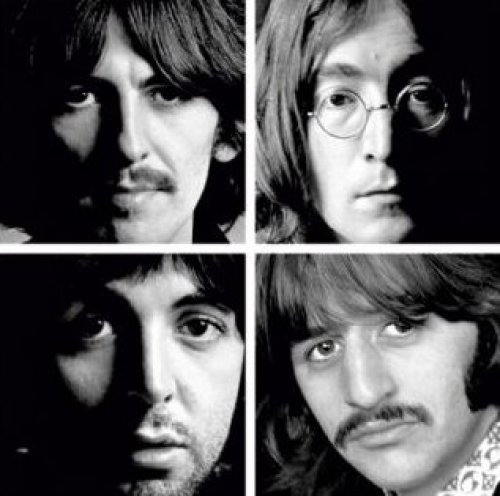
TM got its big push to the forefront thanks to the Beatles. Anything the Beatles touched or endorsed would take on a magical popular quality. Did it help their music? We have the "White Album" to judge on this criteria. The fabled White Album was a two-record set and actually had the formal title "The Beatles." I found I have these records on cassette tape. On the cassette cover we see pictures of the four guys. Boomer-age people don't need reminding of the White Album's popularity. The Beatles were riding a wave that couldn't be stopped. "Sergeant Pepper" came out a year earlier. Rock music was finding its legs on a true artistic basis. It wasn't just rhythm and intensity anymore.
When I say "double album" I'm talking about those big black vinyl records, of course. Increasingly they're museum pieces, as are cassettes. The physical product was everything back then. It cost an appreciable amount of money to buy your music and equipment. Records would wear out. They'd develop a "scratchy" sound. Record player "needles" would succumb to wear. Today I have to pinch myself to see if I'm dreaming. I can sit down at a public library computer station, put on headphones, type the name of any Beatles song into the YouTube search box and presto! It's all free. The sound will be just as sharp centuries from now.
Young people as they grow up will take these "luxuries" for granted, as well they should. We must never forget the evolutionary process behind all this technology. Boomers when young would collect the records and spin them on a turntable. A really good system cost a lot of money. We heard about "woofers" and "tweeters." Today you just listen and enjoy.
 
No "A" grade for White Album
Did I enjoy the White Album? On the whole, no. There are undoubtedly gems in there. Many of the non-hits come across as silly novelties. It's as if the Fab 4 were just toying with us. I consider a lot of it slop. Because the lyrics could be cute, a lot of boomers liked those songs anyway. Gone was the feeling of class that exuded from the Beatles' previous efforts.
Think of the album "Help!" It's obvious the guys took each of those songs totally seriously. The guys started fooling around on the White Album. We might attribute this to the need of all professional musicians to come out with a "new" sound, something unpredictable. Had the Beatles gone to the well too often? This is my interpretation. Their breakup was underway when the White Album was recorded. It was so silly for acrimony to develop. The Beatles knew they'd have no financial worries for the rest of their lives. In fact, it would be even better than that.
If all four had lived, just think of what an attraction they'd be, beginning in the go-go '90s, at which time their old fans actually had money! Can you imagine them being billed at casinos? What a gravy train that would be. They would have riches beyond what they ever could have imagined. It's like the baseball players who never could have imagined the riches coming from memorabilia and card shows. There was no point bickering about your contact in those old days - just get famous and be on a World Series team, and someday all your bills will be paid. Denny McLain didn't have to turn to crime. The Minnesota Twins under penny-pinching Calvin Griffith didn't have to sweat it, they should have just gone out and won that 1967 American League pennant. It was a demoralized team. Just win, baby. Never mind Calvin.
The Beatles knew they were a godsend to a generation. If only they had tried to set more of an example. If only they had just stayed focused on producing great music. It's the biggest "might have been" for boomers to consider, or maybe the second biggest, as the first would be: What if we had never gotten into Viet Nam?
Most of the Beatles songs for the White Album were written during a Transcendental Meditation course with Maharishi Mahesh Yogi in the spring of 1968. The year 1968 brought to a head all the tumultuous things we associate with the 1960s. Maybe that was part of the problem with the White Album. It seemed at times the world was coming apart at the seams.
The Beatles did the study "on location" in India. The band wanted a spiritual respite. They did not stay for the full TM course. The Maharishi reportedly showed his human flaws. Enough on that. The Beatles wrote about 40 songs in India. The White Album was recorded between May and October in 1968. Some songs like George Harrison's "Not Guilty" were saved for later releases, even post-breakup. If I remember that Harrison song correctly, it was lousy. So was "Here Comes the Moon," Harrison's encore to "Here comes the Sun." Harrison could be flat as a pancake as a solo artist, sadly so, with some rare exceptions that were brilliant, totally up to the Beatles' earlier standards. It's a mystery.
 
Unraveling began with White Album
The four Beatles were not a harmonious group for the White Album. They worked increasingly as individuals. Engineer Geoff Emerick got fed up and walked out. Ringo Starr actually quit for a while. "Glass Onion" was a sad song because it mocked some of the Beatles' earlier work. "Back in the USSR" was actually a parody song, of Chuck Berry's "Back in the USA." Can you imagine parody being done on the "Help!" album? Parody reflects cynicism and a feeling of resignation. The White Album was indeed that kind of endeavor, but the guys were guaranteed a high level of commercial success.
Fans took much of the stuff way too seriously. Many of these songs wouldn't see the light of day if they were presented as "demos" today. Yet music historians take the whole album seriously, even if not totally fawning over it. "Rocky Raccoon" and "The Continuing Story of Bungalow Bill" are ridiculous. One of the White Album songs was inspired by the sight of two monkeys copulating on the street. Paul McCartney wondered "why can't humans do the same?" Well. . .
In terms of class, the Beatles had devolved to a depressing degree since "A Hard Day's Night." Look at Lennon's appearance from 1964 to 1968. He should have kept that healthy weight on his body, but he got ticked off when a critic described him as "the fat Beatle." I have argued before that this incident may have affected the Beatles more than we realize. Today we have no problem accepting people who carry what might be seen as excessive weight. It was not that way in the 1960s. "Fat" was stigmatizing. Remember, it was the days before unlimited soft drink refills at fast food restaurants, and all those snack temptations (e.g. frosted rice krispie bars) at convenience stores.
It's too bad "Hey Jude" wasn't on the White Album. This total Beatles classic was recorded in July of 1968 but came out as a single three months before the White Album's release. It only ended up on a compilation album.
An alternate history: The White Album should have been titled "A Doll's House." That was the idea. This was the working title during the project. However, another group had used that title earlier that year. It seems the Beatles groped for some album titles.
We wax nostalgic about the days of vinyl record "albums," those cumbersome, perishable and expensive things. We're so much better off today - 100 per cent better off.
I love my collection of several Beatles CDs from the mid-1960s. However, I would only listen to the White Album if I were forced to do some research, not for enjoyment.
George Martin was right: It should have been a single album.
- Brian Williams - morris mn Minnesota - bwilly73@yahoo.com

Friday, December 19, 2014

"Paradigm Lost?" Whatever, "Revolver" was Beatles' gem

Many of my age lament how the Beatles ended "too soon." I'm not sure that's the true nature of the lament. I think the sadness was due more to the ill feeling among group members at the end.
Truth be told, the Fab 4 put out a tremendous quantity of work. They kept doing their thing after the breakup. You can listen to a lot of the stuff they did as solo artists and imagine that nothing really changed. Yes, "Imagine."
The Beatles' amazing run ended with the "Let It Be" album and Phil Spector's orchestral adornments, right? Or did it end with "Abbey Road?" The train wreck of the Beatles' breakup leaves us confused over what their last album was.
Beatles historians can fall over themselves fawning over the various albums. The CW (conventional wisdom) has it that "Rubber Soul" was the group's first truly artistic album, that "Revolver" took that art to a higher level, and that "Sergeant Pepper" was the true masterpiece. Historians view "Magical Mystery Tour" as flawed, and consider "Abbey Road" the final triumph. "Let It Be" just sort of floats out there as an uneven sort of denouement.
The demands of the critics probably wore on the four guys. How could the Fab 4 just keep turning out material that would have their admirers have one orgasm after another? Who needs that kind of pressure? My assertion would be that all of the Beatles' work had merit. It just went through various iterations. The four guys and their handlers did what all musical pros do: try to turn out albums that contrast with each other and offer fresh styles and ideas. Fans don't fully understand this.
Fans figure that if they really go head over heels over an album, the next album should be fundamentally the same - just "more of same." They think they want that, but they really don't. The movie "Jersey Boys" was excellent in how it peeled away the facade of the music industry and showed how creative people respond to the public's demands.
Pro music people can be very crude and abrupt with each other. I remember that producer character in "Eddie and the Cruisers" who derided some new suggestions by saying "a bunch of jerk-offs making weird sounds." There you have a taste of the music business.
In "Jersey Boys" you see the heroic characters arguing how "Can't Take My Eyes Off You" will represent that "next new thing" in pop music sounds. The highlight scene in the movie, I feel, is where we see Frankie Valli triumphantly performing this song with his backing that had horns, just like Sinatra would.
 
Climbing steps in music
What will the next "new" sound be - a sound that captivates? It's like trying to forecast the stock market - much harder than you might think.
When the Beatles departed from their "merseybeat" sound, it was genuinely risky for them. Would the public accept the group ascending to an artsy level, rather than just appealing to fawning teenage girls? We saw the latter formula work wonderfully in "A Hard Day's Night." Why not push it a littler further? Well, the Beatles wanted to stand for something different. This they asserted in "Rubber Soul" which came out at Christmas time in 1965. Author Robert Rodriguez said this album "hinted at greater ambitions." This is typical fawning with cliche-ridden talk by the group's historians, as surely "Rubber Soul" was more than a mere "hint." It was more than a stepping stone or prelude. It was a destination. So, let's admire it as a stand-alone product.
Rodriguez went on to say "Rubber Soul" challenged the "existing rock paradigm." I didn't learn the word "paradigm" until I was in college. When first hearing it, I didn't connect it to the word spelled as "paradigm." I was relieved to finally make the connection. The late author Edwin Newman indicated I wasn't the only one going through this. Edwin had a tongue-in-cheek chapter name in one of this books: "Paradigm Lost" (a takeoff on "Paradise Lost" of course).
"Revolver" was the album that followed "Rubber Soul." Artistically I think it ranks even with "Sergeant Pepper." What "Revolver" lacks, in comparison, is thematic unity.
The Beatles got a break that spurred their creativity, leading up to "Revolver." They were supposed to put out their third movie. The Fab 4 couldn't come together on what would be a good script. The movie idea was shelved. Thus, much of the time that had been opened for this got vacated. They were one month into recording for "Revolver" when they performed live in Wembley, England. A crowd of 10,000 listened. The CW is that it was an uninspired concert. We read that rumors were rampant of the guys breaking up.
Truth be told, the Beatles hadn't really lost any of their passion. What happened, was that they were writing music that was designed more for the studio than for organic live performances. It was difficult and almost futile to perform some of this stuff live.
 
McCartney finds his legs with "Revolver"
Prior to "Revolver," the Beatles were clearly John Lennon's group - his was the dominant artistic influence. Paul McCartney made his fateful ascent with "Revolver." Paul was destined to have a lifelong presence as a significant creator and performer.
George Harrison had to do something drastic to assert his own artistic presence, and this was done with an affinity to the music and culture of India. I have written before that Harrison seemed rather a mystery. He is credited with writing some of the Beatles' best songs. As a solo performer his gems were lost in a sea of forgetful, redundant-sounding material, causing one critic to say he put out "treadmill albums."
I once speculated that John probably helped George along, to the extent of even feeding him material. It comes across as conspiratorial, of course. But I have read accounts that support my theory. In one case I read where John did some "coaching" of George. A song is really such a simple creation. A classic can be written down on one sheet of manuscript paper. A classic can often be written in just minutes. This aspect of pop music has long fascinated me.
"Revolver" is known for the studio "tricks" the Beatles used. This interests me not at all - I just want to appreciate the core songs.
"Revolver" has been described as "psychedelic." That's a buzzword from the tumultuous times of the '60s, more a word of fashion than of concrete meaning. How would we define it? Perhaps as "a bunch of jerk-offs making weird sounds."
 
Writing for the human voice
McCartney goes into falsetto voice for "Here, There and Everywhere." The availability of falsetto gives a songwriter flexibility for vocal range that is highly coveted. The generally accepted vocal range is one note over one octave. That's really pretty restricting.
When I first dabbled in songwriting I had a problem staying within the accepted vocal range. I had been a trumpet player. Trumpet players have a full two octaves within which to work. Vocalists have no such luxury. Some singers can stretch the usual vocal range, an example being Ronnie Milsap. The Star Spangled Banner is notorious for how it challenges with vocal range.
"Here, There and Everywhere" was inspired by a Beach Boys song. It's a romantic ballad "about living in the here and now," according to Kenneth Womack. That's a pretty general theme. McCartney himself might smirk at such over-analysis or pseudo-interpretation.
NPR's Tim Riley falls into the typical hyperbole or cliches that can befall admiring Beatles historians. He writes that "Here, There and Everywhere" is "the most perfect song that McCartney has ever written."
Uh, the "most perfect." There's an issue with that terminology to begin with. McCartney has put out a mountain of stimulating material. I consider "Nineteen Hundred and Eighty Five" to be a diamond in the rough, coming out during the "Wings" years. I have found a live version of "1985" on YouTube that I consider one of the great musical pleasures a person can find.
I consider "Here, There and Everywhere" a showcase of how vocal range can be pushed by falsetto. Oh, it is a wonderful song.
Speaking of vocal range, Ringo Starr had a limited one, and thus we have "Yellow Submarine," written for the drummer and appealing to the kid in us.
"Tomorrow Never Knows" gives us those studio gimmicks that I shrug at. It also invites the "psychedelic" description. I question whether songs like this were really drug-influenced. The over-analyzing critics are susceptible to this bit of what I feel is myth-making. And it can be harmful, to the extent that kids get the idea that drugs and/or alcohol can enhance their creativity. All successful commercial art is created by people who have their mental faculties fully applied and unimpeded, I would assert.
I don't like the title "Revolver" as it's a pun based in part on a kind of handgun. Think of how John Lennon eventually died. Lennon wanted the title "Four Sides of the Eternal Triangle." That's an interesting alternate history.
 
"Revolver" makes its mark, like the others
"Revolver" has won its share of accolades and hyperbole. Such words are extended to several of the Fab 4's albums. Let's knock off the comparisons and the over-analysis. Each album has its niche. It's not like some "evolution progression" where we see the cave man slowly becoming the modern man. "Rubber Soul" was genius as was "Abbey Road." Let's appreciate the whole succession. There was enough to satisfy all of us.
I don't blame the Fab 4 for deciding they had simply done enough. The acrimony was sad. But remember, the Fab 4 had their run in the 1960s, when many things in our world had sad endings. Think of the Viet Nam War.
- Brian Williams - morris mn minnesota - bwilly73@yahoo.com

Saturday, December 13, 2014

Strangers at home? Not really, but it's a big GBB win

Tigers 61, Minnewaska 35
A happy mood prevailed at the MAHS gym on Friday (12/12). Just as if Santa Claus was there. Ho ho ho! The Tigers of MACA breezed past the Lakers of Minnewaska Area. This was the only home game on the MACA slate for December.
Fans have been a little starved for home action. Prior to Friday's contest, the Tigers played three games as road warriors. And now, we're looking at six contests on the road before what we hope will be a triumphant return to the home gym on January 5. Milbank SD will be the foe on 1/5 for that "happy new year" game.
Coach Dale Henrich's Tigers can feel happy approaching the rest of the pre-Christmas slate. Will the win over 'Waska set the tone? An aggressive crew of Tigers stole the ball 19 times. They carved out a huge rebounding advantage. Truly the squad was energized.
The final horn sounded with the orange and black up 61-35. We got a 33-20 advantage by halftime. We outscored the Lakers 28-15 in the second half. We made 24 of 59 field goal attempts and ten of 14 in freethrows.
Three Tigers each made one 3-point shot: Sam Henrichs, Lauren Reimers and Becca Holland. Reimers topped the scoring list with 13 points and was joined in double figures by Holland with ten. Correy Hickman put in eight points. Then we have Henrichs with seven, Kayla Pring with six, Lacee Maanum with five, Moira McNally with four, Ashley Solvie and Meichsner each with three, and Piper Gibson and Liz Tiernan each with one.
Meichsner topped that strong rebounding department, snaring ten boards. Maanum snared seven. Hickman was the top assist producer with six, while Holland had three. Four Tigers each had three assists: Hickman, Holland, Reimers and Gibson.
Three of the Lakers each made one 3-pointer: Bayley Pooler, Ashley Blom and Taylor Amundson. It was Amundson on top of the 'Waska scoring list with ten points. Pooler scored eight followed by Ariel Ostrander (7), Makenzie Zemke (4), Ashley Blom (3) and Abby VerSteeg (3). Ostrander and VerSteeg led in rebounds, each with four. Ashlyn Guggisberg had three assists and Pooler had two steals.
The MACA record now: 2-2. BTW the Willmar paper has a tendency to refer to our athletic programs as "Morris/Chokio-Alberta" but isn't it really "Morris Area Chokio Alberta" or "MACA?"
 
Boys basketball: Montevideo 60, Tigers 39
MACA boys basketball was dealt a setback Thursday (12/11). The orange and black took the home court to vie with the Thunder Hawks of Montevideo. Monte picked up its third win against one loss, by a score of 60-39 over our Tigers.
Monte's fortunes took off in the second half. MACA kept things close up until the halfway mark, at which time the score stood 21-16. Fans at the break could embrace hope for a second half surge. There was a second half surge but it was by Montevideo. The T-Hawks came on strong to outscore the orange and black 39-23. MACA slid under .500 with this setback, to 2-3.
The shooting stats show our team making 13 of 51 in total field goals and 11 of 17 from the freethrow line. Eric Staebler made two 3-point shots but was the only Tiger succeeding from that distance. He was also the only Tiger scoring in double figures with his 14 points.
Jordan Arbach and Robert Rohloff each put in six points. Then we have Jacob Zosel with four points followed by Noah Grove, Joey Dufault and Andrew Goulet each with two. Sean Amundson, Riley Biesterfeld and Austin Hills each put in one point.
It is significant that Monte held Grove to just those two points.
Staebler led the Tigers in rebounds with ten, Zosel was tops in assists with three, and Goulet was the steals leader with three. (BTW the Willmar newspaper didn't report first names of players - here's where the Maxpreps site helps out.)
Monte's shooting stats were 23 of 50 from the field and eight of 15 in freethrows. Troy Diggins paced the Monte scoring with his 15 points. Troy's contributions were far-reaching as he was the top T-Hawk in rebounds, assists and steals, with a stat of seven in each of those categories.
 
Girls hockey: LPGE/WDC 6, MBA 2
MBA scored one goal each in the second and third periods but it wasn't enough. The Storm are paying some dues this season. On Thursday the story was a 6-2 score with MBA on the short end against the LPGE/WDC skaters.
Abbey Hoffman was the MBA goalie and had 24 saves. Her goalie foe was Angela Hanson who had 17 saves.
Long Prairie struck with two goals in the first period, both by Ashlee Helseth. McKayla Woods assisted on the first goal - Kenzie Christianson and Abigail Ecker supplied assists on the second.
The score became 4-0 before the Storm could get going on the scoreboard. Ecker scored twice for Long Prairie, unassisted the first time, and the second time with an assist from Helseth.
The Storm scored their first goal at 1:29 of the second period. Kelsey Rajewsky scored with an assist from Hallie Watzke. Long Prairie wrapped up the second period scoring with a goal by Morgan Zeise, unassisted at :47.
Nicole Berens scored for MBA in period #3. Megan Kirkeide assisted. Then, Long Prairie finished the night's scoring as Christianson scored with assists by Woods and Helseth.
 
Wrestling: Tigers 54, Minnewaska 24
MAHACA showed a winning flourish in its face-off vs. 'Waska as part of the "United Triangular." The dual between us and 'Waska is one reason I sometimes feel skepticism about the sport of wrestling. Too many forfeits. With this many forfeits, maybe a team should just be forced to forfeit the whole thing, and skip the competition.
Anyway, the record shows that "MAHACA" - I hate that name - had a 54-24 win, so let's take it, I guess.
Dalton Rose and Gideon Joos won by forfeit at 106 and 113 pounds, respectively. At 120 pounds, Matt Munsterman lost by technical fall vs. Joseph Weaver, 15-0. Jared Rohloff was the forfeit winner at 126 pounds. At 132 pounds, Brady Cardwell lost by fall to Dylan Jergenson in 3:52.
Trenton Nelson came on strong to pin Garrett Kelling in 1:03. At 145 pounds, Travis Ostby was edged in a 3-2 decision by Marcelo Arredondo. Phillip Messner at 152 pounds was on the short end of a 15-2 major decision vs. Weston Lardy. Trent Ostby was a forfeit winner at 160 pounds.
Steven Koehl lost by fall in 1:44 to Caleb Blaisdell. Matt McNeill and Gage Wevley were forfeit winners at 182 and 195 pounds, respectively. Jacob Sperr of the Tigers pinned Tyler Vanluik in 3:07. Alec Gausman was the forfeit winner at 285 pounds.
Wrestling has some issues. Forfeits are one. Unreasonable pressure to lose weight is another. But we all love the Tigers of MAHACA! Just don't try to lose too much weight, guys.
- Brian Williams - morris mn minnesota - bwilly73@yahoo.com

Monday, December 8, 2014

On Thursday (not Friday), MACA boys fall 63-62

The best-laid plans for covering MACA boys basketball got thrown for a loop on Saturday. I was of the understanding that the Tigers played the night before against ACGC. That's because the MAHS school calendar informed us that the MACA boys would play ACGC on Friday night, Dec. 5, here.
On Saturday I expected to get the game info from my usual media source. For a few moments I wanted to scold that media source for its apparent negligence, failing to cover the game. I had budgeted space on my blog to write about the game. I would also report on the MACA girls basketball game played on Thursday. I did in fact compile a report on the MACA girls, but for the second straight game, the individual point totals as reported in the Willmar newspaper did not add up to the team total. That is a pet peeve of mine. I asked coach Dale Henrich for some help after the first game but got no response.
Maybe the coaches feel they needn't respond to communications from media writers who are not corporate-connected. No one buys advertising on my websites - I have two. The Morris newspaper, by comparison, gets absolutely drunk, figuratively speaking, filling its product with a pile of paper advertising, much of it for businesses located outside of Morris. In fact, the Morris-based advertising gets lost in the shuffle. One just wants to heave the whole pile into some sort of waste receptacle, instantly.
Let me put it this way: Even if I did a lot of shopping, I wouldn't be interested in paging through even a portion of all that. . .crap. When I shop, it's because I need certain things, not because I see a picture of something in an advertising circular. I'll go to Eul's or Ace Hardware if I need some sort of hardware item, like a caulking substance. I shop at Willie's for daily food needs but I just buy what we need. When you study ads or assemble coupons, you just end up 1) buying things you don't need, or 2) buying certain varieties or brands of things - items not in line with what you really want (e.g. "low cal" or "sugar free").
So, the MACA boys basketball team did not play on Friday as was announced on the school calendar. They played Thursday. A source tells me the change was because of an issue with ACGC, not here.
I think it's important for the MAHS school calendar to be adhered to. I remember last spring, I took the family to MAHS for the jazz band concert. I was going by the school calendar which said the concert would begin at 7 p.m., so we arrived at about 6:40 or 6:45. Halfway to the entrance, we came upon a school district employee who was a friend of ours, and got informed that the concert would be at 7:30. That was going to be too long to wait. We went to McDonald's for ice cream cones and then went home. This was before the McDonald's parking lot got restricted by that fence.
Why was the band concert changed? I can only go by talk "on the street": Apparently because of all the re-scheduled spring sports events, the sports schedule had gotten clogged, and too many kids weren't going to be back in time for the 7 p.m. concert.
So, it was sports. Should we be surprised? Sports takes precedence. It takes precedence over a one-time concert by a program that has infrequent concerts. I suppose kids were off playing golf, running track or whatever, like they do four days a week, and sometimes on Saturday, and so the band program had to adjust. It's never the other way around. Sports takes precedence. That's the way it is, and always will be, apparently.
 
ACGC 63, Tigers 62
So, the MACA boys basketball game was played on Thursday, not Friday. I'm happy to report on the game belatedly. The Tigers lost for the second time against one win. ACGC soared to a 4-1 record with its Thursday success here.
The Tigers led 31-28 at halftime. But the visiting Falcons came on strong to outscore us 35-31 in the second half. The Tigers were crushed at the end when Brody Larson of ACGC completed a three-point play with ten seconds remaining. Noah Grove nearly wrested the lead back for MACA but his 3-point try was unsuccessful.
Alex Hendricks was a nemesis for the Tigers. Falcon Hendricks made four 3-point shots on his way to posting 21 points, a total that led the Falcons. Larson scored just seven points but had the clutch success, along with nine assists for the game.
The Tigers made 26 of 65 field goal attempts. Eric Staebler was prominent offensively as usual. He scored 24 points and snared 13 rebounds. Jacob Zosel put in 13 points and Sean Amundson 12. Noah Grove supplied seven points followed by Ian Howden, Jordan Arbach and Andrew Goulet each with two. Staebler made two 3-point shots and Zosel one.
Zosel
had five assists and Amundson had four steals.
- Brian Williams - morris mn minnesota - bwilly73@yahoo.com

Tuesday, December 2, 2014

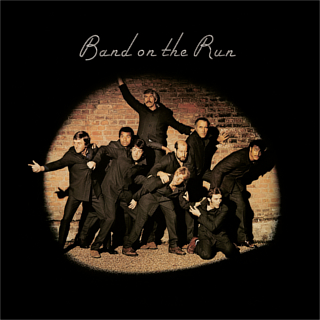
Paul McCartney's "Band on the Run": a 1974 staple

Famous people are often known to live on the edge. It has been said of successful pro athletes that "they have no fear of failure." Perhaps this is a psychological trait really needed to "be in the arena," to perform under those Klieg lights.
The Beatles were the epitome of fame. Post-Beatles, Paul McCartney wasn't about to feel any inhibitions. "Red Rose Speedway" had its own decent impact. "Live and Let Die" totally made the grade as top-tier pop music. We shouldn't be surprised, as the stuff was coming from a former Beatle. But he was "former."
Could McCartney at least come close to the pace and quality of top pop music, that characterized the whole Beatles' reign? Would he be a "retro" attraction, capitalizing mainly on past fame? He surely could have chosen that route. He would never have any holes in his shoes.
McCartney was not about to be so confined. He innately sought to create music that would get in front of the world's masses. What power! I have long been mesmerized by the sheer power that songwriters have. I am in awe of Paul McCartney, even in spite of some of the sloppiness he showed post-Beatles. At his best he was good as ever.
It was after "Red Rose Speedway" that the iconic Paul set out to make an album that would reach higher heights. These heights, he and his associates hoped, would parallel what the Fab 4 did in their glory days. We read that Paul and wife Linda began writing songs at their Scottish retreat. We don't know how much real input Linda had. We have to give her the benefit of the doubt unless shown some real evidence to the contrary. I question whether she had the real background to create music at the highest commercial level.
They say "politics ain't beanbag." Well, to create music at the highest commercial level isn't nearly as easy as it might seem. The songs themselves can seem so simple. Consider some lyrics by Hal David. You might look at that material, shrug and say, "oh, I could write stuff like that." Just try. It ain't "beanbag."
Paul McCartney was the consummate professional who with his fellow Beatles had "paid their dues" in Hamburg, Germany, gaining professionalism that would prove absolutely essential.
In the post-Beatles period, Paul faced a new and awesome challenge. Part of the Beatles' success was that it came from four individuals, each of whom could contribute something special. Remember, Ringo contributed the title for "A Hard Day's Night!" Let's give Linda McCartney the benefit of the doubt, at least in the sense she may have contributed good raw ideas. The "Wings" group had just completed its 1973 tour.
 
Music from when we're age 19
1973! That was the year I graduated from high school. "Wings" was about to ascend to its apex year, and this was in my first year after high school. The popular music of one's freshman college year - or, if you didn't attend college, music at age 19 - is seared permanently into one's consciousness. It is our first year of meaningful independence. We stretch our legs having fun. My friends and I would go to the bowling alley in Morris and hear Wings sing "Jet" on the juke box. Equally popular was the title song from that album, "Band on the Run." 
This was the album that demonstrated that Paul wasn't going to be any retro act. He plunged forward with new music that riveted us. He lived life "on the edge" as he embarked on this recording project. We learn that he had become "bored" with recording in England. Why? I can't understand his thought process. There were times when John Lennon couldn't either.
Paul wanted an exotic place to go and record. He chose Africa: Lagos in Nigeria.
Denny Laine became like "a new Beatle." He was a fixture in Wings. Outside of Paul, Linda and Denny, there would be much turnover in the group. The guitarist and drummer both quit just before the trip to Africa. Why? Were they wary of traveling to Africa? That might be justified.
The core group members arrived in Lagos. A military government reigned. Oh my, there was corruption and disease. The studio had a ramshackle quality. Paul started playing drums and the lead guitar parts.
The musicians could have been killed during this stay. "Living on the edge," Paul with Linda took a walk one evening contrary to advice they'd received. They were robbed at knifepoint. The thieves even made off with some musical material on paper and tape. Did this represent a permanent loss of valuable musical material? My research doesn't answer this.
 
Why smoke?
The perils don't end here, as Paul suffered a very serious self-inflicted calamity. He began gasping for air while singing. He turned white and complained of not being able to breathe. A heart attack? Would fresh air help? He was taken outside into the hot air. Now he seemed worse and he keeled over. Linda feared a heart attack but it was determined that Paul had been smoking too much! The diagnosis was a bronchial spasm. Why would a singer engage in this filthy habit at all? He's lucky he can still sing as well as he does.
Which reminds me: I should check Paul's discography and try to catch up on what he's been doing. At his age, he can't expect to captivate the mass (primarily young) audience anymore. The time to have "your run" as a popular musician is when you're in your 20s or early 30s.
Undaunted by all the scary and perilous stuff, Paul and Linda hosted a beach barbecue to celebrate the end of recording. They would be thankful still being in one piece, when they flew back to England in September of 1973.
The single "Helen Wheels" got released but at that time, it was not tied to the new album. My generation was of course notorious for thinking the name of this song was "Hell on Wheels." Whatever. The song was soon placed on the album against Paul's wishes, although I can't imagine why this was an issue. People in professional music can get into the most intense and sometimes unfathomable arguments. Remember Paul vs. Phil Spector on the "Let It Be" project?
 
Listening to "Jet" at the bowling alley
The "Band on the Run" album needed some time to gain traction commercially. I'm not sure why. McCartney was no diamond in the rough, he was simply a diamond. In 1974 this album really flowered. The music projected from boomboxes and juke boxes everywhere. And, at the Morris bowling alley. Unruly and somewhat crude boomer youth poured in and out of that place. The intense song "Jet" serenaded us.
The album came out during 8-track times! We learn that the 8-track tape version of "Band on the Run" is one of the few 8-tracks to be arranged just like the vinyl album.
Remember "quadrophonic?" This dinosaur was still walking the earth at that time. "Band on the Run" got released in quadrophonic. In 1996 it was released on 5.1 Music Disc.
The album's four singles were: the title song along with "Helen Wheels" (not "Hell on Wheels"), "Mrs. Vandebilt" and "Jet."
"Jet" was so popular, the Maynard Ferguson big band decided to record it, seeking (cynically, I guess) to get on the McCartney bandwagon and sell a few more copies. Maynard Ferguson fans (like myself) learned that the band did "Jet" purely as a studio project, not having their hearts in it, and the arrangement was never played again. It really was a pretty good arrangement. Some ambitious college jazz band instructor should try to track it down.
Maynard Ferguson played the trumpet. Paul when a boy received a trumpet as a birthday present. How this might have changed history! Paul wasn't about to play music without words. He traded the trumpet for a guitar. I played the trumpet myself but I wish I'd picked up the guitar. The guitar is a lifetime instrument. With the trumpet you're just a "slave" in a band where the director is dictator. If you're lucky you escape that setting for jazz.
At age 19, I enjoyed listening to the "Band on the Run" album with friends like Scott "Scooter" Long and the Cruze boys of South Street in Morris. "The South Street kids." I have suggested before that this would be a good name for a movie.
We never forget the music that was popular in our first year out of high school. It occupies a place in our brain where it can never be replaced.
I greatly liked some of the non-singles on "Band on the Run." I remember selecting "Nineteen Hundred and Eighty-five" on the juke box at the Pizza Place, several times. The Pizza Place was located out near where Jerry's U-Save is now. Many of us raved about that place but I just thought it was an ordinary pizza restaurant - nothing wrong with that. I remember the juke box with its highlighted singles in a display at the top, including "When the Snow is on the Roses" by Al Martino. Anyone else remember that?
Just now I checked the lyrics for the "1985" song and was going to paste them here, but they have a weird start. It is not a typo. If I wrote such lyrics, people would wrinkle up foreheads. "On no one left alive in 1985." "On no one left?" I double-checked in other places and this is right. I remember Scott Long was just amazed at how Paul's voice seemed to morph from his normal for this song. (What I remember most about Scott is that he couldn't control himself laughing at the Bill Murray character in "Caddyshack.")
I liked Paul's song "Mamunia." I liked "Bluebird," "Let Me Roll It" and "Picasso's Last Words (Drink to Me)". Still, it wasn't as if the Beatles still existed. Paul and John had a chemistry that would never bless the world again. We all moved on. There was plenty of music to serenade us. You're only age 19 once. And, "Nineteen Hundred and Eighty-five" was a long time ago! Back then we could be "Hell on Wheels." We're more stable today - knock on wood.
- Brian Williams - morris mn minnesota - bwilly73@yahoo.com