History-making music group for UMM - morris mn

History-making music group for UMM - morris mn
The UMM men's chorus opened the Minnesota Day program at the 1962 Seattle World's Fair (Century 21 Exposition).

Friday, September 12, 2014

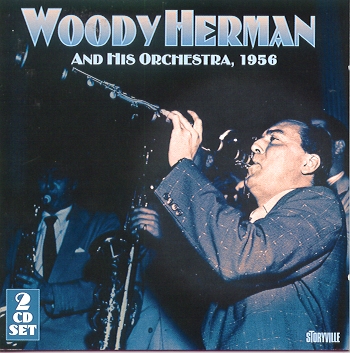
Woody Herman "thundered" through phases of music

Woody Herman was a jewel of a bandleader. He was well-known but probably deserved even more attention and accolades. He was truly like the Energizer Bunny, leading his band until close to the end of his life.
I suspect he would have shown that commitment regardless. Truth be told, his commitment into the 1980s was partly due to financial pressure. He had a commitment to Uncle Sam. He had a burden of paying back taxes. He had been bamboozled by a business manager in the 1960s.
The 1960s were arduous enough for big band artists. This thrilling genre of music had a substantial downturn from its heyday a couple of decades earlier. Small groups with guitars became all the rage. Big bands had to re-define themselves and refocus.
Herman hung in there through various incarnations of his Thundering Herd band. His staying power was really incredible. He may have led his band through necessity toward the end, as he owed the IRS millions, but there was unmistakable inspiration. He was awarded the Grammy Lifetime Achievement Award in 1987. In that year he left us for that great ballroom in the sky.
I had the pleasure of hearing the Thundering Herd in the 1970s at the St. Paul Prom Ballroom. This was the band that put out the "Herd at Montreux" album in 1974. The band was riveting with its sound.
We all visualize Woody playing the clarinet, like Benny Goodman. He was just as capable on soprano sax. The soprano sax does not look like the standard saxophone. It looks more like the clarinet and is handled as such. Woody plays only the soprano sax on "Herd at Montreux."
The "old-time" Woody had no problem handling contemporary funk and fusion music. Transitions in popular music can be drastic. Could Glenn Miller have handled it? We can only wonder. Maynard Ferguson was a visionary performer who transitioned all the way into disco. Maynard jolted us with his "Primal Scream" album. That was wholly disco. Us Maynard fans had quite mixed feelings about that. To the extent he got more popular, we were quite fine with that. Maynard got on "the charts" with his "Rocky" theme cover, remember? Disco city!
Disco was a big wave or maybe more like a rip tide, pulling us away from what might have been more palatable. Maynard made two or three more attempts to crash that pop chart, but I could tell instantly each time these efforts were going nowhere. He tried covers of "Battlestar Gallactica" and "Star Wars" that just didn't have the simple up-tempo feel of "Meco's" hits of the same time. With better handling, Maynard could have had those hits. Meco! That's a trivia answer.
I don't recall Woody Herman ever doing disco. Artistically he stayed on the cutting edge. But disco wasn't so much art as a pop craze. This isn't to say the lyrics couldn't be well-crafted.
 
Woody's alums come to Morris
Jim Pugh played trombone on Woody's "Herd at Montreux" album. He would come to Morris in the 1980s for our University of Minnesota-Morris Jazz Festival. I attended Jim's clinic presentation even though I'm a trumpet player.
Years later we would get another Woody Herman alum coming to the jazz fest, name of Dave Stahl. He's considered among the elite big band trumpeters. He played at the Prom Ballroom when I took in the Herman band's performance. You could never forget how he slid up to the high note on "Superstar."
Young big band fans went gaga over high-note trumpet players. As I get older I have a hard time understanding why. My mother was once like the boy who said the emperor has no clothes. This was when I had a DVD of the Ferguson band on. Maynard was of course the grand poobah of high-note trumpet players. Mom said "if they want to play such high notes, why don't they play a different instrument?"
Well, whatever the explanation, us band youth of the 1970s worshipped at the shrine of high-note trumpet players.
Stahl's appearance for the UMM Jazz Fest ended up not really happy, the legend goes. Sources told me he tried to get out of that commitment. As they say, "a better opportunity came along." Stahl was refused and he came here in a reportedly sullen frame of mind. Lead trumpet players are an ego-driven lot. They don't handle frustrations well.
Actually, trumpet players as a whole are strangely "chair conscious." There's first chair, second chair and third chair - quite the "tier" or "caste" system. The lower the section (third being lowest), the lower the notes you play. Of course, all the notes are important for packaging the final product. And yet "first chair" or "lead" is privilege-laden. Let's adorn that person with a royal cape just like for the cowardly lion in "The Wizard of Oz." (They improvised with a rug, remember?)
Stahl is the quintessential lead trumpet player. While in the service, he was soloist with the Army Band, lead trumpet in the "Army Blues," and principal trumpet in the White House Herald Trumpets. A friend and I went up on the stage after the St. Paul concert to chat with him. He told us something about proper playing posture.
 
An album that connected
Woody Herman's band recorded "Herd at Monteux" at 3:30 a.m. They followed Sonny Rollins' set. I loved the arrangement of The Temptations' hit "Can't Get Next to You." The band played with a flourish on Aaron Copeland's "Fanfare for the Common Man." (None of us can forget PDQ Bach's "Fanfare for the Common Cold.")
Tenor sax players Greg Herbert and Frank Tiberi stand out. Tiberi would later lead the Herman "ghost band" after Woody's death. Andy LaVerne played electric piano, standing out as much with his long fuzzy hair as with his playing. Ferguson had his own "hippie keyboardist" for a time, name of Allan Zavod. These guys look like anything but hippies today, I'm sure. Their old persona came and went like disco. In those old days, you might get teased if you were bald or overweight. Not today. "Plus" sizes have taken over.
Dave Stahl left the service in 1973, whereupon he went to work putting together the finest possible jazz resume, even managing the Buddy Rich band. I give him special kudos for that, given Rich's famous volatile personality.
Stahl was lead trumpet or soloist with an 'A' list of bands including, in addition to Herman and Rich: Count Basie, Larry Elgart and Toshiko Akiyoshi. He has backed up Frank Sinatra, Ella Fitzgerald, Tony Bennett, Mel Torme and Jack Jones. He formed his own band in 1977. In '87 he came out with "Anaconda," an album I remember purchasing in that old vinyl format. It was contemporary pop.
 
The great Bill Chase, RIP
Remember the trumpet player Bill Chase? He was closely associated with Woody Herman. Chase formed his own group and gave us the hit "Get It On," remember? He died in a plane crash in southern Minnesota in the mid-1970s. He was barely hanging on (financially) with his own group at the time of his death, reportedly. This was in spite of the fact his music had made a real splash. But remember, fans of such modern "hip" groups of that time were largely kids - not real well financially endowed. Chase could play today as an "oldie" act at casinos.
At the time of his untimely death, rumors were rife that Chase was going back to Woody Herman's band. His "name" presence would have been good for all involved. We never got to see that of course.
Woody Herman occasionally sang with a voice that frankly wasn't any better than mine. His solos really only required a sense of pitch and in some cases not even that, as on his hit "Caldonia." The band made those tunes. The signature part of "Caldonia" was a soaring eight-bar passage by the trumpets near the end. All hail trumpets!
Woody's first hit was "Woodchopper's Ball" in 1939. The song needed time to gain popularity. The Decca company kept re-releasing it. My, 3-4 years passed before it caught on. It sold over five million copies. I played this tune with the "Tempo Kings" orchestra in the 1970s. I remember the late Walt Sarlette doing a little showboating on clarinet, holding his hand behind his head as he elevated his clarinet for the final rousing section. The dancers always reacted with enthusiasm when we announced that tune.
 
Bebop with "Dizzy" comes along
Time passed and "bebop" started infusing the big band world. Bebop icon Dizzy Gillespie wrote three arrangements for Woody in 1942.
I heard Dizzy with a small combo at St. Cloud State's Kimberly Ritsche Auditorium. Dizzy's physical faculties for playing the trumpet were at a bare minimum. Remember, he had that unorthodox style of puffing out his cheeks. It's unnatural.
I got the impression that in Dizzy's "small-time" concerts like at St. Cloud, he didn't expend himself any more than he had to. I don't think anyone would argue with me saying his playing that night was terrible - uncomfortable to watch. He had no range at all. But he was Dizzy Gillespie! He got applause when he said he was of the Bahai faith. He showed humor introducing his ensemble. He went one by one saying they were "natives" of someplace, until he got to the drummer, a quite dark-skinned fellow, who Gillespie said was simply "a native." (Movies set in Africa once gave us the term "native" as synonymous with the black indigenous people.) I suspect Gillespie's humor would be politically incorrect today. The audience did laugh.
I later saw a contemporaneously filmed performance by Dizzy on PBS in which he suddenly found he could play his trumpet with range. I guess he saved such efforts for the "important" commitments. He probably had no choice. His style of trumpet playing was too taxing physically. His cheeks could have become detached from his face.
Woody Herman had a successful recording of "Laura" from the 1944 movie. He recorded "Caldonia" in 1945. "What makes your big head so hard?" I'd need an explanation on those lyrics.
The band broke up in 1946. Several bands disbanded in December of that year, just as America was getting back to normal after the war years. Some say the storied big band era ended in December of 1946. Of course this was just a hiccup for the indefatigable Woody Herman. In 1947 he formed "The Second Herd," a.k.a. "The Four Brothers Band." They recorded "Four Brothers" in 1947.
Woody had another hit in "Early Autumn." The "Third Herd" came along in the 1950s. And then, "The New Thundering Herd" from 1959 to 1987.
By the 1980s, as with Maynard Ferguson, Woody "came home" to straight-ahead jazz, putting aside the rock and fusion. A steady diet of jazz and conventional big band charts became commercially feasible again. Woody kept packing in the crowds, thus helping him pay off the IRS! He was in danger of eviction from his house.
I would firmly state that Woody Herman was underrated. He had no trouble staying hip even though he didn't look the part, certainly not in the '70s when rock groups held sway. He never grew his hair out or fluffed it up. He looked like he could be the skyscraper owner in the movie "the Towering Inferno," you know, a guy on the wrong end of the generation gap. (That was William Holden BTW.)
Don't be fooled by appearances. Woody didn't need to change how he looked to play exciting music, captivating the young crowd.
I remember when us kids raced to get our Prom Ballroom seats right when they opened the doors - standard custom - and we raced right past Woody himself. Woody was out in the commons area with an unassuming presence, playing some warm-up notes on his clarinet with his open case in front of him. Had this been Maynard, we would have swarmed him. We loved Woody's band but Woody himself wasn't really a cult figure. Ah, but we embraced Woody and his sound totally.
Woody Herman, RIP.
 
Addendum: Here's a remembrance nugget that ought to make Maynard fans misty: Remember how the great MF would play warm-up notes in a little room off to the side of the stage, at the Prom Center? There was a little exhibitionist purpose here. MF knew this would be a turn-on. Sure enough, each time he did this pre-concert, waves of cheers would come from the assembling crowd! Pianist Zavod was onstage once getting his stuff ready, and he reacted for humorous effect as if the cheers were for him! Can memories get any better than this?
 
The full lyrics to "Caldonia" strike me as rather bizarre. If I wrote this stuff, people would say I was off my rocker. But it's a classic. Would a previous generation understand it better?
Here are the lyrics:
 
Walkin' with my baby, she's got great big feet,
She long lean and lanky and ain't had nothin' to eat!
But she's my baby and I love her just the same,
Crazy about that woman 'cause Caldonia is her name.
 
Caldonia!
Caldonia!
What makes your big head so hard? Huh!
I love you, love you just the same,
I'll always love you baby 'cause Caldonia is your name.
 
You know,
My momma told me to leave Caldi]onia alone;
That's what she told me, no kiddin'!
That's what she said!
She says,
"Son, keep away from that woman,she ain't no good, don't bother with her!".
But momma didn't know what Caldonia was puttin' down!
So I'm goin' down to Caldonia's house, and ask her just one more time!
 
Caldonia!
Caldonia!
What makes your big head so hard?
Now!
 
- Brian Williams - morris mn minnesota - bwilly73@yahoo.com

Friday, September 5, 2014

Blogger to the fore in Jacob Wetterling case

Joy Baker's blog (Willmar Radio image)
I remember being at the first-ever Minnesota Timberwolves home opener. The family of Jacob Wetterling came out to the center of the court before the game, for a rousing acclamation. The Wetterling abduction/disappearance case was of course fresh.
You may have forgotten that our Timberwolves played their first season at our beloved old Dome. I attended something like five games and had great fun. Dad (RIP) came with me to one. Bill Musselman was coach, that guy with the maniacal reputation who had soared and then crashed/burned with our U of M Gophers in the '70s.
The Timberwolves charted a course where they would try to maximize winning from the outset, rather than accept the usual lumps of an expansion team. Patrick Reusse would later scold us for enjoying that. Well, I enjoyed it. But, by dropping lower in the draft order than otherwise would have been the case, we may have picked up a "curse" of sorts that has diminished winning opportunities ever since. I have lost interest. Anyone who has seriously followed the T-Wolves over the last 25 years: Shame on you for wasting so much time.
I'm not sure what was accomplished simply having the Wetterling family come forward as if they were being feted in some way. They were simply victims of a horrible tragedy. The pre-game spectacle wasn't going to accomplish anything.
 
Determination by a new media practitioner
It turns out there were lots of wasted efforts over many years trying to unravel the Wetterling mystery. All it took in the end to solve it, was a curious blogger. Her name: Joy Baker. Efforts ought to be made to get Joy some generous compensation. She did what "all the king's horses and all the king's men," i.e. those law enforcement "professionals" with their uniforms, failed to do. It's yet another example of how our new digital, online world is being disruptive. Our old clunky, bureaucratic institutions are revealing all their limitations, while people empowered by the new online world are showing what they can do, unencumbered.
The recent John Walsh TV special on CNN showed the world how a determined Joy Baker simply sought the truth. This pure motivation, minus any bureaucratic or "turf"-centered limitations, penetrated through the apparent thicket of mystery.
Meanwhile this law enforcement guy, this uniformed Sanner fellow, came off looking pathetic. He said something about how bloggers can "speculate" whereas people like him, apparently, cannot? Really? Isn't the whole process of following "leads" based on speculation?
Wasn't it the likes of Sanner who "speculated" in making this Rassier fellow a "person of interest?" Do they realize the damage they are doing to someone's life in applying this "person of interest" tag? I suppose they would deny that such an individual is a "suspect." What, then, is he? Certainly the public would see an individual in this light.
I hope Mr. Rassier, a terrific trumpet player, is suing and I hope he gets a windfall. I played in the St. Cloud State University concert band with Dan for two quarters back in the 1970s. If you're reading this, Dan, "hello." Looks like you're keeping your "chops" in shape. Here's what's disgusting about the situation he ended up in: He's an adult who lives with his parents, so, was this the basis for thinking he might be a little "strange?" There are people all around us who can be considered strange for all sorts of reasons. This lifestyle "norm" that is promoted by our commercial media is a myth - it's a consumerist ideal. In truth, "the majority of men lead lives of quiet desperation."
Mr. Rassier had the great misfortune of living out where the Wetterling tragedy happened. How would you like it if something like that happened where you live? How would you like being viewed with suspicion?
Law enforcement apparently pursued tens of thousands of leads regarding the incident. I'd like to know how far-fetched some of those were. Oh, remember those ridiculous "sketches" of suspects that were pinned up, presumably all over Minnesota? Remember that hyperbolic caption? "We MUST FIND these men." I love the emphasis there. "YOU TOO can prevent forest fires!"
Then there was the line: "So JACOB can be found." Don't we all know guys who would roughly match those drawings? We were informed that one of these guys had a "bold, authoritative manner." Like that's real revelatory. Would anyone in his right mind think that these stupid drawings were going to lead to anything helpful? Did the artist see a matchbook cover ad for drawing school? Let's call all this a charade. It was a charade helping law enforcement people "look good." They went through the motions as per the expectations of their well-funded bureaucracies.
And now a mere humble blogger comes along and shows us all how it's done. What a relief. What a relief to simply know the mystery is over. Who cares who the successful sleuth eventually was? But, something should be done to see she's properly compensated. Quite generously too. I suggest that she write a book and get a good publisher to guide her.
I wonder if all those uniform-wearing professionals are cursing under their breath about this. "Turf protection" is an extremely strong force. Taxi businesses are going wild trying to resist these new Internet-driven transit entities. Up to now the forces unleashed by the Internet have been unstoppable, and "disruption" has been widespread.
 
Yours truly, making waves too
I sensed that local law enforcement was not comfortable with me blogging about the Craig Peterson case. I got an email from the police chief one day. I had prematurely reported that the charges were dropped, based on rumors that were ridiculously pervasive at the time. OK, so I was premature or you might say "wrong." The chief indicated that he expected me to "acknowledge my error." Was that a threat? Well, I made sure I wore my seat belt 100 percent of the time after that.
I have been told that my writing may ultimately have affected the resolution of the case. I was told that my writing had a strong common thread of indicating this was a "he said, she said" case with dubious grounding. I'm not looking for any pats on the back. I'm just an unemployed person with a background in writing.
Anyone non-local reading this, here's a little background: Craig Peterson is the high school principal in Morris who was on paid leave for most of last year due to being charged with first degree criminal sexual conduct.
One reason us new media journalists can be so powerful is that we do what we do for almost no cost. So, we don't need to be blessed by material resources to do what we do, unlike "professional" law enforcement. Maybe if those jerks would spend less time on seat belt citations and minor marijuana offenses, they could actually solve cases like Wetterling.
Anyway, congrats to Joy Baker for her raw energy and concern, simply seeking the truth. It makes too much sense, doesn't it? Our new communications age is like that.
I went to that inaugural Timberwolves game by bus. Our team lost to the Chicago Bulls and Michael Jordan (in his prime). Jordan scored in the mid-40s but it was a "quiet" scoring total, friend Rick Lucken remarked to me. I remember the players shaking hands with owners Wolfenson and Ratner in pre-game. Rick had a chat with Bob Stein. I loved "Crunch" the mascot. Coach Musselman was his usual obsessed self. Basketball was really a blast at the Dome.
 
Addendum: I have communicated with a couple friends/contacts since the Walsh special, and below is an interesting portion of an email I received back:
 
I have a repair tech friend who now lives in the Long Prairie area, who says (and, for some reason, proudly) that he is No. 20 on the FBI's "person of interest list" for the Wetterling case. Seems he lived next door to the Wetterlings in St. Joe back when it happened. He says the FBI sends a couple agents out every two years or so, and they ask him questions again and again - sometimes at his house, and sometimes they "take him downtown." It's mostly just to see if he remembers anything that would be of help.
 
Addendum #2: Scott Thoma, former Willmar newspaper scribe, indicated his next book would be about the Wetterling case. He appeared at our Morris Public Library to present his book about the Tracy MN tornado. He mentioned the Wetterling book project in an informal conversation afterward. I wonder how far along he is with it. The recent revelations would either scrub the book or cause him to approach it anew. He could make Joy Baker the centerpiece.
I ran the Rassier name by him. This was before the recent revelations. "They (the authorities) think he did it," Scott said.
See? That's how the "person of interest" tag gets interpreted. Thoma left the West Central Tribune under circumstances that seem similar to how I left the Morris paper. Both papers are owned by Forum Communications of Fargo ND. It's a Machiavellian company. If they wanted Thoma gone, I'm sure they made it happen. Oh, I'm sure he's a very hard-working and competent person. He was sports editor. Community papers make such a fuss over sports, so far beyond the real level of interest. They make "heroes" out of sports stars which I feel isn't real healthy for the overall school community. A sociologist could do a study.
 
Addendum #3: This morning (Friday, Sept. 5) I heard back from an old friend of mine, a Morris native who today lives in Cold Spring. He has familiarity with Mr. Rassier and has always been skeptical of any suspicion directed his way. Obviously my friend is happy now. Here is what he communicated:
 
It's funny you should mention the John Walsh special on CNN.  We gave up TV about six years ago, but we were in Las Vegas over the weekend and we had just gotten back to our room when (my wife) turned on the TV. The TV station that was on was CNN and they ran a short promo on what was coming up next and it was the Wetterling case. I said to (my wife): I wonder if they will include that blogger's update, and they did! Timing is everything. I thought they did an excellent job on it. They didn't name the guy they suspected for legal reasons (I assume) but it did take the heat off of Dan Rassier. I never see the guy (these days) but I'm sure he is feeling better.
In the end I think the sheriff bungled the case. He said something that implied bloggers could get certain info they could not. What a bunch of B.S.! I'm voting for the other guy in November.

 
Just consider: A kid disappears and then almost anyone, it seems, can be a person of interest. In the meantime that sub-human scum of a perpetrator leaves a trail that affects the lives of more than just the victim/family. Rassier has picked up a stigma that he will work to shake, I'm sure. He has been an adjunct type of teacher in music, I have read. He is a distance running enthusiast. He looks trim and healthy in a photo I found online. He may have lost weight because of the stress.
It's a relief we no longer have to have a trace of suspicion about Mr. Rassier. But think about the impact on his life. Joy Baker comes along like an angel for him (and others I'm sure).
A scary afterthought: If I had blogged extensively about the Wetterling case several years ago, would I be contacted by authorities?
 
- Brian Williams - morris mn minnesota - bwilly73@yahoo.com

Wednesday, September 3, 2014

Stan Kenton big band gave us that "wall of sound"

I wish I could have heard the Stan Kenton band when it was in its early prime. Kenton became a big name because he must have wowed many. He surely "stuck it out" long after the term "big band" took on a past-tense context. "Remember the big bands?"
Electronic amplification meant you didn't need a stage-full of musicians to produce a big sound anymore. Producing a big sound with just a handful of musicians would seem to give musicians economic leverage too: fewer guys to pay!
As with all trends, certain people can be counted on to go against the grain. Kenton was the trooper with his stage full of musicians that he managed up through the 1970s. He died at the end of that decade.
Stan sprang into prominence during the WWII years. I don't know if he had "flat feet" or something, but he apparently had no connection with our military effort. Nothing like Glenn Miller, who led his band in uniform.
Stan was a man of the piano keyboard. I'll never forget his piano introduction to the tune "What Are You Doing the Rest of Your Life?" He did a little cat-and-mouse with the bass player. The bass came in midway through the intro. The bass guy had to anticipate where Stan was going. And of course the pianist had that trademark shining smile, like the cat that ate the canary. Stan always smiled like he knew more about music than anyone. He was hardly reserved in how he spoke about his own, and his band's, musical prowess which was surely awesome, surely by the standards of popular music.
Big bands in the '40s were in the mainstream of popular music. Glenn Miller's band churned out hits in its heyday, leading the way. The big band went to the wings of pop music in the 1950s. Some toured on the strength of their past fame. Then came the '60s which everyone agrees was a death zone for the "big band." Maynard Ferguson ended up retreating to Great Britain.
The '40s didn't seem that remote in time. But "big bands" in the eyes of the nation's youth became equated with a quite distant past. Kids pooh-poohed the likes of Lawrence Welk who held a substantial audience among the nation's older folk. We see the nursing home residents in "Mars Attacks!" tune in to the Lawrence Welk show on TV. Some of that was stereotype of course. The Beatles came along and caused a sea change in tastes. Many of the kids would be thrilled hearing a really good "big band." But they got mesmerized by rock.
 
Stan Kenton, getting going in '41
The great Stan Kenton formed his own band in June of 1941. He got well established on the west coast. His piano playing was influenced by Earl Hines. The sound of the band was influenced by Jimmie Lunceford. Stan liked high-note trumpet players. So guess what? Maynard Ferguson made his first big splash with - guess who? - Mr. Kenton.
Kenton in the 1970s was coasting. I'm sure that many of his concert goers were drawn by having heard Maynard's band. Any cursory study of Maynard's career would have prominent mention of Kenton.
I heard the Kenton band in St. Cloud and Willmar MN. The audiences were like a mirror reflection of those hyper assemblages that Maynard drew for his concerts. Ditto Buddy Rich the drummer and bandleader.
There was a small group of big bands that toured and generated considerable excitement among young people in the 1970s. I hate to sound a dismal chord but the Kenton concerts were largely disappointing. There were bright spots as when the trumpets would do a passage with piercing intensity. I remember after one such passage at St. Cloud, an audience member shouted "animals!"
Kenton didn't seem quite to know what these new young audiences wanted. His concerts got stretched out with segments that seemed boring and repetitive, as with those "ride" solos that went on ad nauseum. I remember a trumpet player coming forward to play several of these at the Willmar concert, and a friend of mine suggesting "this guy must be Stan Kenton's nephew." In other words, his talent didn't warrant so much exposure.
I remember two or three area high school bands playing before the curtain opened for Stan at Willmar. I think it was the Litchfield band who a friend would say was "better than the Kenton band." I'm sure that wasn't literally true. I think the problem was that the Kenton band was too restrained and ponderous too much of the time. I think we sensed the musicians onstage were capable of offering us so much more. It seemed ol' Stan just wasn't "hip" and didn't know how to package his music for us.
It seemed the band would have been just as good with fewer members. It seemed strange that Stan would want to drag such a large ensemble everywhere he went, totally contradicting the trends of the times. Maybe ol' Stan, a genius no doubt, just wanted to be a contrarian.
By the end of the St. Cloud concert, the people seemed tired of hearing such a large group. They were clearly excited by the drummer. Stan had latched onto a young guy who was clearly destined for great things on the drums. An audience member, likely weary of the non-descript stuff, shouted "let Pete do it!" The reference was to the prodigy drummer, name of Peter Erskine. Erskine would soon move on to the much more "with it" band of Maynard Ferguson.
So, Kenton's band could be like a stepping stone for the likes of Erskine. It's too bad the Kenton band couldn't be more of a destination, an end in itself, rather than a fossil-like curiosity, only with a background that exuded greatness. There's no reason that band couldn't still exude that riveting feel. The band teased us with occasional exciting moments and awesome talent. Trombonist Dick Shearer was interesting as that rare specimen of a 'bone stylist.
The saxophonists? All those big band sax players sounded alike to me, sorry. The audiences at Ferguson concerts went wild over a bari saxophone player named Bruce Johnstone. They reacted with almost orgasmic acclamation. Truth be told, they were all there to hear Maynard. I'd argue they wouldn't have spent a dime to hear Johnstone. It's just that they were in a certain mood to consume this type of music. So, let's go crazy as Bruce plays the intro passage to "Stay Loose with Bruce." (That was a re-titled tune, having originally been presented as "Morgan's Organ" featuring Lanny Morgan.)
 
The springboard, on west coast
In the mid-1940s, Kenton's band and style inspired the description "wall of sound." Many bands of that era became known for one particular ballroom that became their springboard. In Stan's case this was the Rendezvous Ballroom in Balboa Beach CA. He whiffed on a major opportunity: for a time he backed up Bob Hope on radio, but the chemistry just wasn't there and along came "Les Brown and his Band of Renown" to complement the comedian.
Stan's band issued a popular record in 1943: "Eager Beaver." June Christy signed on as singer and produced the hit "Tampico." Kenton's band became described as "progressive jazz." Stan himself was very proud of that reputation, often speaking almost defensively about the esoteric musical standards he subscribed to. It seemed he was almost aspiring to a "concert orchestra" rather than big band, ironic at a time when everyone was talking about the demise of large groups.
Ah, Stan the contrarian. He liked the Latin rhythm. "The Peanut Vendor" became a signature tune for the band. In 1949 he took the year off. In 1950 he put together an outrageous ensemble - 39 pieces! - and accentuated that "progressive" reputation in a pretentious way that was his tendency. (I don't hold it against him.)
He called the group "Innovations in Modern Music." My God, there were 16 strings, woodwinds and - brace yourself - two French horns. The group played dense modern classical charts. Everyone could see there was little commercial potential. Stan was following that different drummer. He experimented. But eventually he went back to the still-large 19-piece group. He made an unexpected excursion into swing.
Kenton had an innate quality of giving us unexpected things. Always, his music could be bombastic. His last big foray into the unexpected was his "mellophonium" chapter. This was in the early '60s.
"Kenton Plays Wagner" came out in 1964. His last Top 40 release was the unusual "Mama Sang a Song," written by Bill Anderson from a field of music seemingly 180 degrees from what Stan stood for. The "Mama" song was re-released in the '70s on Kenton's own Creative World label. I remember those 8-track tapes with the yellow and black colors, giving us the Kenton sound. Doug Garberick of Morris loved playing those in his car. He'd occasionally look back at us kids to gauge our reaction. We worried a little about him driving safely.
 
Those anticlimactic '70s
The '70s seemed a sad time for the Kenton sound as he couldn't quite deliver what the young people wanted. It was sad because he came close at times. The seeds were there. The corduroy-wearing adolescent male high school trumpet players wanted music that was really testosterone-fueled. The Maynard Ferguson band definitely gave us that.
Maynard had no trouble "connecting" through his career. Buddy Rich the drummer was good at that too. Oh, and let's not forget Woody Herman and his "Thundering Herd" - quite capable of being "hip." We ate up the music of the veteran pianist Count Basie and his orchestra. Now I've cited the whole circle of touring big bands that supplied pleasure to us boomer-age musicians: Maynard, Buddy, Stan, Woody and "the Count."
The Thad Jones/Mel Lewis orchestra flirted with being in that circle. I heard Thad and Mel at the St. Paul Prom ballroom. I'd rank their sound above Stan's. Maybe Stan wasn't all that interested in thrilling us through that time (i.e. that "disco" time). He had done plenty of that earlier in his career. In the '70s, he wanted to affirm his stamp on sophisticated music, that "progressive" sound, even though the youth would have preferred a little "regression." Give us loud and intense charts please.
Stan really rode the coattails of his old protege Maynard Ferguson. Kids who were fascinated with Maynard eagerly bought tickets to Kenton concerts. The Kenton concerts merely reminded us of how exciting a contemporary big band could be. It whetted our appetite for more. Kenton needed to condense both his band and its library, had he really been after commercial success in the 1970s. I guess he wasn't. His health failed at decade's end.
David Brinkley of NBC News did a little piece suggesting that Kenton's death was imminent. It was like a short eulogy, leaving no doubt that ol' David was a fan. But Kenton miraculously recovered for a time. Finally he left us for that Balboa Ballroom in the sky.
 
Exemplary approach to life, art
I had nothing but respect for the venerated keyboardist who was always eager to seek something new and innovative. There is much to say for that approach to life and to art. I'll never forget those glistening teeth as he smiled from his piano bench. It was the kind of smile that made you think he was in possession of great insights.
I embrace the memory of how Stan opened that favorite song of mine, "What Are You Doing the Rest of Your Life?" Remember? "North and south and east and west of your life." I'd love to be able to write a song like that. I'm sure it wasn't his nephew out there playing trumpet. But Stan certainly opened the door for many young musicians eager to put something impressive on their resume.
"Stan Kenton" was quite the genius. He stuck with his refinement even when he might have garnered greater commercial success. He was "in the arena." His was a remarkably full life.
"The band knocked me out," Bernie Woods wrote of the Kenton band's east coast debut. Woods continued:
 
Stan was an intense young leader who knew what he wanted. He had formed an organization that was decidedly different from any then in existence. It was wildly exciting and eventually very successful, even though after a full evening of listening, one felt as though he'd taken a physical pounding. The word to describe some of its arrangements: ponderous.
One of the Broadway wags in Lindy's described the band as sounding like "a plane crash at LaGuardia Field." Another cracked: "You don't kick that band off - you count it down."
I liked Stan immediately. He seemed shy, yet was implacable about what he was trying to accomplish. I got a great kick out of talking with him and did so at every opportunity. He seemed to feel the same way. He seemed always to be searching for criticisms or comments about his band and what he was trying to do with it, which he then culled and turned to whatever advantage possible.
 
Here's another passage from Woods' book, "When the Music Stopped":
 
One point that highlights the difference between Variety and the so-called "jazz" sheets then in existence, is contained in a comment made by George Simon of Metronome at almost the same time I made a note relative to Stan's style of conducting.
Kenton's orchestra played a concert at Carnegie Hall, an event of which Stan was immensely proud, rightly so. Simon took Stan over the coals for his "bombastic" conducting style. A tall man, Stan liked to flap his arms, wave only his hands at arms' length, and go into other gyrations when conducting. Simon didn't think much of what was normal for Stan. In an almost coincident issue of Variety I commented that "Kenton's arm-flapping style of conducting is in itself a form of showmanship."
Simon was looking at Stan's methods from a strictly musical viewpoint and felt, apparently, that his gyrations reduced the great musical impact of the band. I took the "commercial" viewpoint, feeling that the style of conducting added interest to the overall impact of the band. Later, when Kenton's orchestra was the basis of a weekly TV broadcast, the director often focused his cameras on Stan's arm-waving.
Performers have looked for a "hook" from time immemorial. Kenton's "hook" was his conducting, although it was minor and he did not intend it as such.
 
Addendum: I remember being moved seeing Willie Maiden in Kenton's band at the Willmar MN concert. This is a name that Maynard Ferguson fans will associate with Maynard's "pre-famous" period, when MF was doing refined jazz in the 1960s. Sophisticated yes - revenue-producing, not so much. Maynard had a reliable stable of musicians through much of the '60s, a group also including Mike Abene, Tony Inzalaco and that Lanny Morgan (of "Morgan's Organ"). Maiden seemed so slightly built. He had probably always been that way, but in the '70s with Kenton he almost looked a bit sickly, and my fellow concert-goer Doug Garberick expressed concern about Willie's ability to handle his instrument. Willie seemed to do fine, and it was interesting to see this familiar name from the past, in the flesh, still plying his jazz "chops."
Jazz is a universal language, eh?
- Brian Williams - morris mn Minnesota - bwilly73@yahoo.com

Wednesday, August 27, 2014

Donnelly Threshing Bee has long signaled end of summer

In photo: a musical unit for the 1977 Donnelly Threshing Bee parade. No, we didn't play "disco." Your blog host, Brian Williams, is at right with trumpet. Joining me in the front row are Del Sarlette (left) and Doug Garberick (wearing helmet, a curious adornment and surely a conversation-starter). In the middle row, from left, are rock-solid UMMers Jeff Johnson, Marty Sarlette and Clyde Johnson. The gents in back are, l-r: Bruce Maus, John Woell (high school band director) and Jim Waage. I remember one year, a bright-eyed Harold Trost (RIP) drove past us as we were parked on the grounds and "compensated" us with a 12-pack or two of "brewskies." I actually preferred winning a liter of Pepsi at the ring-toss on the grounds. I warmly remember Darlene Awsumb (RIP) serving me some nice hot coffee. The ice cream shack was quite a temptation.
 
We're past the Donnelly Threshing Bee which means we're ushering out summer. The time between the county fair and Threshing Bee is an anticlimactic part of summer. Summer's glory most surely still reigns. We ought to relish it just as much as around July 4.
We seem to start getting distracted by anticipating the new school year. I was told many years ago: Don't schedule a class reunion for August because everyone will get back to you and say: "We can't come because we have to get ready for school." I'm not sure this statement is literally true. I just think people have fallen out of that state of mind where they do vacation-type things. That's reserved for earlier in summer.
Is it really so demanding to "get ready for school?" I told this story to Steve Dudding once and he said: "The ones who want to be there (at the reunion) will find a way to get there."
I have found that the older a class gets, the more likely it is to schedule a reunion for late in summer or even the fall. I think the 30-year reunion might be the hardest to organize. No longer do the alums have that naturally giddy feeling about reunions - they've been gone from school too long - and they are preoccupied with their own children, understandably I'm sure. They relax better when they get older.
Father Gerald Dalseth once shared interesting thoughts about reunions. He said the older we get, the more willing we are to open up with each other about our failures. Fr. Dalseth, a Morris native and quite wise individual, said that at the ten-year reunion, no matter what job we have, it sounds impressive. We become steadily more aware of our shortcomings as we get older. Humility grows. We smile at the brimming optimism that young people around us show - their naivete and occasional chutzpah. This is how God created us. We wouldn't have it any other way.
I was an organizer for our 10, 20 and 30-year reunions, then decided to take a pass for the 40th. I didn't attend last summer (in 2013). In response to a phone call, I did show up for a little informal gathering at the deck behind The Old No. 1. So, technically speaking, maybe you could say I attended. I didn't want to attend because I didn't want to end up in a photo that got published in the Morris newspaper. I was told that my services as a photographer would have been helpful.
I don't think any photos from the reunion got into the paper. The paper doesn't have as much room anymore for that kind of stuff. The paper contracted drastically between our 30 and 40-year reunions. It's a night-and-day difference. The Morris paper today is compact and only seems large because of that infernal pile of advertising circulars, many of them for Alexandria businesses.
I haven't been to the Donnelly Threshing Bee in about nine years, sorry. I may have been at the first-ever Threshing Bee. I began covering the Threshing Bee for the Morris paper in 1979. I believe the first queen I covered was Gayle Struck. I took a photo of Butch Ersted being dunked at the dunking booth. Way back when, I had a hard time getting over Butch's suspension from the high school basketball team. If he thinks people forget that kind of thing, he's wrong. I was in junior high and rather impressionable.
 
Nuggets of "Bee" memories
I remember a famous horseshoes player being a visiting dignitary for the Threshing Bee. Donnelly was associated with horseshoes for a time. I remember hot-air ballooning as an exciting exhibition for the Threshing Bee. I remember the Upper Mississippi Bluegrass Band supplying terrific folksy entertainment that fit right in with the atmosphere.
The royalty aspect was heartwarming on Saturday night. The emcee and candidates gathered on that stage in front of the depot building. I remember Mr. Sax starting out the dance at the town hall by dancing with his daughter, the queen.
The Threshing Bee has touted its "big top tent." It's quite the asset as relief from an overbearing sun or impending rain. Morris' Prairie Pioneer Days could use such an asset.
 
Soaking in "celebration of community"
I wouldn't be surprised if the total size and turnout for the Threshing Bee has declined in recent years. This isn't to say it has less value for attending. Prairie Pioneer Days has shown signs of decline, yet we enjoy it. It's a simple celebration of community. It doesn't need all the bells and whistles.
There would be no fault assigned if the Threshing Bee is declining, it would simply reflect outstate rural demographics. This trend, or the seeds of it anyway, got started many years ago with the advent of the birth control pill. Singer Loretta Lynn once said "if the pill had been around when I was younger, I would've taken them like candy." The late Wally Behm told me about how people in education noticed the effects of the pill quite unmistakably, after a few years had gone by of course.
If you want to appreciate what life was like in the pre-pill times, watch the movie "Spencer's Mountain" and see Henry Fonda seated at the dinner table with something like nine kids seated around him, and his wife (Maureen O'Hara). Pity the O'Hara character. Or maybe she liked it - being beleaguered by so many hyper children. We can't assume it was all arduous. Many would argue that God wants us to multiply like this. I guess Catholics would lead the way, although their ranks include many who opt for the minimal child burden.
The Donnelly kids had a group identity when I was young. My class included at least a couple girls who your typical boy would describe as "cute." My elementary basketball team played a big "away game" at the Donnelly town hall. You know, that's an amazing little building. It seems so minimal and almost rather gloomy, yet so many festive community events have been held there - fish fries and the like.
Donnelly seemed to have more than its share of "characters" - interesting people. Were they eccentric or just intelligent and insightful? Take your pick. I'll never forget the genius artist Del Holdgrafer who left us too soon. I once asked him to do a custom drawing job and all he asked in return was "enough money to fill my gas tank." He resented how prices starting going up at the doctor's office. I'm sure he loved the days when doctors made "house calls." When he parodied the Morris doctors in a cartoon, he left out the name of Dr. Rossberg who was more the down-home type of doctor he preferred.
I have written before that Holdgrafer is one of the people I'll look up right away if I'm fortunate enough to get to heaven. I guess I've already committed to Willie Martin being the first. Arnie Hennen is on the list. I had better keep going to church.
The rumor today is that St. John's Lutheran of Donnelly could be on its last legs. I always used to smile when hearing St. John's described as the "town" church while Kongsvinger was the "country" church, as if either could really be considered "urban." I attended the ceremony of closure for St. Theresia's Catholic Church in Donnelly. I covered that solemn event for the newspaper, snapping a photo of the bishop (from St. Cloud) who offered consolation. "Maybe we could be a titular parish," he said.
It's no revelation that the small outstate rural communities aren't what they once were. The "Spencer's Mountain" model for families has dissipated. We can't expect the old small town atmosphere to ever be fully resurrected. We live in a world today that is too, shall we say, "efficient." Everyone behaves like they've had too much caffeine. (Holdgrafer would appreciate that statement.)
I remember playing in the band for the Donnelly ice cream social in the late 1960s. It was held outside, not in the town hall, and was most festive with a large number of attendees. Years later I played my horn in the Threshing Bee parade. Then my newspaper responsibilities took over for quite a few years.
Owen Heiberg and I did some judging for parade units. Each year Jan Greiner would ask us to do that. I wonder if Jan remembered that I was a very poor student of hers in junior high French class in Morris. Junior high French class! Horrors. Conjugating all those stupid verbs. And when we were all done with those classes, we couldn't speak French anyway.
 
A Sadie Hawkins "spectacular"
I was named coach of the "Donnelly Duds" basketball team for Sadie Hawkins week at MHS. This was the boys team. My opposing coach was Maureen Griffith who coached the "Crystal Lake Mud Hens." My gimmick was to have the boys line up for a "field goal attempt" using the basketball at game's end. These days I see Maureen at West Wind Village occasionally, on Sundays visiting. I guess if I had asked anyone to Prom, it would be her.
The Donnelly group of kids was most vibrant through school. There was Marv Stoneburg. Bob Van Zomeren. Chuck Kopel. The inscrutable Allen Anderson. Bob comes from a family with long lifespans. I was at his home once watching a basketball game in which Kareen Abdul-Jabbar still went by the name "Lew Alcindor" (at UCLA). Kareem was a long way from his role in the "Airplane" movie. I won't list any girls because you might wonder if these are the "cute" ones I cited earlier. I remember arguing with one of them over several weeks over whether there was such a thing as "moose meat loaf." Such are the quite insignificant memories that can stand out in our thoughts.
We get older and become more aware of our human failings. Will I be at our 50-year reunion? A whole lot is going to happen before then. I hope the Threshing Bee continues with a sufficient base of vitality, for a very long time.
- Brian Williams - morris mn Minnesota - bwilly73@yahoo.com

Thursday, August 21, 2014

My adolescence was small potatoes back in 1968

I was in that unpleasant maelstrom of adolescence for the year 1968. This is the year pinpointed by so many of our intelligentsia as the ultimate maelstrom for our nation. Books have been written on this very thesis.
My adolescence was a personal inconvenience. The maelstrom of the nation was real but certainly was not confined to one calendar year. The intelligentsia can point to certain specific disasters. North Viet Nam and the Viet Cong launched the Tet Offensive. This is the conflict that "our side" technically won, but it exacted such a toll, or created just the kind of war weariness that the "aggressors" had sought. I put "aggressors" in quotes because I'm not prepared to indict that side. We should have stayed out of the messy affairs of Viet Nam. We were tragically lured into intervention by the boogeyman of "communism."
Mikhail Gorbachev would be puzzled by the term "communism," when asked about it many years later. He groped for an interpretation and finally decided to equate it with organized crime. Very astute. Any time a nation's leaders are not elected, the argument is elementary that it's a crime structure.
America was like a shining beacon with its democratic and freedom-oriented institutions. But we sank to depraved levels when thinking we could transform the rest of the world and bring it around to our ideals. In recent times we discovered that the Iraq war was a mistake. Those who don't learn from history, repeat it.
The 1968 Tet Offensive accomplished what the Army of Northern Virginia was seeking to accomplish with its "invasion" of the north, into Pennsylvania. The hellish confrontation in the countryside around the pastoral town of Gettysburg PA was a result of Robert E. Lee wanting to get the Union to capitulate, based on the pain of casualties. Lee never had a chance, contrary to legend, of "marching into Washington" and demanding peace terms. The Union had resources that could have coalesced and contracted around that pathetic gray assemblage like a snake.
"War of the Rebellion" was the term promoted in northern circles, as if it was just a reflexive matter of protest rather than a genuine effort to create something new. Did the Confederacy ever have an idea of its own borders? It didn't even have a strong central government - an arrangement that surely worked against its interests. Hey, it was a lot like the "tea party" of today. Sorry, Fox News. Sorry, Mike Huckabee. Regressive forces always get dragged along with the rest of us.
The Soviet Union invaded Czechoslovakia in 1968. I remember Eugene McCarthy sort of being thrown on his heels by that. McCarthy was a "dove." He cautioned against a visceral reaction to what was happening with the Soviets. He felt there was too much hand-wringing here. He was probably right, as we would eventually discover that "communism" would implode on its own.
Would the Nazi system have imploded on its own? Would it break apart under the sheer weight of the aggressive and combative nature of its leaders? I have often thought it would have crumbled naturally, thus we might not have had to launch that miserable D-Day attack and that subsequent heart-wrenching conflict into Europe. In the movie "Kelly's Heroes" (Clint Eastwood), we discover that Nazis could be persuaded by money. That's in line with what Barack Obama does these days with "sanctions." "Sanctions" are in lieu of armed conflict.
War protests became common through the western world in 1968. Why on earth couldn't they make more headway? It's because the young people who dominated those theatric events lacked money and power. Us boomers can easily forget how powerless and penniless we were in an earlier time. Many "name" music groups struggled to keep going financially - Bill Chase was on the verge of disbanding his group at the time he died in a plane crash - and man, if they had only realized that years down the road, they could "rake it in" (the money) as "oldie" attractions at casinos!
By the same token, baseball players who moaned about being underpaid - they were - only needed three or four good seasons to someday be able to "rake it in" at sports memorabilia shows. Denny McLain could have made a fortune as a former big star but he had a natural inclination to crime. We are so human an animal. McLain was such a unique person. A musician as well as athlete, McLain gained note for endorsing the Hammond organ. The type of people who develop talents like this, aren't likely to develop criminal tendencies. But McLain had it in his DNA. Bowie Kuhn would write about how perplexed he felt by this.
Our Minnesota Twins baseball team was in its first decade of existence in 1968. I think the honeymoon was still going, not to end until about 1971. Or maybe it ended abruptly with the firing of Billy Martin after the 1969 season. How strange we seemed "wedded" to a certain manager. Martin would unravel years later. He literally shriveled up physically. He was the classic example of an unstable person who rode the coattails of past fame. Might fame be some sort of disease?
The 1968 baseball season stands out as unique in baseball history. The defensive side completely took over. It was called "the year of the pitcher." The Twins had a 79-83 record and finished seventh in the American League. Tony Oliva was right up there in the batting race, finishing third, but this was with a mere .289 average.
It was a curious year for Harmon Killebrew. "The Killer" was pretty passive in May and June, hitting below .200 in both months. He barely crept over .200 for the all-star break. Still, so solidified was his reputation, he was named starting first baseman for the all-star game. He confessed to being a little embarrassed. He would have been better off missing that all-star game. In the third inning, he stretched for a ball thrown by Jim Fregosi, his foot slipped and he did the "splits." He ruptured his left medial hamstring and was carried from the field on a stretcher. After seven months of rehab, he was still in pain but had his best season in 1969.
The major league powers-that-be took actions helping the hitters for the '69 season.
Killebrew, Oliva and Rod Carew were all-stars from the Twins in '68. It was the last year before the divisional alignment. We had the fourth highest attendance in the league, at our beloved old Metropolitan Stadium.
Lyndon Johnson announced in '68 that he wouldn't seek re-election. Jacqueline Kennedy married Aristotle Onassis. RFK was assassinated at the Ambassador Hotel in Los Angeles. I saw the movie "Bobby" at the cineplex in Alexandria and was emotionally affected by it. It's an underrated movie in my view. Is it possible that the fatal shot or shots came not from the assassin but from a security guard (by accident of course)?
It was in 1968 that U.S. soldiers massacred men, women and children in My lai, Viet Nam. I remember following the steady news coverage of that. War protesters argued that the alleged U.S. perpetrators of that tragedy were merely "scapegoats," in effect victims who had gotten lost or deluded in the fog of war. I'm inclined to agree.
The assassination of Martin Luther King Jr. led to violence and race riots in 1968.
And me? My biggest problem was being an adolescent, a junior high student at the public school here. Adolescence can be like a disease. A lot of these kids need help. Perhaps our systems of today have solved that.
Remember those "junior high dances" at the old elementary auditorium in Morris? "Count Floyd" of SCTV would say "Brrrrr, scary!"
- Brian Williams - morris mn minnesota - bwilly73@yahoo.com

Friday, August 15, 2014

"Heaven help us" when noise disrupts at church

First Lutheran Church, Morris MN
I attended church at First Lutheran Sunday (8/10), which prompts me to share the following passage from the Maurice Faust book, "Remember, no electricity!"
  
We did not go to church as a family because of the younger siblings in the family. Mama did not believe in taking a baby to church - they gained nothing from the service and kept others from total participation. Another big reason was that Father from the pulpit or altar would not hesitate to look at a frustrated mother and say, "Can't you keep that child quiet?"
  
These infants are a wonderful gift from God, no doubt, and I don't blame anyone for wanting to celebrate their presence. However, some people are in church to try to be enriched by what is said from the front of the sanctuary. Those needs and desires need to be respected also.
I faintly remember that as a preschool child, in St. Paul, we attended a church with accommodations for families with potentially noisy kids. I was probably one of them. There was a section at the back of the sanctuary with a glass panel in front. First Lutheran in Morris would benefit from this.
First Lutheran would seem to have drawbacks with its design. Obviously it was designed in the days before "handicapped accessibility." So was our old school, the one torn down not long ago. It's not that our society didn't care about handicapped people. I suppose we felt that special, separate accommodations could be made for them. Eventually the philosophy took hold that we must help those individuals feel like part of the mainstream. Instead of family or friends lifting a wheelchair up over a curb, the curb could be sloped so the handicapped person could handle it alone.
First Lutheran has steps and stairs all over the place. It's essentially split-level. You enter in front and have to decide: go up or down? The only ground floor place is the entry on the east where the elevator is located. The elevator was added when handicapped awareness reached a point where it was a necessity. It was a problem for First Lutheran because I guess it could not be installed close to the sanctuary. First Lutheran had no choice, I'm told, but to install it way over on the east end, next to the parking lot. This leaves a considerable distance between the elevator and sanctuary, whereas at Assumption Church (the Catholic church), you're in the sanctuary, the front in fact, when you step out of the elevator.
Faith Lutheran Church on the west side of town is 180 degrees from First in terms of its accessibility for people who are either handicapped or challenged for walking. Remember, we have an aging population. Medical science has given us this miracle, but it comes with the rather substantial challenge of seeing that people are accommodated for their limitations or weaknesses. Heck, I'll be 60 years old next year! It's a myth that us boomers never age.
Faith Lutheran has no steps or stairs whatsoever, not even at the entrance. Logically it should be our church, given that my mother is 90 years of age, but she has belonged to First Lutheran since we came to Morris over 50 years ago.
At First Lutheran, the men's restroom is on one floor, the women's on the other! I guess they've added a unisex restroom also.
It can be hard for people seated toward the back of the sanctuary to see what's going on in front. One might suggest that a sanctuary be designed so that seats in back are higher than those in front.
I'm not sure a full-fledged pipe organ is needed in our new tech age, an age that would have a simple electronic keyboard and a couple tiny speakers produce a very full sound.
When I was a kid, an usher would greet you at the sanctuary entrance and guide you to a suggested seating spot. The usher would be a male pillar of the community, dressed in suit and tie. Today you are merely handed some literature for that day, then you simply choose a spot. Lots of seating is usually available.
Author Maurice Faust remembers from his youth how families actually had reserved spots among the pews, for which specific payment was made. BTW his memories are concentrated from the '30s and '40s, and originated from Pierz MN. The book was written some time ago. I'll quote again:
  
Before starting first grade, we always sat with a parent and always in the same pew. Parishioners were assigned a specific bench and therefore were expected to use it. Rent charged for the assigned bench was based on the number of adults in the family and the desirability of the reserved spot for worship. Pews with a post were cheaper than those without. In our church there are two benches that have a post at each end. Our pew, because it had an obstruction at each end, was one of the cheaper ones. It was also far from the front under the choir loft.
Being this far from the front of the big church, I could only see the backs of people in front of me. I could not understand the liturgy - it was in Latin. I did, however, enjoy hearing the big choir. Trying to figure out how the ceiling over the nave of the church was held in place was my primary concern.
  
The passing of the offering plates bothers me a little. The practice seems a little archaic. Why can't church members just be expected to make a quarterly contribution? The plates seem akin to groveling. The church picks up some spare change from people who may not be regular members. There is nothing to prevent non-members from attending a service. Even if they aren't paying, they are probably helping the church by filling space to give the impression of vitality for the church. There are some Sundays when we need it. Such "freeloaders" are thus like "shills" in a casino (playing with house money).
I'll share some more from Faust's book:
  
Taking up the offertory collection was a bit of a break during Mass. Our church at that time did not have ushers, so the collecting of offerings was done by the parish trustees. Because trustees were elected to an indefinite term we saw the same two men pass the collection basket Sunday after Sunday for many years. Weekly offerings by the faithful during those hard times were very meager. The primary sources of income for the parish came from pew rent. People took their obligation seriously and responded with almost total compliance. The financial report of the Church of St. Joseph, Pierz, Minnesota for the year of 1934 showed $1,510.80 total plate collections. The amount for pew rent in 1934 showed receipts of $6,183.25.
All the parish buildings at that time were heated with wood. Parishioners hard-pressed financially were given the option of bringing in firewood in lieu of hard cash. In 1934, $386.75 worth of wood was brought in, and this was the total spent for the year to heat the church, school, parish house and convent.
  
I don't know if Faust's book, "Remember, No Electricity!" is still available, but I recommend it. His approach toward journalism is just like mine. We think it's important to remember all the little things. We think it's important to note generational contrasts, the different ways each generation responds to stimuli around it. I will quote once more from the book, this time a passage that should leave you smiling:
  
A fellow confessed that he ate hamburger on Friday. The confessor told him hamburger is meat and therefore not allowed. For his penance the man was told to bring a load of wood to the parish. A few days later the man arrived at the church with a load of sawdust. Father told the man, "You were supposed to bring a load of wood." The fellow replied, "Father, if hamburger is meat, sawdust is wood."
  
I'm rather discouraged by the fact our First Lutheran pastor, Paul Erdal, is leaving. It shouldn't be happening. It's only happening because his wife Stacey was forced to seek a new teaching job, and this is happening only because another teacher chose to come back from an extended leave, defying the expectations of most.
Pastor Erdal gave a wonderful speech for my father's funeral. He was available to come to the hospital on the night my father suddenly passed away. I will never forget those moments when he recited important scriptural stuff.
It is very nice that the street in front of First Lutheran finally got re-paved. That was a belated step, but it's nice now.
Frankly, I think the best thing for Morris ELCA Lutherans would be one nice new big church, designed according to all the current standards. It could be on the outskirts of town with a big paved parking lot. Of course, anyone can be committed to Christianity or any other faith without going to a building once a week.
The Morris Community Church has moved into the building where I had my office for 27 years. That's the old Morris Sun Tribune building. I don't know why those parishioners can't just come over to First Lutheran which is a stone's throw away.
I think the Morris Community Church was created in a time when my generation was jaded and skeptical about the traditional mainstream denominations. Young people today probably wouldn't know what I'm talking about, but that air of resignation and skepticism was very real at one time. We saw those old churches as too detached from the issues of the day - too staid. The Morris Community Church with Neil Thielke at the forefront had a more organic, sincere feel about it, in the eyes of many.
An organization called "Young Life" was created for Morris youth, separate from the old denominations. Young people weren't all that interested in "Luther League" or its counterparts anymore. All this was a phase our nation passed through. It may seem an odd historical curiosity now. Today the traditional denominations forge ahead.
We never know what the future will bring.
(Pastor Franey at Morris Community Church should know that the names of deities were intoned many times at the old Sun Tribune building, but not in a context he would approve of.)
- Brian Williams - morris mn minnesota - bwilly73@yahoo.com

Thursday, August 7, 2014

All hail APBA baseball, a pre-digital board game

Killebrew: his APBA card
APBA baseball is a museum piece showing how nerds developed complicated systems in pre-digital times. It was a simulation baseball game. I'll use the past tense here. I won't even bother researching whether the game still exists. If it exists it's a curiosity, or should be one.
Computers can put together simulation models that would do rings around APBA. APBA and its rival Strat-o-Matic were the best for their time. It was cute the way the two took pot shots at each other, a la Macy's vs. Gimbel's in "Miracle on 34th Street." Game aficionados considered both decent. I chose APBA.
We all knew each game had its strengths and weaknesses. Some fans were quite obsessive and would kick and scream about certain apparent weaknesses. Major league baseball cannot be replicated with perfection in a board game. Yes, a board game with the typical accoutrements. We rolled the dice and went by numbers on player cards.
No doubt, the best hitters in real life would be the best in APBA. Pitchers were graded to yield appropriate performances. The game could not take into account all variables. I chose not to quibble on this stuff. In fact, I just appreciated having the APBA cards even if I chose not to play games.
You could argue the cards were more useful than the Topps kind. Once you got well-versed in APBA, you could size up a player within seconds just by "reading" his card. A defensive position or positions were specified along with numbers denoting fielding skill. A shortstop rated "9" was stellar. Outfielders were only rated up to "3" because of being judged less valuable than shortstops. An "F" rating for speed meant "fast." Tony Oliva was an "F" at the start of his career but at the sad end, ol' Tony could get thrown out at first on a liner that fell in.
A pitcher with an "X" was good at strikeouts. A "Y" meant moderately good in this regard. Ah, there was cleverness everywhere in this game. The creator, who it turns out stole his APBA concept from a precursor game, kept tweaking until he finally vented some frustration. I mean, he wanted his game to be easily playable for the newcomer. Trying for perfection made the game cumbersome and perhaps frustrating.
Dick Seitz was this creative person, a man of Pennsylvania. He may have "stolen" the basic concept of the game but he advanced it so far, we're inclined to forgive him. The original game way back did not even have pitcher ratings.
APBA was a game that really bloomed when my boomer generation was in its teens. We pined for something like that. We would have devoured computers if only tech had accommodated us. It took time to refine all that hardware discovered in that crashed UFO in the New Mexico desert (LOL). We made do with Dick Seitz's APBA and that "villain" rival, Strat-o-Matic.
Judge Charlie Glasrud told me he was a Strat-o-Matic guy. The hours we must have exhausted doing all this. Dave Barry once said there was "a fine line between having a hobby and mental illness." Silly rabbit, hobbies can be enriching. They yield intangibles. They can encourage mental discipline. 
 
Fascinating but difficult
APBA really required too much mental focus. It was easy to commit an oversight during a game. Any time you substituted, even with a relief pitcher, a team's defensive rating might be changed. If a pitcher pitched a certain number of consecutive scoreless innings, his rating was supposed to be bumped up. It would go down if he got rocked. We felt mental strain trying to keep track of all this.
Fundamentally, APBA was an easier game to appreciate in theory than in practice.
Flipping through a team's cards for a given year really gave you a sense of the composition of that team. You'll notice players you might have forgotten about. At a glance you'll notice if a player had an "up" year or "down" year. What I'm trying to say here is that APBA had a wealth of historical data, data that was much more fun to peruse than by consulting the dry "Baseball Encyclopedia."
"Oh, Bill Pleis pitched for that Twins team. Hey, he was really effective that year. Now I remember - he was nicknamed "Shorty!"
Nicknames were specified on the cards. Zoilo Versalles was supposedly called "Zorro" but I don't recall this from the Twins broadcasts. Halsey Hall never told me this. I remember when Herb Carneal tried nicknaming Rod Carew "Choo Choo" based on some train-related story from Rodney's childhood. But. . . Rodney must have put the kibosh on that.
I was never among the nitpickers for APBA. I accepted the game in its basic form. I was an aspiring sportswriter. All I ever asked of APBA was that it yield game results that looked authentic. And it did. It always did.
I always saw a well-written baseball game summary and that boxscore as a thing of beauty. I'd assemble these results in such a way as to try to project reality: as if the game had been actually played!
Seitz marketed the game with literature that shared summaries of World Series games based on the most recent World Series. When I bought the game, his review was of the 1969 Mets vs. Orioles - the matchup for that memorable World Series. This review was a rock-solid "alternate history." The Mets did win.
There is a whole school of writing called "alternate histories," for example, imagining how the Battle of Gettysburg could have turned out different. A well-known piece did in fact speculate on that, but it didn't have the Confederates winning! Anyone doing serious research would have a hard time weaving together a scenario where ol' Robert E. Lee would win. His army was depleted, exhausted and lacking resources. An alternate history of Gettysburg would have the Union wiping out the Army of Northern Virginia, because that was a real possibility. But that's easy for us to say in hindsight. Try going on the offensive when you're trying to take care of thousands of wounded men.
 
Useful tool for a writer
Playing APBA gave me a chance to "stretch my legs" as a sportswriter. I'd type boxscores and those game reviews on a. . .manual typewriter! Yes, it seems akin to caveman paintings. The "electric typewriter" wasn't much better. You had to use "white-out." Is it true that Michael Nesmith's mom invented "white-out" or "liquid paper?" (Nesmith was with the musical group "Monkees.")
Today, a simulation would be performed by the computer with the "game player" largely an observer, I suspect. And, a game boxscore could probably be printed out for you. In the '60s and '70s, the only electronic asset might be a table lamp. APBA was the equivalent of "unplugged" music - those organic acoustic guitars.
There were guys who claimed to have replayed whole seasons with APBA. Congrats to them - they can enjoy their hobby any way they want. But I suspect they raced through games with nine-man lineups and pitchers going the whole way. And, maybe they had mental illness! I'm joking, but I always played APBA in the opposite way, pondering lots of strategic moves and not seeking to rush through anything. I'd consider double-switches! I tried making the appropriate platooning decisions. This was especially tough. When I noticed a lefthanded batter who had, say, 350 at-bats, I had to ask: Was he platooned or was his playing time limited for other reasons? Was he hurt? Was he called up at mid-season?
One thing Mr. Seitz did to really tick off his customers, was to not issue cards for players who got traded for the stretch drive. A player like Tommy Davis wasn't much use to the 1969 Seattle Pilots in September. Some APBA players tried creating their own cards for players like Davis, using what they knew about the APBA formula.
Some nerds really went to work analyzing the formula. Apparently the game was a gold mine for math geniuses. I remember one such APBA player named Ron Mura. I wonder how ol' Ron is applying his genius today.
I remember a humor columnist for the APBA hobbyist publication. This guy with the gimlet eye was Dave Ouellette. I re-discovered him years later teaching for a small college in the Midwest.
The hobbyist publication was independent of the company. However, there was some symbiosis because the publication couldn't exist without a little flyer that was included with the game. I remember some tension growing between Seitz and that publication. The publication was a mouthpiece for the nitpickers too much of the time. Seitz just wanted to sell lots of games. He marketed to casual fans in addition to those arcane-minded nerds.
APBA had four standard game boards which covered various on-base situations. If you rolled a "66" (boxcars) with the bases loaded, your eyes would pop wide-open. Most likely you'd get a grand slam.
Those four game boards couldn't cover everything, so there was a "sacrifice and hit-and-run booklet." Yes, it was oh so complicated.
The APBA players were trying to envision computers in an era where such things were fodder for reams of sci-fi. Photos of nerdy-looking guys appeared in the APBA Journal. These were clearly bookish types. Today they'd be right in the mainstream!
The APBA Journal got its start under a couple boys who lived in San Mateo CA: the "Gaydos boys!" Such is the stuff of memories for APBA "alumni." Ron and Len Gaydos made a passion of that publication which was a challenge, I'm sure, in that pre-desktop publishing age. Standard typewriters, scotch tape and wax were the media, I'm sure. They reported on results from certain well-known APBA leagues.
The TV network news of that era gave some attention to this novel hobby of "baseball simulation" with the dice. Reporters seemed amazed that people would go to such lengths.
Hobbyists carried their game stuff around in briefcases. A Journal writer joked about how you could explain your APBA passion if a friend came to your house and noticed all the game paraphernalia spread around: "Tell them you're working on your taxes!" We might be averse to admitting what we were really doing. Simulation major league baseball games with dice and game boards? Well, it whetted my appetite.
I enjoyed the "real" games at our Metropolitan Stadium, Bloomington MN. I guess I wanted a little more. Maybe I could re-play the 1965 World Series and the Twins would win, not lose in seven as destiny scripted for us. Sandy Koufax! Why couldn't we get to him? Why couldn't his arm have been a little tired for Game 7? Why couldn't the Twins have broken through in the bottom of the ninth? We can close our eyes and imagine a different outcome, an "alternate history." Or, we can play APBA and see if we can win that way!
Dick Seitz, RIP. I'm sure Strat-o-Matic was a quite fine game too. Today the computers reign. Let them hum. Let the game-players just relax.
  
A simulation: '65 Twins vs. the White Sox
I once played a number of games involving the 1965 American League teams. The idea was to complete a whole tournament with teams playing best-of-five series vs. each other. My plan was for double-elimination.
The whole project got to be a bit much so I aborted it, but in the meantime I gained that unique APBA perspective on the teams of that year. The Twins beat the Chisox in four games. They lost game 1 and then took charge.
  
Game #1, in Chicago: White Sox 8, Twins 6
There was a clear highlight in this contest: Tom McCraw's grand slam home run in the second inning. Bill Skowron, Gene Freese and Floyd Robinson were on base for McCraw's blast. The Comiskey Field fans became most enlivened.
Remember, Skowron wasn't just a Yankee! He walked to get on base in the second. Freese singled off Jim Kaat. Robinson also worked Kaat for a walk. Lefty batter McCraw got to lefty hurler Kaat. The big southpaw Kaat threw a gopher ball. Kaat was still out there in the third but he got no reprieve. Skowron reached on an error by the normally slick-fielding Jerry Kindall. Skowron later came home on Freese's single.
Kaat actually survived into the seventh. He allowed successive base hits by Al Weis, Don Buford and Danny Cater. Remember Danny Cater? His average was always "up there." Cater's single scored Weis. Kaat finally got the hook in favor of John Klippstein. Skowron hit a sacrifice fly to score Buford. Robinson socked a triple to bring Cater in.
The pitching win went to knuckleballer Ed Fisher who worked one efficient inning. Gary Peters came on to pitch two scoreless innings. The starting Chicago hurler was Joel Horlen.
  
Game #2: Twins 10, Chicago 0
The Minnesota Twins' substantial assets showed themselves in this game at Comiskey. Those assets were ample but they didn't really bloom until the ninth inning. The score was just 2-0 up to the ninth. Jim "Mudcat" Grant had the Chisox under control from the pitching mound.
A total of 13 Minnesota batters appeared in the top of the ninth. An eight-run rally pushed the score to 10-0 and made the outcome academic. John Klippstein was going to close out this game on the hill. The big new cushion adjusted manager Sam Mele's thinking. Sam went further down the depth chart to big Dick Stigman, native of Nimrod MN. Stigman, he of the six-finger glove, performed like an ace. He faced just the minimum three batters. The last was Bill Skowron who grounded into a double play.
Joe Nossek began the Twins' big rally with a single. Tony Oliva and Rich Rollins built the rally with hits, and Don Mincher coaxed a walk out of reliever Juan Pizarro. Jimmie Hall reached on an outfield error. Chicago's fortunes crumbled further as Zoilo Versalles singled. My oh my, Earl Battey singled too. A fly out by Nossek was followed by Frank Quilici at bat. The Chicago pitcher now is Gary Peters. There was a passed ball and then, finally, the third out of the inning as Oliva went down.
A Battey home run produced Minnesota's first run back in the second. Oliva singled in the fifth and scored on a Hall sacrifice fly.
A little history: Hall made himself scarce after retiring from baseball. Sid Hartman said the popular outfielder, lefty at the plate, was "bitter about baseball." Hall's career did go into a rather steady decline. Some experts felt that lefty pitchers had him figured out. It was noted that Hall grew up in a rural part of North Carolina where he probably saw few lefties. Rural North Carolina: near Mayberry?
  
Game #3, in Minnesota: Twins 4, Chicago 3
The series arrived at Metropolitan Stadium, Bloomington MN, with fans primed to see more Twins success. It wasn't so one-sided this time around. All the Twins cared about was the outcome, and it was a 4-3 win.
Imagining the old "Met" gets me remembering that curious combined odor of beer and cigarette smoke. Such vices were more outward then. Acting "drunk" wasn't condemned. We'd often laugh.
I can close my eyes and visualize the Registry Hotel off in the distance, the equivalent (in my mind) of the "Citgo" sign at Boston's Fenway.
Jim Perry, the good-hitting pitcher of the Twins, singled to begin the third. Tony Oliva, the very good hitting outfielder, followed with a single. The two got into scoring position for Jimmie Hall (one of my favorite old Twins) who singled them in.
Oliva singled to begin the fifth, and scored when big Don Mincher doubled. Joe Nossek walked in the seventh and advanced to second on Oliva's ground ball. Dave Boswell, a pitcher, singled as pinch-hitter for John Klippstein, driving in Nossek. Boswell was a young up-and-comer in '65. Remember, he's the Twin who ended up getting into a fist fight with manager Billy Martin in 1969.
Klippstein was the winning pitcher with his stint of one and two-thirds innings. Boswell stayed in the game to pitch and worked two innings, allowing no runs. "Bos" fanned three. He was a fine pitcher at his peak but he always seemed to have control problems.
When a pitcher got a hit in APBA they usually had to defy the odds, like with a "66" being rolled, but they did get hits just as pitchers in real life do. There was no DH back in '65 of course.
  
Game #4: Twins 10, Chicago 2
The Twins got back up to the ten-run plateau as they closed out this series. Met Stadium was rocking as the Twins wasted no time. Singles resonated off the bats of Joe Nossek, Tony Oliva, Rich Rollins and Earl Battey in the first inning. Jimmie Hall lofted a sacrifice fly. Minnesota led 3-1 after one inning.
The scoreboard had a string of zeroes up until the seventh. Don Mincher, Hall, Zoilo Versalles and (pinch-runner) Jim Perry scored runs in the seventh. Battey delivered a two-RBI single. Nossek hit a sacrifice fly. Good ol' Sandy Valdespino - remember him? - singled in Perry to close out the rally.
Three runs in the eighth were an exclamation point for Minny. Hall tripled in a run and scored himself. Nossek rapped a two-RBI single. Versalles scored a run after getting an intentional walk. Mincher walked and scored a run.
The big 10-2 win advances the Minny crew further. Chicago is staggered. It wasn't the dice. Minnesota was on a mission in that storied 1965 season.
  
Series MVP:
Jimmie Hall, native of Mt. Holly NC, asserted his bat in each of the Twins' wins. He warmed up in game 2 with an RBI in the 10-0 rout. He really made the difference in game 3, in which he was one-for-four with two RBIs in this hard-fought 4-3 win. Game 4 saw Jimmie go two-for-four with two runs scored and a pair of ribbies in the 10-2 triumph.
Minnesota had a .305 team batting average in the series.
Nostalgia? To a degree, yes, but remember, America was on the cusp of getting dragged tragically further into the Viet Nam nightmare. If only we could erase that.
- Brian Williams - morris mn minnesota - bwilly73@yahoo.com