History-making music group for UMM - morris mn

History-making music group for UMM - morris mn
The UMM men's chorus opened the Minnesota Day program at the 1962 Seattle World's Fair (Century 21 Exposition).

Wednesday, December 11, 2013

"Wonderland" concert at church prompts memories

Assumption Catholic Church, Morris MN
We attended the "Winter Wonderland" concert of the UMM Concert Choir Saturday night (12/7). I hadn't been in Assumption Church since I left the Morris newspaper. I used to visit there quite often to cover various things (St. Mary's School too).
Back in the 1980s I took a photo at the church that ended up on the front of the Diocese newspaper. Father Botz was retiring and was presented with a golf cart as a gift. He and Father Dressen got in and sped down the main aisle of the sanctuary. Both grinned widely. What a perfect and appealing feature photo.
These days the Catholic Church seems on the front page of the Star Tribune nearly every day, for reasons hardly joyful. Even the Morris Catholic Church has been scarred by the kind of misbehavior that is getting the dubious headlines. I wasn't blogging at that time. Nor was I blogging at the time the proposed Stevens County jail, which would have been an addition to our courthouse, was a focus of community controversy. The courthouse improvement project - a new courthouse? - did go forward, minus the jail, but at way too much cost and trouble, IMHO. Technology is steadily reducing the need for bricks and mortar assets in government. Why did we miss the boat on this?
Why does the Catholic Church keep getting as much support as it does, given the terrible things that have happened in its name? It's sad because the new Pope (Francis) is so inspiring and enlightening. He is a breath of fresh air. Now the Catholic Church needs to get rid of celibacy for priests. I remember discussing this with a former co-worker, initials H.M., and we concluded that celibacy was ridiculous on the face of it.
It's hard adjusting from tradition. I have told people that if the harm done by the Catholic Church is so bad, Catholics could easily just hop on over to a Lutheran church. Come on, is there really that much difference? Don't you think you could still get to heaven? Don't you think the sermons would be just as uplifting? You don't have to like the pastor or even know him on personal terms. Just go to church. Consider it a weekly "home base" for your life, like a weekly pep talk, so you can get through all the travails of the coming week.
 
Re. my travails. . .
In my case, I couldn't take the travails any more. If I had tried to stay at the Morris Sun Tribune newspaper, I would have aged an additional ten years by now. But most likely, I wouldn't have even made it. The day would have arrived when I'd have to just throw up my arms and say "I just can't write five new feature articles this week. . .I can't find a new article idea for the pork page. . .I can't achieve perfection in sports coverage because I can't get all the cooperation I need, or I just run out of time, and even if I do my very best, there would be voices out in the community calling me every name in the book, including our family dentist (which actually happened)."
How many of you can relate to the following? Your family dentist, with whom you thought you were on good terms, writes a letter to the editor of the county newspaper excoriating you, stating that the sports department is a "miserable failure," which of course means I'm a miserable failure. Do you possibly know what that feels like? The Sun Trib had just put out an issue in which I devoted a half-page of space to cross country - his area of interest - and there were four or five photos accompanying the article. My critic might say I'm a horses--t writer, and such language apparently crossed his lips easily - but I really just did the best I could. I hope Christmas can pierce his exterior.
People never understood that I might want to budget a little time for my personal life once in a while. Our family had to change dentists and at this point, I became nervous because there were no other dentists to whom we could flee. We were going to have to establish ourselves as patients there, the alternative being to go out of town, which considering my aging parents, was not going to be advisable.
Up until now we have done fine seeing Dr. Jeffrey Hauger and his associate. The new guy there doesn't see me as a journalist, he sees me as just an unemployed non-entity. That's advantageous. There are advantages to being unemployed if you can maintain some sort of safety net.
 
Ambivilance at Christmastime
I don't know what the long-term future is for me. I can't see myself working again because I have been too jaded, stunned and discouraged by the experience. But I'm only 58 years old. So I just don't know. I have never even dated a woman. On those few occasions when I have tried to break the ice in this regard, the women react like they are offended. Offended that I would even have such thoughts. I don't wish to offend anyone.
So I'm left somewhat alone at this stage of my life, trying to appreciate the Christmas of 2013, with two of our family gone: my father and dog. Merry Christmas to all. The "Winter Wonderland" concert at Assumption Church was wonderful. Kudos to the University of Minnesota-Morris concert choir and director, Dr. Christina Armandarez.
 
Neat idea?
Here's a suggestion: The UMM choir could do one of those "flash mob" things at Willie's Super Valu sometime when the store is busy. The choir members could filter in, looking like regular customers. They'd slowly congregate in one part of the store. There they'd break into joyous song. It could be videotaped and put online.
Last weekend was a busy one for UMM music. On Sunday night we attended the winter concert of UMM Symphonic Winds (what I used to call "band") and the UMM Chamber Orchestra. My late father Ralph directed the first UMM orchestra back in the school's formative days. My parents could have gotten me a babysitter but they had me hang around rehearsal.
Symphonic Winds is directed by Simon Tillier, with whom our family has developed special rapport. Perhaps we'll develop a British accent. Simon and my father were able to shake hands after the last concert my father attended at UMM: the 2012 Homecoming concert.
The Chamber Orchestra is directed by Joel Salvo.
Hey everyone: The University Choir has a concert set Friday, Dec. 13, 7:30 p.m., and it's free. Melissa Hanson directs that group. It's the non-auditioned vocal group (but still very good).
 
Humanities facilities
I find it ironic that our public school has an asset like the concert hall and UMM has nothing comparable. The HFA Recital Hall at UMM seems a little confining. Unless you have an aisle seat, you must say "excuse me" and have people stand up to let you in or out.
I wish the concert hall had been built as a shared facility between the public school and UMM. The two institutions were able to pull this off with the football stadium. Big Cat Stadium has a scoreboard named for a couple guys who were sentenced to four years in Federal prison.
The momentum building against the sport of football, for reasons I shouldn't have to cite here, is steady. The best thing that happens all year at Big Cat Stadium is the Irondale marching band rehearsing and putting on an exhibition.
A shared humanities facility between UMM and the public school could be used year-round. UMM doesn't have a true "concert hall." It has a "recital hall." Anyway, the music programs at UMM are quite strong. The Concert Choir used the cavernous space of the Assumption Church sanctuary for the carol concert. Don't let Bill O'Reilly know we don't use the word "Christmas." He might send his ambush interviewer, Jesse Watters, out here. "How come you're ashamed of Christmas?"
Actually, UMM is in position now to get some negative media attention, and it's because of difficulties with campus media publications. Things get curiouser with that. On Sunday night when I was at the HFA, I poked around looking for the new issue of the University Register. I could not find one, nor could I find one at the Student Center. Mind you, the University Register is not the problem. The libertarian "Northstar" is the problem. But I see no trace of either one at UMM now.
I checked again on Monday. Nothing. I have a theory: The UMM administration has suspended all student publications until a new set of policies can be drawn up to make sure they behave. If the University Register had come out on Friday, its main story would probably have been about "Northstar."
Since "Northstar" has become problematic for UMM, the administration just wants everyone to "zip it," which is the stance the U of M always takes when controversy brews. I think this policy accelerated after that Gangelhoff/Haskins thing years ago. The U knows that the media have an instinct to look for unflattering stuff. As Chuck Todd of MSNBC has said, the media don't go out to the airport to cover all the successful landings and takeoffs.
Here's what fascinates me: UMM may come out of this mess with the conclusion that "paper" newspapers on campus are unworkable and unnecessary in our new age. These troublemakers with "Northstar" can just go online, keep doing this thing, and get out of our face. We can ignore it. If they commit libel, which I think they already have, they can be sued. But online, this foolishness is much easier for all of us to dismiss.
I asked three or four students Sunday night at the HFA if they knew why the new University Register wasn't out. Not only did they not know a thing about it, they seemed to indicate they didn't care, like they couldn't care less about any campus newspaper. I think that spoke volumes.
The UMM chancellor, Jacqueline Johnson, felt the need to submit a letter to the editor to the town paper dealing with "Northstar." In a crazy twist, two issues of "Northstar" had been included as inserts (presumably paid) with the town paper, the Sun Tribune. The newspaper manager devoted a column to the unpleasantness, and one came away with the impression there's conflict between the two institutions: the newspaper and the U of M.
With whom should we side? The Fargo-owned Morris newspaper* or our U of M-Morris and its chancellor, Jacqueline Johnson? Hmmm.
The newspaper manager says "Northstar" is inserted with the Sun Tribune and that no one at the Sun Tribune has prior knowledge of its content. Chancellor Johnson says the Northstar is "student speech" and isn't the voice of UMM.
Back when I drove the van for the Sun Tribune and picked up ad circulars, I was always expected to give a "sample" to Evelyn Baas of the paper staff, and I'd be reprimanded if I forgot. So, it was common practice for the Sun Tribune staff to be familiar with contents of inserts/circulars prior to publication.
The Sun Tribune might not want to know what's in Northstar because then they might have to veto including it, and that would mean a loss of revenue. I still don't know who's paying for this (to have it inserted). There are well-heeled right wing interests out and about who pay for this sort of thing, but they don't like revealing themselves.
I attended the Christmas party of the UMM Retirees Association and overheard Judy Riley, a UMM retiree, take sides with Sue Dieter, manager of the newspaper, vs. Chancellor Johnson. I didn't care to hear that.
I would like to encourage all Morrissites to just stop buying the Morris paper. It could be a free-circulation paper like "Senior Perspective." Why not?
The Morris paper is stuffed with so many ads, why don't the big advertisers like Menards pay to get the paper in people's hands? Maybe we're being played for suckers.
Don't buy the paper, and you won't have to worry about "Northstar" getting into your home, being seen by children etc.
 
* Forum Communications, owner of the Morris newspaper, recently made a $1 million gift, not to UMM but to Minnesota State University-Moorhead. The money will create a "center for innovative journalism." A company spokesman said "Forum Communications Company has enjoyed a strong relationship with Minnesota State University-Moorhead for many years." So, Morris businesspeople, keep in mind where your money goes when you buy in to those "sucker ads" in the Morris paper, you know, when your business gets listed under some nice-sounding message. Spend your $ more wisely please.
- Brian Williams - morris mn minnesota - bwilly73@yahoo.com

Monday, December 9, 2013

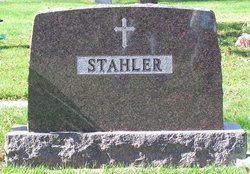
Bob Hope, Judge Stahler & America's ultimate triumph

I got within a few feet of Bob Hope once. The entertainer had arrived in Willmar via small plane and was slated to perform as some sort of fundraiser in Montevideo, as I recall. I heard later the event was not a success.
The name Bob Hope still meant a lot. But he was well past his prime. He was at a point where he might have been best off enjoying retirement. I'm guessing you couldn't count on a good draw just because of his name.
It's not uncommon for entertainers to keep going longer than they should. We wonder about Bob Dylan and the Rolling Stones today. A performance by B.B. King was so deficient, someone felt he had to write a letter to the editor to the Star Tribune. To which, someone responded we should have more respect than that. And that's the whole problem: our need to feel reverence. Are we buying memories when we buy a concert ticket?
I had a chance to see Bob Hope when he was younger at the Minnesota State Fair. He brought out a female singer and fawned over her looks and not her musical ability. The latter was substandard. Mr. Hope said more than once: "Isn't she pretty?" Such an attitude wasn't surprising since Hope was from a generation that had pretty rigid ideas about women's roles. We love that generation - it's still with us - but it had flaws as all generations do.
Hope's generation needed prodding to overcome racial stereotypes too. Don Rickles made a living off these stereotypes. I saw Rickles perform in Las Vegas once. These guys were tremendously hard workers: Hope, Rickles and the rest. If you want to see just how regressive their sense of humor was, just watch a re-run of one of those old "Dean Martin celebrity roasts." Martin's "rat pack" was the epitome of lots of regressive things. Only in a retro sense do we laugh at a lot of this stuff today.
Hope was in his true salad days at the end of World War II. He had a reputation of building rapport with the troops, of helping the lowest-level troops sense some enrichment. The late Thomas Stahler of Morris remembered. So many of us still remember Judge Stahler. I never knew him personally. His recollections of his WWII service are included in a book put out by our Historical Society. The book seems more a treasure trove today than ever before. So many of the contributing individuals are no longer with us.
The book does so much to keep the memories of them alive. The term "the greatest generation" seems so apt when observing these names. I see some of their names and I can immediately envision them as if they were standing in front of me. Earl Wevley! They were so unique and iconic and yet so unassuming. They viewed themselves as ordinary people. Truly they were fortunate even getting through all the adversity of their younger years. The war was preceded by the Great Depression. 
  
Rest in peace, Judge Stahler
Lean times in their youth
Tom Stahler graduated from high school in 1935, one year after my father. It was "the dirty thirties." The Depression was a specter. Stahler was born on a farm in Scott Township. He graduated from Alberta High School. My father Ralph graduated in Glenwood.
"There was no work, no money and no rich relatives," the Judge recalled. He decided that in his situation - no special advantages - he should get an education. Tremendously wise. He literally hitchhiked to Minneapolis to begin this venture, his possessions threadbare. He got his law degree seven years later. He said it's a myth how wonderful it is to "work your way through college." He wrote "I can attest that it is not so great."
He continued: "Those were the hardest years of my life and I missed many of the enjoyable aspects of college and cultural life."
 
Pearl Harbor, and then, changed lives
Tom had been married one year to Bonnie when the Japanese bombed Pearl Harbor. Instantly he felt he'd be getting a "government job" soon. He didn't wait for a draft notice. He enlisted as a Marine. He was called into active duty in December of 1942. His first destination was South Carolina. There, at a place called Parris Island - Tom called it "the hell hole of creation" - he was "indoctrinated" as a Marine. There he learned that a private was "the lowest level a human being could be."
Tom got promoted to Private First Class, and was selected for officer's training. He was named Second Lieutenant in the Marines, which he learned was "the second most lowly position in the armed forces," he wrote. He progressed to First Lieutenant and was then commissioned as captain.
The year was 1945, the last year of the horrible conflict, when Tom was ordered to the South Pacific Theater. He went there on a ship that "zig-zagged" to try to avoid enemy submarines/torpedoes.
Tom had a fascinating flashback as this whole episode unfolded. This is incredible. As a child, Tom listened to his mother sing: "Oh, the monkeys have no tails in Zamboanga." It was a refrain so it got well embedded in Tom's mind. Where the heck was Zamboanga? What were the odds a little child from America's heartland would ever see it? Was it just a made-up place? Tom would learn it was certainly not made up. His ship pulled in there.
Zamboanga was on the island of Mindanao in the Philippines.
"On disembarking from the ship, I found to my astonishment that the monkeys, in fact, did not have tails. There were not many monkeys to be seen, however, because the Japanese had eaten most of them."
Tom's contingent moved on from that place. They moved on to Malabang where "the ground was so soft that digging foxholes was swift and easy." Wartime danger remained very much out and about. Foxholes! In the movies a soldier in a foxhole might pick up a live hand grenade and throw it back. I'm amused at how the "good guys" in these war movies have an uncannily good aim throwing grenades, even from fairly long distances. They all should have gone on to become NFL quarterbacks.
Soon Tom learned he was part of the burgeoning effort to invade the mainland of Japan - a daunting task to the maximum. A miracle then happened. The 'A' bomb was dropped. President Truman thus spared the lives of countless U.S. soldiers. Two A-bombs were needed vs. the blindly committed Japanese.
Tom recalled that Okinawa was a staging area for the planned invasion of the mainland. Tom had arrived there on an LST (landing ship/tank). He saw thousands of ships in the harbor. Aircraft were "stacked." But the troops had another enemy besides the Japanese or "Japs" (or "Nips" for Nipponese). The weather loomed. In August Stahler's group was ordered out to sea on a small LST, part of an effort to "prevent the thousands of ships anchored in the harbor from crashing into one another in the typhoon, which was upon us," he wrote.
Tom experienced three very violent days in the China Sea. His group then arrived in a Chinese city, there to disarm Japanese troops who had been in control. He found that the Japanese were terrified, not so much by being in the face of the enemy, but gripped by fears of what would happen when they returned home as a result of their "surrender."
 
Hazard prompts a prayer (in Norwegian)
In December Tom got word that he'd be heading back to the "states." He traveled in a two-engine transport. A violent rainstorm knocked out one of the engines. "The pilot gave orders to prepare to ditch," Tom remembered. The rubber boat was released.
I'm not sure a movie could do justice to everything Tom saw. Tom heard a comrade saying a prayer in Norwegian.
A miracle: The pilot got the plane to its landing in Hawaii with only one engine. Tom got on a ship and headed to San Francisco. There was Bob Hope! The entertainer was waiting there to greet and show good cheer with the troops. "He paid for hotel rooms and dinner for all the Marines on board," Tom wrote.
This was Bob Hope at the apex of his life and career. It was nice what Hope did in Viet Nam, but our troops shouldn't have been there in the first place. He once asked while in Viet Nam: "What's that smell?" It was marijuana.
Tom was able to have a few words with Mr. Hope. Tom said: "Do you know that the monkeys have no tails in Zamboanga?" Hope looked a little confused. He "scratched his head and stared at me over his shoulder," Tom wrote.
"I returned to Morris where our family has lived ever since. I practiced law for 23 years and was a District Judge of the 8th Judicial District for 18 years."
What an incredible life. A classic "greatest generation" life.
Much information for this post comes from the Stevens County Historical Society book: "The '40s, a time for war and a time for peace."
  
Addendum: I remember a joke that Bob Hope told at the Minnesota State Fair in the '70s. He talked about the bartender who looked down to see a grasshopper, and who said "I suppose you don't know we have a drink named after you." And the grasshopper looked up and said, "You mean you have a drink named Thorndike?"
 
- Brian Williams - morris mn minnesota - bwilly73@yahoo.com

Monday, December 2, 2013

Our Samuel Smith, Civil War vet, running into eternity

The Sam Smith statue in Summit Cemetery, Morris MN (B.W. photo)
Our family is honored having its cemetery plot in the same cemetery as Samuel Smith. What a fascinating person Smith was.
You'd think Morris was located too far to the west to have much connection to U.S. Civil War memory. The town wasn't officially formed until 1871. We do in fact have those Civil War connections. Atop this list is the Samuel Smith "running rifleman" of Summit Cemetery.
I would guess such statuary is rare for a community the size of Morris. It's also very distinct and dynamic with its running pose. You might say Sam Smith has never stopped running, running forward and with elan on behalf of the Union cause, helping make the U.S. what it is today.
The Civil War is a little difficult to acknowledge today in comparison to other U.S. wars. Its obvious uniqueness is that it was Americans fighting other Americans. Speeches for such occasions as Veterans Day and Memorial Day don't seem to acknowledge the Civil War much. Those old vets are gone. In the spirit of reconciliation with the U.S. South, I think there's an effort to sort of soft-pedal talk about the Civil War. It was very messy business that had to be attended to. In its aftermath, all the U.S. states had to come together in the slogging process of re-unification.
The difficulties inherent in Civil War remembrance are underscored in a book by Tony Horwitz. Tony is a Pulitzer Prize-winning author. He traveled the South to study how the Civil War is remembered in that scarred region, a region that still has Stone Mountain as (sort of) a gesture to the "Lost Cause" of the Confederacy.
Southerners are conflicted about Stone Mountain itself. Southerners who want to keep it alive and vital, even with some corporate sponsorship, know they can't sell it as a true tribute to the Confederacy. So they try to adjust to modern times, making it a symbol of how the Civil War wounds needed to be healed.
To argue that the war resulted in something new and better is a little labored. Stop and reflect: The tragedy and toll of the war were so immense. Conciliation was forced by the North (or Union). In fact the South was crushed and left as something like a smoldering cinder. Horwitz found, unsurprisingly I guess, that many Southerners honored the old cause with little if any sentiment of reconciliation. Or, they painstakingly try to rationalize that the old cause can somehow be weaved into U.S. history as something other than an abject loser. I'll whisper: It was an abject loser.
  
A reflection of Gettysburg
Our Samuel Smith fought on the winning side. We can visit Summit Cemetery and admire the spectacular statue. It's very close in design to the statue at the Gettysburg Battlefield honoring the First Minnesota Volunteer Regiment.
Minnesota was quite the fledgling state when it sent its soldiers into the fray. Sam Smith reflected the melting pot of America. You might say America was a still-fledgling country.
Samuel was born in Germany in 1839. It gets complicated because he wasn't born as Samuel Smith! He was born Christ (or Christian) Zimmerman. The war would affect the name issue. He was age 16 when coming to America. He settled in Red Wing MN. He was age 22 when the Civil War conflagration broke out. He entered military service as a substitute for a fellow named Samuel Smith of Winona. He enlisted under Smith's name in Company 'K' of the soon to be heralded First Minnesota.
Huh? How, and why? The arrangements at that time allowed someone who was drafted to "hire" a sub. It does come across as a bit unseemly. Certainly unacceptable for today. But such was the way of the Union in the 1860s, and it would have Mr. Zimmerman taking his new name of Smith all the way to the grave.
Substitution was actually quite common. From this grew the saying: "A rich man's war and a poor man's fight."
My generation had problems with the morality of the Viet Nam War. That's an understatement, but war always proves calamitous from certain angles, even for the winners. There's the saying: "The first casualty of war is the truth."
You might get the impression looking at the Smith statue that war was a glorious proposition. While the cause may have been essential, the business of war was hell, and never more so than in the U.S. Civil War when medical knowledge was so limited. My friend Ken Hamrum notes that any time you were wounded in the Civil War and "it was more than a graze," you were likely in deep trouble. Of course, disease was as much of a calamity, most likely worse, than guns and bullets.
 
Fortunate to get through war
Considering all that Samuel Smith went through, he was incredibly fortunate to exit the war in good enough health to live a bountiful and productive post-war life. He was a very important early resident of the Morris area, building a large family that resulted in many descendants alive today.
Smith saw the panorama of battle in the eastern theater. He was at the First Battle of Bull Run, also called the Battle of Manassas. He got wounded while reloading his musket.
The Civil War was a transition time for Civil War weaponry. It's why the war was so tragically violent and took a toll as if a scythe. The word "musket" suggests the standard weaponry, but this was being replaced by the repeating rifle. One reason why Buford's Cavalry was so successful early in the Gettysburg battle, is that these soldiers had repeaters. The guns weren't always reliable. They could jam. But the military was on the cusp of a significant transition in the tools of war.
The "rifled gun" was deployed for the Civil War. This was an incredible advancement from earlier wars when "smoothbore" was used. The rifled gun discharged bullets that would spin. Shots were more accurate and powerful. Smoothbore was still around. It was a smoothbore that mortally wounded Confederate General Stonewall Jackson at Chancellorsville. The shot was "friendly fire." Jackson failed to survive an amputation. (There is an actual "grave marker" for his arm.)
Sam Smith's wound at Manassas resulted in his right thumb being amputated at the first knuckle. He remained full-go for military service. He became a teamster. He was hurt again in March of 1862, the second year of the war. A train locomotive at Sandy Hook, Maryland, frightened his team of horses. Smith got thrown from the wagon and was pounded by the wheels. Still he was not sidelined from service. He recovered from the chest and back injuries. He was assigned the ambulance corps just before the Battle of Fair Oaks in the spring of 1862.
Sam was discharged in 1864 and you'd think the war would be fully behind him. You'd think he could issue a sigh of relief, but no, he was ready to re-join the war effort. Surely this commitment demonstrates why such a grand statue is appropriate at our cemetery. Sam "substituted" again, this time for a fellow name of Johann Theis, but Sam didn't take on Johann's name. Now Smith is in the rolls of Company 'K' of the Second Minnesota. He got on board in time for General Sherman's march to the sea.
I found it unseemly in 1991 when the Minnesota Twins baseball team beat Atlanta in the World Series and some people invoked the "march to the sea" phrase. Let's not make such analogies.
Smith was discharged again on July 11, 1865, in Kentucky. Then it was back to Red Wing where I'd guess Smith was a transformed person, having seen all that he had seen. Smith resumed his work in a sawmill. The veteran married Catherine Hartman two years after the end of the war.
 
A venture into new challenge!
After all the wartime adventures, Smith was about to embark on the adventure (to be sure) of raising a large family: 12 children! Eleven were boys, ensuring that the "Smith" name would stay most high-profile for a long time here. What a legacy, both in terms of wartime service and family vitality. I'll venture he had the most incredible life of anyone buried at Summit Cemetery.
He attended a reunion of the First Minnesota in 1874 in Lake City.
The year was 1876 when Smith came to Stevens County, settling in Rendsville Township. He rolled up his sleeves for a farming career. He became active with the Overton Post of the Grand Army of the Republic, a precursor to the Legion, VFW and AmVETS of today.
Again there is a distinction: Those earlier vets were marking a war that had Americans fighting other Americans. The speechmakers of today can be a little restrained acknowledging that conflict, because after all, we have welcomed Southerners back into the fold.
Stone Mountain starts out celebrating the "Lost Cause" and ends up as a sort of symbol of reconciliation. A strange world, or strange country. Certainly a unique country. The bottom line is the South lost. General Grant's "total war" ensured that. He did what Lincoln hired him to do.
It wasn't until 1880 that Sam Smith became a naturalized citizen of the U.S. He had his name legally changed to Samuel Smith in 1889. Why? Descendants would explain that the Smith name would facilitate or make certain the pension benefits from war injuries suffered when he served as "Sam Smith." He first applied for a pension in 1872. He began getting $2 per month. In 1886 he applied for a hike in benefits. The name "Sam Smith" would cement his association with all that happened on the war front.
 
The grim nature of war
Getting pinned under wagon wheels reminds me of the Civil War trading cards which once made the rounds among boomer generation males. My friend Del Sarlette grins when recalling the Civil War series because they were "awfully gory." He grins about our ghoulish nature. Getting caught under wagon wheels is just the type of subject we might expect. Fortunately for Smith, he was resilient enough to overcome that and other incidents.
Sam and Catherine had a son named Ferdinand who died in 1895. It was at that time that Smith bought a lot in the Morris cemetery. Catherine passed away in April 1915. In October of that year, Sam, now age 76, traveled to attend the 50th Review of the GAR in the nation's capital. On the way back he visited the Gettysburg Battlefield.
Sam left us for the peace of heaven on May 11 of 1923. He died on his farm near Morris.
The statue of Smith is obviously inspired by the statue for the First Minnesota at Gettysburg. The pose is of a soldier making a bayonet charge. The statue in Gettysburg faces the Emmittsburg Road at the top of the slope where the fighting Minnesotans began their storied and tragic charge on Day 2 of the battle.
The Gettysburg statue, sculpted by Jacob Fjelde of Minneapolis, was put up in 1893, coinciding with the 30th anniversary of the battle. It wasn't until 1897 that this monument was formally dedicated, on July 2, the same date as when the First Minnesota gained its permanent fame. Governor David Clough accompanied the party of eligible honorees on the trip east. William Lochren was the emcee. Governor Clough donated the statue to Gettysburg National Park. "Three rousing cheers" came forth when Col. William Colvill, who commanded the men at Gettysburg, was introduced. The GAR post of Lafayette PA gave a 44-gun salute.
 
A salute from Morris MN
Sam arranged for his own statue in Morris as a gesture of honor toward the charge of the First Minnesota at Gettysburg. Sam was assigned to the ambulance corps on the day of this charge, and was not part of the charge. The First Minnesota had to close a gap in the Union line, and paid a dear price doing so.
Both statues reflect the "rank and file" of the military, nothing explicitly heroic. The common man of wartime was celebrated.
The statues have accomplished their purpose. Smith most likely got inspiration for his own statue from his GAR trip out east in 1915.
"Samuel Smith had a sense of history and his place in it," wrote Thomas Rice, whose research I pored over for writing this post. Thank you Thomas. "(Sam) and all of his comrades saw that they had saved the Union for posterity. They were proud of their accomplishment and wanted history to know about their deeds."
All is not placid with Civil War remembrance out here in West Central Minnesota. I have seen a Confederate battle flag flying at a residence in Starbuck. The Confederate flag is a symbol today of vague notions of rebellion. The actual "War of the Rebellion" - a term popular in the North during the war - had the rebels stomped out as if an ant underfoot. Lincoln, Grant, Colvill, Smith and all the others ensured that.
Let's salute Samuel Smith whose life is an incredible story. Pay homage at Summit Cemetery. Walk a little ways east and stop by our Williams monument also, which acknowledges WWII with my father Ralph's service in the Pacific. He was a gunnery commander. When my father died, one of my first thoughts was that I wanted to make sure there would be a gun salute for his funeral. There was, and it was moving. Thanks to our Legion, VFW and AmVETS.
- Brian Williams - morris mn minnesota - bwilly73@yahoo.com

Monday, November 25, 2013

The WWII generation & Ralph Lesmeister: compelling

The B-26 bomber, what Ralph Lesmeister flew
Observing a list of WWII servicemen from Stevens County is humbling and uplifting. We can remember so many of these people. So many have left us for the afterlife. Others might be debilitated because of the effects of age.
It was actually quite some time ago that we first heard pronouncements about how "the World War II generation is leaving us." I remember interviewing the national commander of a veterans organization who said this, and thinking that his thoughts, while pointing in the right direction, were a little premature.
"There are obituaries for World War II veterans in the paper every day," he said.
Absolutely true. But so many of the Greatest Generation got on board with the war effort, many were going to stay with us for a long time to come. Now, many years later, the words of that commander ring more true.
I remember when the number of World War I veterans dwindled to where the ones that were left became novelties or celebrities at the local level. I remember photographing a group of these at the Morris Legion Club. I remember interviewing Earl Eames and Thore Mathison - wonderful men. Thore's grandson Thore Dosdall keeps the memory alive.
We now see the day coming when WWII veterans are going to be in that same small, exclusive circle. My father Ralph E. Williams left us in February of this year. He was a U.S. Navy vet of WWII in the Pacific Theater. He visited Tokyo when it was a smoldering cinder of a city after the hostilities had ceased and firebombing had ravaged the city. War is hell.
We hear speeches on holidays like Veterans Day and Memorial Day about the necessity of wartime sacrifice. My generation, unless we've changed, is a little more reserved about the necessity of war. I say "unless we've changed" because us boomers have made up a big part of the political "tea party" which has attitudes so contradictory to what we seemed to stand for when young. We detested the Viet Nam War. We even directed some misguided feelings toward the servicemen of that time. Today I think almost all of us would regret that.
"We were all in it together": the skeptical and emotional protesters and the young men who answered their nation's call.
"Rambo's" commander in the first Rambo movie said, in that impassioned conversation at the end: "It was a bad time for all of us." That synthesizes it.
What a chasm between WWII and Viet Nam in terms of our perception. The "generation gap" itself was an outgrowth of that difference between the two wars, one being the "good war" and absolutely necessary, and the other being at the opposite pole, a hellish nightmare with no purpose.
Some WWII veterans are still among us and have plenty of spunk left. They circulate in the community, attend church etc. But so many have departed from us. I hear their names and can instantly envision them. I can sense their uplifting personalities around me. They were such gentle people.
It has been said of the WWII generation that they "never changed." That's a compliment. They saw the boomer generation with its odd traits and excesses and never commented much. You might say they were enablers. But I have another take: Not only did these older people get through the travail of WWII, they had gotten through the Great Depression that preceded it. I think they were just so thankful for their material blessings post-war, they weren't at all averse to spoiling their own children.
They stood back and just gave thanks.
 
Ralph Lesmeister: airman of WWII
Looking down that list of WWII veterans from Stevens County, I paused at the name of Ralph Lesmeister. He was a most agreeable fellow. I remembered he had some significant wartime experiences. These experiences are detailed in a book put out by the Stevens County Historical Society.
Lesmeister wrote his own reflections which really paint a picture of his generation. He recalled the 1930s as a time of peace, "and it seemed to us that there were few changes in the world." He noted that "we learned a lot about saving money, getting by with the minimum. Prices didn't even change in the Sears catalog and we still did a good share of the farm work with horses. I remember turning on the radio and hearing a man called Hitler, talking in a foreign tongue. No one paid much attention."
Ralph graduated from high school in 1940. He was on the cusp of incredible experiences. Any placid atmosphere of his high school years would now certainly be disrupted. Ralph recalled that no one was expecting a big war. History books tell us about the "America Firsters" who had Charles Lindbergh helping lead the way, making sure our government wouldn't be lured into a foreign conflict. The sentiment seemed so strong.
"America First" is probably not remembered as well as it might be, because it became politically incorrect. That happened when the bombs fell on Pearl Harbor. The movement seemed to quickly dissolve. Frankly, I think "America First" represented a pretty laudable impulse. It's the idea that war is bad and a total last resort. Recently we seemed to project that impulse when we all rose up and pressured our government not to have a repeat of the Iraq experience in Syria.
But WWII seemed quite another matter. Patriotic fervor erupted. The sense of mission seemed to overwhelm us, although there's the dirty little secret that many young men quietly looked for ways to be exempt from military service. An author who once spoke at our Morris Public Library wrote about this. There were interests seeking to make money off the war in unseemly ways. We are so human an animal.
 
An eerie prediction
The "class prophecy" when Ralph Lesmeister graduated from high school had him as "a flyer in a war."
"Whoever thought we would be in a war?" Ralph asked. "Nobody would go for that. Strange, but two years later, I was enlisted in the Army Air Corps and we were in a war."
Ralph got into pilot training. After several months of this, he joined a crew of six on a B-26 medium-sized bomber. It was destination England.
He wrote: "It is difficult to comprehend coming from being a farm boy from Morris, and here I was looking ahead to my first bombing mission over the enemy, seeing the first flak shelling burst around me, feeling the shake-up of the ship, and finally coming back to base and getting the holes patched up, only to go out again the next day! We would bomb bridges, railways, factories, air fields, and German troop concentrations."
(end of quote) 
Whatever possessed the German people to go in the direction they did? Were they not rational human beings? Was it the steep economic collapse that country experienced, and the emergence of the National Socialist Party as a savior in effect? Had the German people been overly punished at the end of World War I? Had they become desperate trying to crawl out of a hole? We all call Hitler a madman. But a single individual with insane tendencies shouldn't be able to get a whole country in his grasp. There was a much broader phenomenon, it's just that we like a convenient symbol, and that symbol is Hitler.
 
"Flying through the flak"
"It all seemed so unreal," Ralph wrote, "flying through the flak."
Ralph and his fellow pilots knew the evasive actions that would up their odds of survival, so he actually felt confidence. The picture changed dramatically just before Christmas in 1944. The Allies were hoping that the Wermacht was on the ropes, but the enemy was pugnacious. The enemy mounted the Battle of the Bulge, the great counteroffensive.
Robert Shaw played a German tank commander in a movie about the Battle of the Bulge. His character was in denial about the war's realities. He was a total reflection of the pugnacious stance. Is there something in a German's DNA that promotes this? I have heard this trait connected to the "Prussians." I don't know. I know the American Revolution vs. England was helped by a Prussian military master brought here.
Ralph Lesmeister and his crew headed out to blow up a bridge on the Ahr River. The Germans were using the bridge to supply their massive last-ditch effort. All of a sudden, enemy Messerschmidt 109s and FW-190s swarmed toward Ralph's group. Ralph recalled an "ME-109" ramming his plane and cutting off its tail. The tail gunner was killed and went down with the turret.
Ralph realized the situation had become as dire as it could be. The Luftwaffe loomed. "Machine gun tracers were as thick as rain, it seemed," he wrote. He added: "Oh God, how I wished I were home!"
Ralph's plane became disabled. The bomb bay was on fire. "I knew we had to bail out or burn," he wrote.
Ralph as the pilot was the last to bail out. He literally jumped through the fire. He decided to fall freely for about two miles to try to avoid detection by the enemy planes.
"I swung only twice and then was in the trees," he wrote. "What a feeling."
He realized he was now in a position to be "hunted like an animal." He eluded some of the locals who were out and about with pitchforks. "Hitler Youth" were poised with their machine guns. Ralph sought desperately to walk back toward the line and away from the enemy. It was impossible. In the blackness of night, Ralph stumbled into a German troop camp.
"The rest is rather difficult to talk about," Ralph recalled. He was marched down the streets, taunted and spit at. The atmosphere wasn't totally devoid of humanity. It is heartening to note that a young Wermacht corporal, assigned to guard Ralph, saved his life from an incendiary lynch mob in Bonn. British planes were showering bombs down on Bonn.
Ralph ended up in solitary confinement, cold and with minimal food and water. This lasted until war's end in May of 1945. Ralph was relieved by the Russian Allies who overran his prison camp at Stalag I on the Baltic Sea. Ralph was free again.
For a long time, Ralph had trouble forgiving, he shared in his memoir piece. But he eventually found his way out of that. He and wife Millie would sometimes watch a movie about WWII and break down and cry, he recalled.
"That was the 1940s," he said in wrapping up. "In the time after the war, life became about starting a family, finding a home and learning a trade. Though it was a great challenge, there was much joy about it. But we will never forget the '40s."
 
Two Ralphs who had seen a lot
My father, name of Ralph also, could tell his own share of sobering stories. He like Mr. Lesmeister moved on after the war, plotting a new course but never forgetting. My father's military service is acknowledged on our new family monument at Summit Cemetery in Morris. This is a black bench type of monument on the eastern end of the new portion of the cemetery. It stands out a little because only recently did the cemetery give the OK for above-ground monuments (as opposed to "flat stones").
Come and visit. Reflect. The Greatest Generation is indeed leaving us. But they left a legacy.
 
The Stevens County Historical Society book is called "The '40s, a time for war and a time for peace." Be aware that the publisher appeared to have cut corners, because my copy has fallen apart much too easily, pages coming out all over the place!
- Brian Williams - morris mn minnesota - bwilly73@yahoo.com

Monday, November 18, 2013

Joys and difficulties within community newspaper

Perry Ford, fun to interview
Holidays always bring some memories of when I was out and about with the Morris newspaper. Halloween could be a very stimulating time. There was always a wide choice of Halloween parties. I remember a terrific Darth Vader costume at a party at UMM. Kids' parties were the best.
Perhaps my favorite memory is of a "Midnight Madness" unveiling event for UMM basketball, coinciding with Halloween. I remember coach Perry Ford handing the microphone to a young man dressed as Elvis Presley. This was the late Elvis: white jump suit and bell-bottoms. This was the kind of Elvis who jumped out of an airplane - a group of Elvis "clones" skydiving - in that movie with James Caan. Those "Elvises" landed on the Las Vegas strip.
I took a photo of the costumed student standing next to coach Ford. The student made a little speech projecting Elvis' persona quite fine. A bemused and proud Ford looked on. Also that night, I photographed a student dressed as a gremlin befriending Chuck Grussing of Campus Security. The student put his arm across Grussing's shoulder and the two smiled.
UMM in those days played in the Northern Sun Conference. UMM hoops may be quite fun to watch today, but the average caliber in the UMAC is lower.
Coach Ford had a pretty long tenure here. He was a strong recruiter and PR man. As a bench coach I don't think his grade was that high. His intensity didn't always come across as uplifting. Sometimes it just seemed more like exasperation. I'm sure it was a challenge trying to hold things together at an institution where athletics was never going to get an abundance of resources. That's not a criticism, really. Joining the UMAC eased the frustration.
Ford was intense but this seemed to put him in the, well, manic range sometimes, IMHO. He was a little like Robert Hays trying to land the plane in the movie "Airplane." Remember the Robert Stack character saying of "Striker" that "he felt too much?" That was coach Ford, in my assessment.
I gather that Perry has had a happy landing career-wise with American Family Insurance. He's a very family-oriented man. UMM basketball was not going to continue to be a good fit for him. The UMM hoops coaches today seem on sedatives by comparison - a totally even keel, with no clipboard-throwing.
I interviewed coach Ford very often for articles. UMM had no true sports information director in those days. UMM either had no SID at all, or an SID in name only (like an assistant football coach who was always on the road).
I'll admit there could be a hit-and-miss quality to my sports journalism in those days. How could it be any different, considering how many teams were out there? The only alternative would have been to cut way back, just to ensure "equal treatment." That would be throwing the baby out with the bathwater. So I kept plugging away with my own personal philosophy of just "casting a wide net."
I produced a substantial amount of sports for each issue and I had to try to budget adequate time for "quality control" - you know, proofreading and such. It didn't really work to give my sports sources a "deadline" for getting stuff to me. The deadline would only work if they all didn't wait until the last minute. I had to roll up my sleeves and get started.well in advance of any deadline. So it was an imperfect system.
But I was still happy to soak in that whole wide world of sports in Stevens County. It was fun to be amidst the likes of the gremlin and Elvis. Thinking of Chuck Grussing reminds me of when UMM Campus Security was more relaxed and less uptight than today.
 
The end comes, amidst discomfort
When I left the Sun Tribune newspaper in 2006, the atmosphere had become tense and unsettled. At one point, showing my usual candor, I said directly to the top person: "Why can't we just enjoy life?"
What a stupid question. Meeting quotas and profit goals is much more important than enjoying life (sarcasm intended). It's much more important to watch your back while the eyes of higher management glare down on you.
The Morris newspaper was no longer a relaxed family business. We were "corporate" with the accompanying crack of the whip. We were two weeks from high school graduation and the start of summer when I made that "enjoy life" comment to the top manager. (I don't use the word "publisher" because I don't believe that's accurate.)
I was hoping we could just slide into summer and then reflect and make any tweaks. But no. People had their cheeks sucked in. It was "tight."
 
Marching orders, in writing
Regarding sports, the news editor told me in writing: "We want more features on individuals. I know some coaches tend to balk at this kind of thing, with the old bromide that no one should be singled out. Bushwah. If they are athletes people are talking about, we're going to write about them. If people feel slighted, that's the way of the world. It's a safe bet that a lot of people would've thought twice about going to MAHS boys hoops games last year if Brent Winkelman weren't there to watch."
(Actually his name is Brett Winkelman.)
Well. . . In theory there is nothing wrong with more feature articles. But how was I supposed to scrounge these up week after week? There really aren't that many captivating ideas out there. We had triplets in MAHS sports in those days, so that's an obvious feature story candidate. However, it's very delicate, in my view, singling out high school-age student athletes for feature story recognition. Would those triplets even want that kind of attention, or might they prefer just being viewed as individuals?
Maybe if there's an amputee in wrestling, that's a feature story. But we wouldn't want this individual to feel like a freak. Athletes under the age of 18 deserve some generous privacy. I was already trying to write 3-5 decent non-sports feature articles every week. In fact, the top manager was requiring me to turn in a list of these story ideas every Monday morning. And now I was being required to start churning out sports feature articles, presumably on a regular basis.
Also, just as impractical, I was being required to try to get quotes from players for sports articles. Again, this directive was in writing. Every working person knows that when you're being showered with written directives, you're in effect being harassed. There should be a simple element of trust between an employee and his superiors. But remember, all this bad stuff was happening in 2006, the year which we all now know was when the newspaper industry realized it was in trouble.
The newspaper industry has adjusted and stayed alive through cutting and consolidating. I in effect got cut, although the remaining people there would like to just pretend I left voluntarily. It must be miserable to have to live with a lie.
 
Apparently no follow-through
Judging from the written directives I was given in sports, the Morris paper was going to go in a totally avant-garde direction. Of course it didn't. What actually happened? First there was an editorial about a month after I left, stating that sports coverage in the Morris paper was going to be "more timely" in the future. How wonderful Brian is gone, eh?
And you have to just hang it out to dry. Instead of disparaging me, why don't you just show you can do it better? Oh, I guess that would be harder. The individual who wrote those directives went on to taunt me when I simply wanted to visit East Side Park one day and maybe say hello to Tom Emmer. I knew there would be someone from the Sun Tribune sticking to Emmer like glue.
My sin was of trying to stay employed by the local newspaper where I'd been for 27 years.
When I glance at the Morris newspaper sports section today, it strikes me as totally generic. I don't sense any special enterprise at all. And of course the whole product is substantially smaller now - perhaps even less than 50 per cent of what it had been (in the heyday when I was there).
The newspaper editor wanted to suppress what he called the "gamer" sports article - the kind of article that simply reviewed what happened in a game. Again, I have all this in writing. But doesn't the Morris Sun Tribune of today present "gamers" totally and unapologetically? I'm not sure I couldn't sue. I was told to do things in a certain way, to make UMM sports our top priority, to write lots of sports feature articles and include lots of quotes in sports re-caps.
And then the paper turns around, after I left, and appeared to do little if any of this. If anything the sports articles in the Sun Tribune today seem plain-Jane, devoid of any imagination at all. So, was I harassed out of the workplace? You decide.
I was told all game stats would be moved to a special section on page 2. Fine in theory, but what if we're in a slow sports week, like around a holiday, and I'm just trying to flesh out page 1B of that section? I was being micromanaged in a way that can eventually affect one's mental health.
Fact is, the newspaper was headed toward retrenchment. I just wish they had undertaken a more direct and honest way of dealing with it.
Quotes from players? I felt highly uncomfortable getting on the phone and regularly tracking down adolescents, especially girls, for quotes on some game. The kids might be busy with other things. The parents might be uneasy about this.
I walked out of the Sun Tribune building for the last time on June 2, 2006, relieved of all that anxiety. But without a job, and about to lose my health insurance. I'm not sure Obamacare is going to be a lifeline. (Spell-check doesn't recognize "Obamacare." Is that a bad omen?)
- Brian Williams - morris mn minnesota - bwilly73@yahoo.com
Tuesday, November 12, 2013

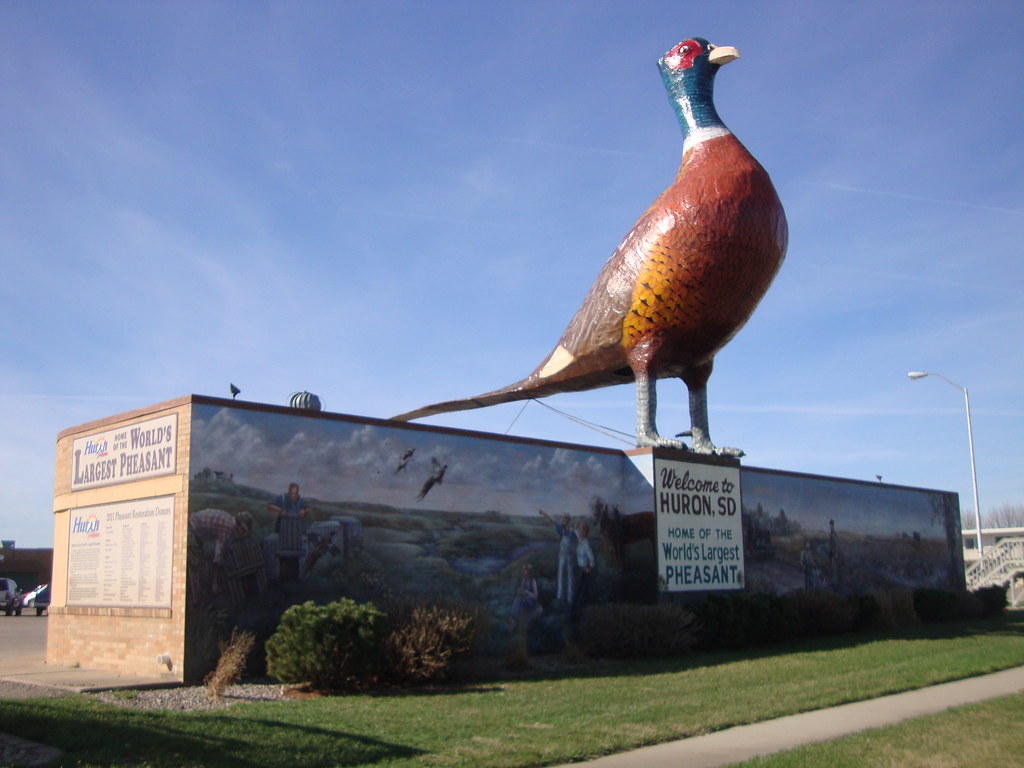
Monument to nature: "World's largest pheasant" (Huron)

Nature isn't always easy to find in the prairie portions of the state. Farmland presides.
I remember the meadowlark with its distinct call being part of the backdrop of living in rural Morris when I was a kid. We lived on the north edge which was a little more remote then. No Superior Industries with its massive operations. Still, there's a feeling of country where we live (knock on wood).
The beauty of the natural world usually breaks through even where man has a strong imprint. The prevalent and bountiful farmland doesn't stand in the way of the pheasant. Some years are better than others for this wonderfully colored bird. We can hope that the low points never get too extreme.
Something about the habitat has caused the meadowlark to leave us. If the meadowlark were around, I would surely know it because the call is unmistakable.
We have seen the eagle depart and then come back to a certain extent. Eagles are known around Lake Crystal. I well remember the grand profile of a bald eagle up near the top of a tree by the Pomme de Terre dam.
Geese were once a pretty rare sight in this county. So rare, people would pause and gawk skyward when they were overhead. The Canada goose was a rare delight to see in the 1960s, but we were treated occasionally to flocks of "blues" and "snows" (blue geese and snow geese) passing overhead in the fall.
If you were a hunter and got a goose, you could tell people as if bragging. The Canada goose not only rebounded, its vitality became such that the now-deceased writer Doug Rasmusson described them as "sky carp." Doug would really love the Internet. His writing would win wider renown.
Geese are attracted to Lake Crystal along with coots. It can be quite the panorama for the Waddell family of the Waddell trailer park to enjoy. They tell me the sunsets across the lake can be quite special. Raccoons are known to be quite comfortable in that vicinity. I suppose raccoons are on the undesirable side of nature's presence, but they seem industrious. Skunks can go elsewhere.
As I write this (on 11/9) there is a big bloated dead skunk on the south shoulder of the highway between Prairie Inn and Fastenal. I stopped by the City of Morris office in the middle of last week to inform of this. I swear the dead animal has been there a week. I have noticed there is no odor issue with it, as I passed by it on bike one day. But it's an unacceptable eyesore. It's inexcusable for the City of Morris to ignore this, while at the same time our City Police go out and about looking to give citations to people not wearing seat belts - tantamount to harassment.
And then when we need the City to provide a service - removing a big dead skunk - they do nothing. Maybe the tea partiers are right and government is all out of whack.
Pheasants are the most desirable part of nature. No bird can "run" like a pheasant. The booming sound of a "flushing" pheasant can truly startle. Be aware of this when taking a walk on the biking/walking trail around Pomme de Terre River.
The pheasant numbers are reportedly low now. Hunters were advised that the pheasant population was down about 30 per cent from 2012. Cited as factors were the extended winter and cool wet spring. Also, the state's farmers have been plowing up more grassland to grow corn and other crops because of high prices. The trend is likely to continue.
Pheasants are mostly in the south half of the state. Southwest Minnesota offers the best numbers. Governor Mark Dayton went to Madelia in southern Minnesota for the opener.
 
A pheasant to symbolize
Back in the early 1980s I suggested that Morris establish some community iconography: the world's largest pheasant. Wheaton has the world's largest mallard. Another community lays claim to the world's largest bullhead. I wasn't aware at the time, but another community does in fact present the "world's largest pheasant." The Internet helps us find out such things today.
You can do a Google image search and find "the world's largest pheasant." Congratulations to Huron, South Dakota, on having this asset. The late Governor Rudy Perpich once said South Dakota was "50th in everything." Remember? Maybe you don't, but "Governor Goofy" as he was sometimes called, had to concede that South Dakota was No. 1 with its iconic pheasant, located along Highway 14 in Huron. It's a 22-ton sculpture made of fiberglass and steel, and it's an advertisement to attract hunters. It spans over 40 feet from the beak to the tip of its feathered tail.
There's even some fascinating mythology associated with this grand bird. It seems remindful of Native American religion. Andy Rooney once said Native American religion stood for nothing, but we know better.
 
Inspiration from folklore
From where does the howling prairie wind come from? Turns out, Huron's big sculpture was once a living, real bird, a giant bird, according to the legend. The legend dates back to when the first settlers came to the Dakota Territory in the early 1880s.
Stories spread of this giant pheasant with colors so magnificent, in flight it could be mistaken for a brilliant rainbow. It had incredible speed on the ground and in the air. Settlers felt the volatile winds of the Dakota prairie were caused by this bird running across the grassland. 
As with "Champ" the sea monster of Lake Champlain, out east, many people claimed to see the fascinating bird, but nothing could be authenticated.
One day in the distant past, a boy with a gun is said to have confronted the bird. The boy raised his gun but he paused, as the beauty overwhelmed him. "Why not kill me?" the bird asked (so, it's anthropomorphic). The boy responded, "You are a magnificent bird."
The bird then said to the spellbound boy: "If you spare my life, I won't move from this perch until everyone in the world has seen my family of pheasants and me. And to honor me, I ask that you give your word that you'll hunt only roosters and only in the fall and winter months."
The boy was quite agreeable to the terms.
The pheasant also asked that a ritual be established. The Huron-ites would release a single ringneck to christen the hunting season, and if the bird were to fly toward the James River, hunters would find a bountiful early season, and if the direction was away from the river, the late-season would be most rewarding.
I'm sure hunting is important to the Huron economy. I'm sure it has impact for our Morris too. As a young person I hunted. I find no appeal in the pastime anymore. My father and I both lost our interest. My father said "live and let live." We would appreciate the meadowlarks' beauty without feeling we'd have to kill any such thing. Killing is an odd way to express admiration for nature's presence.
Take a walk along the biking/walking trail. Enjoy the deer, striped gophers, squirrels and the array of birds. Show the proper awe and respect, in the same manner as Native Americans do. Andy Rooney was all wet.
 
To symbolize Morris
What about community iconography for Morris? We must cross the world's largest pheasant off our list. What then to consider?
I'll suggest, again, that maybe we could erect a replica of that well-known sign between Morris and Cyrus, the one that proclaims "Stop and smell the roses." The best location would be that grassy area where the highways meet in front of McDonald's. At bottom-right could be printed "Morris Minnesota," and somewhere else could be printed the name of the person inspiring it: the late Dan Helberg. The sign could be illuminated at night. It would be the answer to the "star" and "buck" of Starbuck. It would essentially be a billboard, something our Terry Timmerman could handle quite professionally.
I'll always appreciate that Terry, when he was with the Morris newspaper, knew my favorite soft drink was the Mountain Dew "Code Red."
Every community should consider a defining icon of some kind. Morris could use a little extra PR push. We're supposedly accenting tourism now. Some of us laughed at that at first. But why not pursue it? Let's "stop and smell the roses" and appreciate all the nature out and about, even the raccoon. I love the junco bird during the winter months. It's a hardy companion.
- Brian Williams - morris mn minnesota - bwilly73@yahoo.com

Friday, November 8, 2013

Richie Incognito & another ominous cloud for football

We in Minnesota are committed to a Vikings stadium that may be a bridge too far. Who hasn't had thoughts in the back of his/her mind about this? The stadium takes on a life of its own, as if we're mere observers and unable to demand any real accountability.
Who can feel certain football will continue with its popularity? The sport takes nicks to its image constantly. The awareness of health issues is more than a mere nick. Another problem is the anachronistic nature of football culture. That anachronism is in full view with the Richie Incognito matter.
Incognito is the poster boy for testosterone-fueled, in-your-face football "macho." Joe Kapp was once on the cover of Sports Illustrated with the caption "man of machismo."
Hasn't the concept of "manly" pastimes gone the way of Foster Brooks, the "Lovable Lush" - remember? - who made a living imitating drunks. Brooks got famous on those Dean Martin roasts. Ol' Dean-o was the "rat-packer," suavely holding a cigarette, who promoted the idea of beautiful women with "curves in the right places." I point out these cultural changes because I believe the sport of football is threatened by the same kind of change.
We in Minnesota are committed to a Taj Mahal type of stadium while we increasingly learn about the troubling aspects of football culture and the obvious barbarity - men damaging their bodies and brains. I can remember when UMM football in Morris was accompanied by a real swagger. I'll congratulate UMM for easing its program out of that image. UMM also promotes the far better alternative to football: soccer. If only we could get soccer propped up as an alternative for the teen boys of our community.
For that matter, do we even need a sport that is exclusively for boys? Why a sport for boys only? I suppose the physical rigors of football would be too much for women? Well, we seem to be learning that the rigors are too much for men.
The moral of the story might be that a sport that is too dangerous for girls is too dangerous for everyone.
Girls and women are privileged: they are not drawn into a sport that dishes out real serious health consequences. Those of us who are concerned about the Vikings stadium, and about Mark Dayton's myopic stance regarding it, are alarmed by a litany of news reports showing football in a bad light.
Daily we hear about the Incognito matter. (I'm wondering how someone comes to have a last name - "Incognito" - that I understand to be a word rather than a name. "Incognito" means having one's true identity concealed.)
 
A guy with character issues
Richard Domnick Incognito Jr. is an intimidating jerk. We can all remember someone like him in our lives.
Intimidation is normally a bad thing, but football is all about rolling over your opponent. Richie Incognito can accomplish this with his 324 pounds and 6'3" stature. Offensive lineman hardly seem like athletes. They seem like fully loaded trucks.
You would think a bully on a football team would at least support his own teammates. But Incognito loomed like a huge imposing nuisance for a fellow Miami Dolphin. The victim here is Jonathan Martin. Not that Incognito doesn't have other victims in his past. He has a long-established reputation. He's tolerated in the NFL because he can apparently help you win. Coaches are paid to win. Winning is the product, as it is in Division I college ball. You win by overpowering and by seeking to intimidate. On the field this is brutal. We as fans either don't notice or are in denial.
Joe Philbin is coach of the Dolphins. He only speaks on this messy situation because he has to. He'd happily look the other way if he could just get some wins.
Football's "tough" culture is coming to light in an unflattering way. We're learning that Incognito had coaches' instructions to "toughen up" Martin. Martin left the Dolphins with emotional issues after being subjected to bullying from that raging soul, Incognito. Someone has wondered if Incognito suffers from " 'roid rage."
The pressure to win in the NFL is overwhelming. We see quarterback Jay Cutler of Chicago desperately trying to return to action after a groin injury - a premature return. Players know the risks but succumb to football's spell as if it was a siren song. We read about retired players who are pathetic because of the toll the game took. The game was like an elixir for them. Where else might many of these men have been able to perform in front of tens of thousands of admiring fans?
We as a society have created this monster. We have done it at the micro level with elaborate football facilities - we sure have one in Morris - that are like shrines to this barbaric and increasingly dated-looking sport, a sport that could get filed away with "rat pack" humor and the "cocktail hour."
Incognito is suspended. That's because media attention painted the NFL into a corner. There may be too many leaks in the NFL's ship, though.
It's unforgivable that in order to "toughen up" Martin, Incognito felt he had to employ racial epithets and profane language in voicemail and text messages.
The crudeness reminds me of UMM Cougar football's previous era marked by that masculine swagger. The best exhibit I can put forward is the "Cougar Follies" that was an absolutely unnecessary event leading into the season. The more crude, the better. I remember mentioning "Cougar Follies" in a chat with then-Chancellor Jack Imholte - the title was "Provost" then - and Jack saying "the less people know about that, the better." I remember being at the 9F Sportsmen's Club waiting for this event to start, and players were a little slow in quieting down, and one of the captains (initials S.S.) stood up and yelled "shut the f--- up!" That set the tone.
 
A less-gentle time
We all went along with UMM's football swagger and its testosterone source, because UMM football won. That of course eventually changed. I think a lot of us were privately annoyed by that swagger when it reigned.
We probably knew better than to laugh at a lot of the "rat pack" humor with its misogyny. But cultural change happens slowly. We realize a certain thing is wrong but we keep our finger in the wind to make sure there's a societal consensus.
So many of us question the new Vikings stadium. There are so many storm clouds around the sport of football. Not only that, an increasing number of fans prefer watching the game on TV and aren't interested in "being there." How many of us choose to watch a game start-to-finish? It's almost intolerable with all the breaks. Football is an entertainment product subject to all the vicissitudes of the entertainment market. It has had an incredibly successful reign as a golden goose. But there's a saying: The bigger they come, the harder they fall.
The story involving Richie Incognito has been high-profile in the media for several days, even breaking beyond the boundaries of sports reporting. It's in the straight news because we sense this is a cultural issue. As a cultural issue it puts football on trial. Coaches have looked the other way with Incognito's sins. The player has a long history of bullying. As a freshman at Nebraska he picked fights and harassed teammates. He has been described as "a privileged jock who likes to make life miserable for opponents and easy targets."
The media in a subliminal way seem to be telling us that Incognito's misbehavior reflects an anachronistic culture. We all know football has intimidation. It's "news" now because we're questioning it.
 
"Tear away the illusions"
On Wednesday there was another big headline coming out of the NFL: John Moffitt of the Broncos choosing to walk away from the game. He's forfeiting tons of money. He says he'll still have enough money.
You're in the wrong age, John - money is everything in our contemporary culture. Or at least it has been.
Moffitt said he "lost his love for the game." He was "tired of risking his health." He was a third-year guard from Wisconsin.
Moffitt says it's "madness to risk your body, to risk your well-being and happiness for money." He continued: "I just want to be happy. And I find that people who have the least in life are sometimes the happiest. And I don't have the least in life. And I don't want to sacrifice my health for that."
Moffitt said of pro football: "Once you tear away all the illusions of it, it's hard work. And it's dangerous work."
As fans we can cling to those "illusions." Governor Dayton apparently is.
The NFL is having to put out these little brushfires of horrible publicity all the time. The public can't stay fooled for long. We finally had enough of Foster brooks, Dean Martin, the "cocktail hour" and "curvaceous women." Civilization finally takes over.
In the meantime, we'll be watching a new Vikings stadium go up as if it were some magnificent palace in Sodom and Gomorrah.
- Brian Williams - morris mn minnesota - bwilly73@yahoo.com