History-making music group for UMM - morris mn

History-making music group for UMM - morris mn
The UMM men's chorus opened the Minnesota Day program at the 1962 Seattle World's Fair (Century 21 Exposition).

Wednesday, January 9, 2013

Brent Musburger & the mystifying concept of "babes"

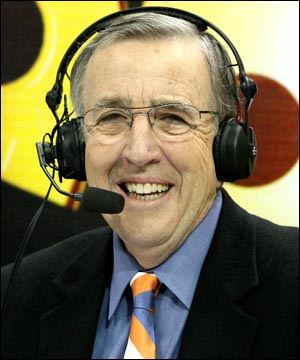
Brent Musburger, taking brickbats
The humor of the "rat pack" belongs in a time capsule. We are charmed by it because it's so distant. None of our cultural norms disappear permanently though.
Men judging women by aesthetic standards that are archaic surfaced this week. I heard about it on the morning after, during the essential "Morning Joe" program (MSNBC).
The behavior in question happened during that big football game. I wasn't watching because, as anyone who follows my writing knows, I'm withdrawing from football. Maybe football is heading the way of the rat pack and its humor. It's way too damaging to the human body and brain. Women can feel thankful they've been spared that.
Women have been subjected through time to comments from men that seem shallow and boorish. I remember seeing Bob Hope in concert once when he had a featured singer. He asked for a special additional applause for her and said "isn't she pretty?" This concert was at the Minnesota State Fair. Frankly she was not a good singer. But she fit this image of what has been broadly accepted as a "bombshell."
You chuckle? Such language has faded but it's not gone. On Headline News we can see Nancy Grace, the fire-breathing legal commentator, talking about the Jodi Arias murder case with a label at the bottom of the screen: "bombshell beauty." This "bombshell" may have committed a heinous murder. But why are the aesthetic qualities of the accused worthy of such mention? Because, the "old" criteria as promoted by the rat pack and Bob Hope still float around our culture.
So Brent Musburger "steps into it" Monday night during a game that I hear was horribly boring.
Good, I'm glad it was boring. It didn't bother me to learn that Notre Dame was pummeled either. Notre Dame's chutzpah with football has always grated on me. Today the chutzpah of all of football grates. It grates on me that our University of Minnesota chose to flush away $800,000 to get out of a home-and-home football series with University of North Carolina. And I don't care if the athletic director can explain this away with talking points. On the surface it's awful.
I don't think of Brent Musburger as an old man. I need someone to tap me on the shoulder. It's the year 2013 now.
I remember Musburger when he was part of the popular Sunday afternoon panel that included Phyllis George, known as a "former beauty queen." Once a beauty queen, always a beauty queen. The mother of the murdered JonBenet Ramsey was a former beauty queen.
We seemed to have a more firm notion of what constituted beauty once. By "we" I suppose I mean mostly men. Men had a more prominent role in defining our culture once.
Musburger began gushing about the girlfriend of the Alabama quarterback. Let's remember this TV crew was trying to keep the evening's broadcast entertaining despite a one-sided football game. Let's remember they're media professionals. They're always conscious of the eyeballs - wanting to keep them. How do you think Musburger keeps getting these gigs at age 73? Celebrities like him may seem carefree and nonchalant but underneath they are calculating craftsmen.
Musburger evaluated this young lady by archaic terms.
What he said wouldn't have stood out at all, in the old days of Monday night football. Which reminds me, wasn't there a famous episode where the camera panned in on a young woman who shall we say was attractive, who after a couple moments, reached up to remove some effluence from her nose? And I think it was Frank Gifford who said "she was almost perfect."
Almost perfect. . . Eventually the crass expression "a perfect 10" came along.
Musburger must know he's working in a quite different media environment today. Electronic communications can seize on otherwise innocuous episodes and make them "viral." What a perfect example we saw with Musburger and his comments about the young lady (named Katherine Webb). Bob Hope would be proud.
Oh, and in the old days we might decide a "wolf whistle" was in order! A man might get slapped in the face today.
Willie Geist of the "Morning Joe" panel felt Musburger deserves a "Brent Musburger pass." Hey, let's consider his stature and age. Someone might whisper to him about the inappropriateness sometime.
Today's media culture is set up as a meritocracy where we think we can get clarity on everything. But a question hangs out there in limbo: What is a "good looking woman?" Nancy Grace would consider herself enlightened and yet she allows the term "bombshell beauty." Why is an expression from war needed? We have an instinct to reject such terms today. But they seem to have legacy staying power.
We hear the term "beautiful woman" and get an image of the type of woman that's being suggested. What are the real grounds for this? Have we never thought about the feelings of women who don't conform to that image? Have we ever thought about how the "beautiful women" themselves might feel cheapened and dehumanized by the old criteria?
The rat pack embraced smoking and drinking too. A lot has changed. We may even see a full-scale withdrawal from football someday. This might be happening faster than you think.
How fortunate the feminine gender is, that they've been spared football. If a women's sport were found to have the same kind of hazards that football does for men, there would be calls to have it banned immediately. But in football we admire, or we're supposed to, the gladiatorial ethos that has someone like Robert Griffin III trying to play through pain and physical damage. I checked in with that game only briefly as it was being played. I knew "something was up" with Griffin. Then the next day we had the cacophony of media voices. There should have been overwhelming condemnation of coach Mike Shanahan and the "team doctor."
Yes, there was condemnation but there was also too much of "the other side," people wanting to give Shanahan some space for his decision. Hey it's football. Be gritty out there.
If you don't have human compassion for Griffin, then think of him as an investment. If there's any language people understand nowadays, that's it. But in football there's so much money flowing around, maybe it doesn't matter. Look how that Alabama coach is being compensated. This isn't just proper professional compensation. It makes him sort of a pillar unto himself, a man to be revered more than the state's governor.
In the Deep South or Southeast maybe we can let this go a little longer. It's a deeply-ingrained cultural thing. It needn't be that way here.
It wasn't necessary for the U of M under Norwood Teague to forfeit 800 thou because they're chicken about playing North Carolina. They want that absolutely guaranteed 4-0 start through the non-conference schedule, so as to ensure they can make a low-level bowl like what Patrick Reusse called "the muffler bowl." The Gophers lost to Texas Tech or Texas State or Tech State or whatever it was. The teams went back and forth scoring. It was like arena football. The coaches may have agreed on somewhat loose defensive tactics.
Am I an outlier with such a conspiratorial thought? I remember when the venerable Dick Cullum of the Minneapolis Tribune offered the same theory after the first-ever Fiesta Bowl game. A high-scoring and close game is considered quite the formula. Professional wrestling knows all about formulas too.
The Brent Musburger episode has been bandied about quite a bit. We lack clarity. Are we prepared to declare what an "attractive" woman is? Can we come up with a clinical definition, in this age in which we expect clear answers to everything? We can't. So we ought to feel a little chastened.
When I was a kid, the "cute girls" became cheerleaders. Then female sports took off toward total legitimacy. We came to see athletic qualities as being consistent with a generally accepted notion of being "attractive." Cheerleaders actually became a little anachronistic. But then along came "cheer teams" and male participants. The pastime took on new qualities although our Morris Area High School has chosen not to get on board.
Cheerleaders are considered athletes today. We occasionally see a visiting team at Big Cat Stadium with cheerleaders who conform more to the older model. We for all practical purposes no longer have cheerleaders nor a pep band for home football. And yet Big Cat Stadium is deemed a step forward.
In a few years, nothing associated with football will be considered a step forward, I predict.
The concept of the "attractive woman" surfaced with that Iowa Supreme Court case recently where that dentist, according to popular media reports, fired a female assistant because she was "too hot." OK, maybe "hot" is the new "attractive." Bob Hope could have learned that word.
The dentist was given a pass on his firing decision. Apparently the argument wasn't gender-based but rather on grounds that the dentist "wanted to protect his marriage." I imagine most men don't go to the dentist thinking in terms of getting a hard-on.
Women who are overweight aren't generally considered attractive. But this may be not so much aesthetic criteria as criteria about healthy vs. non-healthy. We are learning we can probably blame fructose for that horrible problem of trying to keep one's weight down.
In high school we know which boys can ask out which girls, and which pairings would be unthinkable. The movie "Carrie" (Sissy Spacek) made us think about all that. The basketball captain asks out the cheerleader. Are other people bothered, like me, that we never got to know the cheerleaders at all in the movie "Hoosiers?"
I think there's an unspoken frustration among kids about why certain kids ought to be attracted to certain other opposite-gender kids based on criteria that can't be explained in any meaningful way. There's an impulse to reject that. We saw this in the movie "Carrie."
A high school homecoming will make national news when a developmentally challenged kid gets chosen for royalty. It makes the news because the norm isn't being followed.
When I was a kid, Natalie Wood and Raquel Welch were considered "hot."
Back when the Internet was young, I exchanged emails with a columnist for the Chicago Sun-Times, Mark Brown, after he wrote a column that fits in with the themes I'm touching on. I think I can remember Mr. Brown's headline word for word: "Babes of our youth stay forever young." He was inspired by a recent chat with a colleague. This colleague was gushing about a certain female acquaintance on her looks, and said "she reminds me of Julie Christie." Brown then thought: My, Julie Christie must be quite up in years. He reported her estimated age.
Brown decided that men envision certain "babes" from popular culture as always being a certain age. I pointed out to him he had misspelled "Hayley Mills." He spelled it "Haley." Doggone it, he responded in effect, "I should have checked that."
He apparently got a lot of feedback on this column. He later sent out a mass email to those who communicated with him on it, thanking all of us and noting we had acknowledged a concept of interest. This was in the days when simple "computers" and "email" were all the cutting edge, before all the exotic new tools and systems came along. Back then we spelled "email" with a hyphen: "e-mail."
I remember a media figure who I think was Dan Rather, suggesting Hillary Clinton was an attractive First Lady and wondering "what it's going to be like having an attractive First Lady." Of course there's the very irritating suggestion that her predecessor was different. How crass. But again, how do we define "attractive?"
Brent Musburger has done us a service in reminding us of this elusive concept. He might also remind us of the "rat pack" and Bob Hope. And days of cigarettes and alcohol. Ah, maturity.
- Brian Williams - morris mn minnesota - bwilly73@yahoo.com

Thursday, January 3, 2013

What could spoil a beautiful fall evening here?

Our Big Cat Stadium, Morris MN
Have you noticed the sheer length of the district court news in the local newspaper on many weeks? I don't buy the paper but I have occasion to see it in public places. I related to a friend recently that the attention-getting block of space for "district court" might be a public relations issue for Morris.
I asked "isn't Morris basically a small, quiet and safe rural community?" In other words, shouldn't that be a selling point for the community? Shouldn't we frown about so many cotton pickin' citations being given out?
Our political leaders usually try to walk a fine line with law enforcement. They know the aim of law enforcement is to keep us safe. They also must be sure law enforcement doesn't become an onerous and oppressive presence. The same applies to "security" personnel at public places.
I remember the night of the first-ever high school football game at Big Cat Stadium. As I recall, the Tigers were playing Minnewaska Area. Our community leaders must have had some delusions of grandeur about the place. They felt they had to chase away any people who might be able to get a glimpse of the field without having to pay. I found right away getting such a glimpse was easy. You can get an excellent view of the field from the south sidewalk leading from the P.E. Center.
I was making my evening rounds on bicycle. I went to the stadium not as a freeloading fan because my intent was to just "check it out," to be there maybe ten minutes maximum. I'm sure my main purpose that night was to stop by Westwood Apartments and check on a friend who was dealing with Parkinson's.
I parked my bike and headed over to that sidewalk to see what a high school football game would look like at the new field. Obviously there are no restrictions to access to that sidewalk on a normal day. As an aside, allow me to recall that this sidewalk got used less after the RFC opened. No longer could you enter the P.E. Center for a basketball game at the south entrance. Then-coach Jim Severson told me why, as if I'd have trouble figuring it out. "They want you to see the RFC," he told me. This would be accomplished through use of the north entrance. The urgency for everyone to "see the RFC" was of course a selling job.
Anyway, that south sidewalk (on the north side of the field of course) affords a surprisingly good view of the field. I'm surprised the facility was designed this way. On day #1 for high school football, the powers that be determined they needed to keep an eye on the sidewalk and possibly other perches.
Who were "the powers that be?"
Because Big Cat is a joint project, involving not just UMM, we can't answer that question automatically. Big Cat Stadium has the feel of being part of the UMM campus. But the public school is equally involved. So we can't be sure who makes some of the decisions. That's a drawback to a "cooperative" arrangement. A town leader told me once that the state's leaders were giddy about the cooperative example being set by our Big Cat Stadium.
I should insert that this time of year (winter), Big Cat sits there for months being good for absolutely nothing.
I was standing on the sidewalk just prior to the start of that first-ever prep game. Along comes a young man, looking like a UMM student and wearing a sweatshirt or T-shirt with a reference to Big Cat Stadium on the front. "Hello," he says. I turn, face him and rather self-consciously return the greeting. I'm not certain his "hello" was an innocent or well-intentioned one. Not wanting to assume the worst, I said "hello" back to him in a heartfelt way. But it couldn't end there.
"Are you here for the game?" he asked. I answered that I was just stopping by to get a look at the spread. I then got the impression I was illegal. On a public sidewalk. He kept walking past me, not pausing to make meaningful interaction, and retorted something to the effect that "we don't want people watching the game from here."
OK, who is "we?"
I felt like tracking down good ol' Chuck Grussing and sharing my views on this experience. I didn't at the time. Eventually I had occasion to speak to the genial and now-retired Mr. Grussing. Did he really have to retire when he did? The circumstances under which I spoke to him were novel. It was at a time when I was attempting one of my occasional "comebacks" as a distance runner. I made the mistake of being out running on the day of the Tinman Triathlon in April. This can cause confusion. I saw a "water station" and immediately realized I probably shouldn't be out running. I wasn't a participant.
Finally I stopped running when I got out to the bypass. Chuck Grussing was positioned out there in connection with the Tinman. So we chatted a little. I told him my little story about my experience on that first-ever night for high school football at Big Cat. I had felt offended. This young man who accosted me on that night was a volunteer on behalf of some public entity. I got the impression as I talked with Grussing that it wasn't UMM campus security. He said that as far as he knew, "the college doesn't care" about some fans watching from that sidewalk or anywhere else outside the complex, for the UMM football games. He couldn't make such an assertion about the high school games.
So he seemed to be implying that the high school enacted some sort of policy, which would mean Mary Holmberg, the then-athletic director, was most likely involved. I could see Mary doing that.
Here's the problem though: A person who has an unpleasant experience on the UMM campus is probably going to hold UMM responsible. This is one of the problems of "cooperative" ownership and operation of an athletic venue.
There is no evidence today that anyone gets "chased" from that sidewalk during any kind of football game. In fact, I'm guessing that the night of my annoying experience may have been the only time they even attempted it.
I asked Chuck why UMM or the high school couldn't install tarp along the fence on the north side of the field, so as to prevent any "free" viewing. He seemed to think the issue was really just a non-issue, no big deal.
I have gone back and forth with my feelings about Big Cat Stadium. I was a skeptic at first. There are strong political pressures in Morris to be totally positive about it. There is a relatively new issue in our broader society that could put a cloud over this facility. The consciousness of football's horrible health consequences for its players has risen dramatically.
For the time being, the sport seems stable. But there are rumblings below the surface. Football will literally die without its feeder system with America's youth. More and more pressures are coming down from the medical community. A strong consensus is building that youth shouldn't be involved in football until age 14. And where do we go from there? Kids who don't play football 'til 14 might develop other interests. I pray they do.
I wondered before the current pro and college season whether I could get myself to watch less football. I was worried that the old habit of feeling attracted to the game would cause me to break down, to dismiss my good judgment. I can now report the results: I was successful in watching far less football! So I'm happy. I only checked occasionally out of curiosity to see if certain teams were "up" or "down."
I had absolutely no emotional investment in the game anymore. I got more emotional reading about how the U of M jettisoned $800,000 to get out of playing a home-and-home series with University of North Carolina. Maybe the 'U' people got the North Carolina football team confused with the basketball team.
Our U of M people would be prescient if they would just start backing away from football. Instead we hear the standard talk of how "we need to be more competitive" etc.
No, let's start putting football aside. As much as many of us swear we'll continue enjoying football, how it's as American as apple pie etc., it's really out of our hands. There are forces far more powerful here, namely the insurance companies and lawyers.
Many of us get annoyed by seat belt citations which can seem like overzealous law enforcement. But the powers that be insist, emotionally, that such enforcement is necessary to promote safety. We are a society trying to eliminate all risk, which is a philosophical matter I could expound upon in another post. So we also hear the refrain from some about how armed guards are necessary at all the nation's schools. Ron Paul totally shakes his head. He is an outlier sometimes with his blunt wisdom. He says simply that total safety and security are unattainable, and it would be bad to give the state such absolute power to be out and about with firearms.
Football will die because we don't want to see an appreciable segment of U.S. males begin to develop cognitive issues when in their 50s. They'll develop dependence for one thing. In a time when medical science is miraculously extending lifespans, we need to ensure people can maintain optimum health for as long as possible.
And no one is going to remember you were on a football team that beat Montevideo 20-12 twenty years ago.
I decided to sing the praises of Big Cat Stadium for a while, but I won't anymore. I'll be dismissed (again) as a contrarian. So be it.
- Brian Williams - morris mn minnesota - bwilly73@yahoo.com

Friday, December 28, 2012

Soldiers' bond distinguishes "Bridge at Remagen"

A certain type of World War 2 movie entertained the boomers when young. All these movies were correct with their historical backdrop. Thus they had value in terms of learning history. They revealed the horrors of war but only up to a point.
Eventually Hollywood crossed a line and decided it was time to show the real horrors. Thus in 1998 we got "Saving Private Ryan." It's hard to criticize honesty. But "Ryan" and some other subsequent cinema may have dulled our appetite for the traditional war movie. We're not ghouls. But we have an appetite for history.
"The Bridge at Remagen" was of the genre of WWII movies that boomers consumed when young. It has become a favorite of mine. Bleak as it is, it teaches us a lesson about the tragedy of war without being graphic about the violence. It is bleak in every way imaginable. An online critic says "everyone in the movie is pissed off all the time." He adds that this quality, in his view, doesn't make it bad.
You might have to search for some special inspiration in this movie. But it's there. We see the inevitability of the Allies' victory. We see the pathetic nature of the Nazis' final resistance when SS officers went out and about and trumped the judgment of the regular military people. At the end an SS officer has taken over the command of a general who had a grasp of humanity. This general had dispatched the Robert Vaughn character to attend to the bridge over the Rhine River.
What to do with that bridge? Hitler ordered it destroyed. But its immediate destruction would trap the 15th Army on the west bank. General von Brock (Peter Van Eyck) and Major Paul Kruger (the Vaughn character) felt a reasonable delay was prudent.
Of course, everything seems to go wrong for the losing side toward the end of any war. Their resources are gone. The noose is tightening. Yet people get delusional. It happened to the Confederates here in the U.S.
What do I find that's bright or inspiring in "The Bridge at Remagen?" One has to peel through, but I think the friendship of Lt. Hartman (played by George Segal) and Sgt. Angelo (Ben Gazzara) is defining. With the world seemingly crumbling around them, they have a bond that seems transcendent. I had a psychology professor once who called it "unconditional positive regard." 
In the midst of conflict that shows "war is hell" - never mind that's a paraphrase of General Sherman - Hartman and Angelo are male soul mates, even through some occasional discord.
E. G. Marshall plays "General Shinner" who exudes the wisdom and guidance of a true father figure.
The U.S. 9th Armored Division approaches Remagen and finds the Ludendorff Bridge still intact. Bradford Dillman plays "Major Barnes" who is "sort of" a bad guy. He's bad in the sense he's vain. Hartman and Angelo find themselves at the actual heart of the conflict. Hartman in particular seems weary from having seen too much of the sharp edge of war. He's promoted to company commander after the death of a comrade. A week-long battle will develop around the bridge.
E.G. Marshall's "Shinner" character sees immediately that the bridge will afford a foothold for pushing into Germany and shortening the war, saving many U.S. lives.
When I say this movie is a period movie, it's meant in more ways than one. It's period by definition because it's about World War 2. Less obvious but still significant is the fact this movie was made in 1968. War weariness with Viet Nam was growing. There was a haunting sense of futility about that war and about the efforts to try to get out of it. The fact we knew it was horrible, coupled with our skepticism about being able to withdraw from it expeditiously, made for cynicism. It's this mood that creeps into "The Bridge at Remagen" and gives a backdrop.
The review I quoted earlier, whose byline is just "Chris," observes that "in typical '60s angry fashion, just when you think it's over, it's not, and the real massacre starts." And more: "You have to love the equally cynical closing plates, where they tell us 'none of it mattered since the bridge collapsed of its own accord a few days later.' "
The futility of Viet Nam creeping into a WWII movie? In reality it wasn't all futile, even though the capturing of the Remagen bridge had mainly a psychological advantage for the Allies. The Allies were in fact able to push resources across, albeit for a short time. Its collapse did cause casualties.
Hitler ordered five officers shot by firing squad due to loss of the bridge (or failure to demolish).
A line that really struck me in this movie was a German saying "a dying animal begins to bite at its own wounds." This German was a schoolmaster in peacetime, he tells us. He and Major Paul Kruger come off as sane and sensible even while under the Nazi hysteria.
Remagen is defended by a tattered assortment of old veterans and boys. "On paper" their strength is supposed to be greater of course. Kruger calls for tank reserves. "Reserves" never seem to show up for the losing side. It's like the Confederates in the John Wayne movie "The Horse Soldiers," who always say "General (Nathan Bedford) Forrest is on his way." No, the Wayne character and his side prevailed, even destroying a bridge at the end. Bridges seem quite the plum in wartime. Wayne uses a cigar to light the fuse as advancing Confederates are seen in the distance.
When was the last good Civil War movie? Could it be that "Gods and Generals," that turgid movie that tried to show the Confederacy in a sympathetic light, killed off that genre? Is Hollywood afraid to offend the Deep South? 
Did "Saving Private Ryan" and similar stuff later kill off the standard WWII movie, through its vividness in showing the violence?
"The Bridge at Remagen" continued a genre that was epitomized by "The Longest Day" which also included John Wayne. "The Longest Day" was shot in black and white, surprising since it's dated 1962. It's long, coming in at 178 minutes. "The Longest Day" tells the story of D-Day. Yes we see lots of death. But in the 1960s, Hollywood drew a line on the vividness. We'd see a group of soldiers running through gunfire with some dropping to the ground, perhaps writhing for a moment. Perhaps these guys were dead but we saw no prolonged suffering or agony. Or exposed entrails.
Yes, the Richard Burton character at the end of "The Longest Day" looks like he might be mortally wounded. But there's nothing graphic, and this character just seems downcast and resigned. He's befriended by a British flight officer. They observe a nearby dead German soldier. There's a line that typifies the kind of wartime despair evident in such conflict, a line that could just as easily have been spoken in "The Bridge at Remagen." The Burton character says "he's dead, I'm crippled and you're lost." 
(He might feel similarly down if he were to see the current "Liz and Dick" movie, LOL.)
I like the music in "The Bridge at Remagen." This is an often overlooked aspect of a good movie. We might take it for granted. (I have heard all my life that Maynard Ferguson played in "The Ten Commandments" but I've never been able to pick out the sound of his trumpet.)
"Chris" of The War Movie Blog says of "The Bridge at Remagen" that "if you're after a good old-fashioned war movie with lots of gunfire, tanks, explosives and the stereotypical soldier-types on both sides, this movie is right up your alley."
I think Vaughn was masterful playing his "Kruger" character. He comes across as human and with depth, getting lost and disoriented amidst the rapidly growing futility of the Nazi cause. E.G. Marshall looks like a general who couldn't lose if he tried. Bradford Dillman looks like a middle manager type who "does whatever it takes."
The real human beings in this movie are Lt. Hartman (Segal) and Sgt. Angelo (Gazzara). Many of their type weren't fortunate enough to survive. The dramatic scene at the end shows Hartman making what seemed like a suicidal walk across the bridge toward the enemy position. He is at his most despondent here, thinking Angelo has been killed in an assault on a gun nest on a barge moored to the bridge. Hurriedly, Hartman's mates try to give him "cover." At the same time, a squad of M24 Chaffee light tanks begins an advance across the bridge.
Hartman is greeted by the tattered and exhausted Germans who seek surrender. Hartman then discovers to his ecstatic delight that Sgt. Angelo has survived.
Kruger is marched out for execution. If there's a famous line from this movie, it's from the Vaughn character as he's about to be executed by the SS. Planes roar near the city. "Ours or theirs?" Vaughn asks the officer who has escorted him. He is offered a cigarette. "Enemy planes, sir," the officer says. Vaughn looks afar, sighs and says "But who is the enemy?"
"The Bridge at Remagen" was filmed on location in Czechoslovakia. The filming itself had its own special drama. The Soviets invaded Czechoslovakia to reinstall a hard-line Communist government, forcing the film cast and crew to flee to the west in taxis.
"The Bridge at Remagen" never got iconic status among war film buffs of the 1960s. It was reasonably well-known and was shown (and still is) on TV. "The Longest Day" is more the iconic movie of that genre. But I find the bridge movie especially appealing. It shows how human bonds can overcome an environment where nothing but destruction and despair seem evident.
I give this 1969 movie the full five stars.
- Brian Williams - morris mn minnesota - bwilly73@yahoo.com
Sunday, December 23, 2012

Let's transplant Charles Dickens story to today

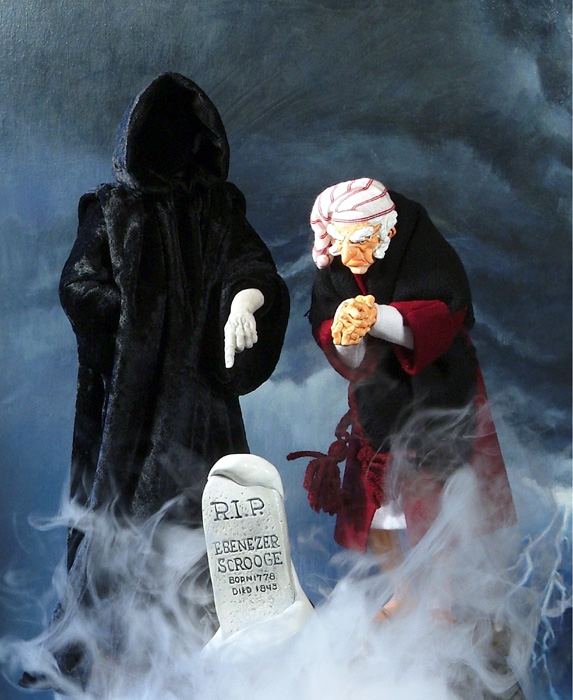
Wouldn't it be wonderful if certain people got up on Christmas morning as if they had been visited by the ghosts of Christmas past, present and future? Just imagine Wayne LaPierre, Jim DeMint and Allen West. It's especially hard to imagine Allen West. But imagining is what the classic Charles Dickens story is all about.
West's basic countenance is so bitter and in-your-face. He's the guy from Florida who was part of the reactionary political wave of the mid-terms (in 2010). Curious time, those mid-terms.
The nation sent a message in November that the sentiment of 2010 was not going to be long-term. We in effect came to our senses. Some of the regressive voices remain shrill. Those souls have a tin ear about what the American public is saying. If they won't listen to us, "us" being the sensible mainstream, maybe they'll listen to those ghosts of Christmas past, present and future.
Maybe the ghost of Christmas present could show them how so many Americans "in the middle" are struggling. We lament the lot of the middle class but what about the poor? When I was a kid, it was common to hear about the plight of the poor. RFK did his "poverty tour." Politicians have gotten more delicate, not wanting to use language about "the poor." Why? Today they're apt to use language about "the middle class and those aspiring to be middle class." The "aspiring" term might be the closest they get to talking about the poor. The ghost of Christmas present might scold us about that.
But there's so much more he could scold Allen West about. The bitter face of that individual has been like a scourge, signaling just what a regressive force the tea party is. He lost in his re-election bid and hasn't even been a good loser. He tried challenging his loss. Might he weigh, just for a moment, moderating his views? Might he weigh simple humility? Could he laugh just a little? This is a man who said Debbie Wasserman-Schultz "wasn't a lady" just because she was making a policy argument. He used other language that made him a parody of himself.
So wouldn't it be wonderful if by some miracle, he could wake up on Christmas morning and be transformed into a joyful soul? Since he's apparently always close to a Fox News camera, maybe he could find one and project that brimming Christmas cheer that embraces all of humanity. Exercise those smiling muscles. Let your guard down about all those "liberals" out there. Stop looking at the world in such simplistic terms. I realize Fox News rewards you for doing that. I realize you have learned that reading a certain script for Fox News will get you considerable attention. Surprise them. Be like Ebeneezer Scrooge on Christmas morning, going out on the streets of London with a whole new countenance, giving a big donation to the Community Chest etc.
Say you understand people's struggles. Say you understand government's role in giving people a platform from which to build on. Say you understand the need to trim our military from the kind of bulky model that was designed in the Cold War (or to defeat the Wermacht). None other than David Stockman has said we could cut as much as 1/3 of our defense budget.
Republicans like Stockman (Ronald Reagan's old budget hatchet-man), Chuck Hagel and now maybe even John Boehner are being slowly drummed out of the right wing corps. For a while we heard the term "rino," denoting "Republicans in name only." That was a prelude to the kind of splintering we're seeing now in conservative ranks. Charlie Crist has decided to become a Democrat. His undoing, conventional wisdom holds, was when he joined President Obama in a brief embrace when announcing stimulus funds for Florida.
Who knows? Boehner may have been hurt being videotaped just shaking hands with Obama. Hank Williams Jr., a man of the Deep South who's unabashed with his conservatism, called Obama "the enemy." He likened Obama to Hitler. Yes he was almost completely banished from television, although Mike Huckabee has seen fit to pay some attention. Progressives like Bill Maher have tried to be nice about Huckabee, describing him as a basically pleasant person, never mind the Neanderthal stuff.
Progressives have indeed tried to stay restrained up until now. We have bent over backward trying to show respect. MSNBC will try to deny it's a prima facie soap box for progressives when in fact there should be no reservations about this. Fox News has tried to use stealth. Fox News says it's fair and balanced and proclaims it's needed to offset the "liberal mainstream media." Fox News is a virtual soap box for the likes of West, Huckabee, Sarah Palin and others who are resisting the forces of history.
Thomas Ricks says of MSNBC that "they do the same thing (as Fox) but they aren't as good at it." Ricks says it better than I can. The emperor has no clothes.
MSNBC is getting better. Rachel Maddow and Lawrence O'Donnell do investigative and analytical stuff that is absolutely necessary. Whatever defensiveness they might have had about being ideological, has got to get wiped away. Joe Scarborough has said the way you deal with a bully is by punching him in the face.
I'd prefer seeing many of these ideological ruffians (e.g. Rush Limbaugh) get visited by the ghosts of Christmas past, present and future.
Why did Wayne LaPierre have to be so predictable, as predictable as (the bad) Scrooge himself, when going to the podium post-Newtown? Why do these people have to stick to their script so much? To stay in their foxholes? Why couldn't the likes of LaPierre say they've been humbled by what happened? That they have learned to look at the world in a different way? That they have been horrified into backing off on certain views?
Intransigence on the debt ceiling actually hurt the U.S. economy. Intransigence is endangering the House speakership of John Boehner (pronounced "boner" by radio host/humorist Stephanie Miller).
Why does LaPierre have to go to that microphone and insult us all by merely stating the knee-jerk standard NRA rhetoric, when we all know some re-thinking is in order? Maybe the ghost of Christmas past could escort Mr. LaPierre into the lives of some of those cherub/vicitms from when they were infants, revealing the glow and innocence in their lives - the tremendous promise.
LaPierre's answer now is more guns. Specifically we need more "good guys" with guns, LaPierre says, to counter the "bad guys." One envisions an old west main street complete with a saloon, where one man says to another "all right, draw!" But we don't live in the movies, we live in real life. In real life the mad shooters might actually take it as a challenge that schools have armed officers. What's to keep an armed teacher or principal from "flipping out" and doing something horrible, or having their weapon fall into the wrong hands?
"More guns," eh? It's what the NRA stands for, not for humanity. And LaPierre has to continue in lock-step because this is his stock in trade. It's his "brand" as it were, and we're all about "branding" and never deviating from it. If only more people would throw off the shackles of such groupthink.
Ebeneezer Scrooge woke up on Christmas morning completely freed of all the old inhibitions that bothered him. He was unafraid to become that new person, to view the world from the depths of his soul as if he were a child again, a child like those in Newtown.
LaPierre represents a "protection racket" of sorts. He might have to leave completely if he's to become the kind of person like Scrooge on Christmas morning. Why does our Congressman Collin Peterson have to be so deferential to the NRA? Please contact him.
Jim DeMint is from South Carolina which was the state most eager to start the U.S. Civil War. Are we still dealing with vestiges of that? After having gone on record railing about "pressure groups," DeMint has decided to leave his elected position to join a pressure group: the Heritage Foundation. It's a pressure group from the right wing naturally.
Is the Deep South going to muck things up again?
Like so many on his side, DeMint is so utterly predictable. These sullen souls can't show a shade of nuance for the life of them. They are zombie-like in their withdrawal from reality, from the lives of "real folks" who live in places like trailer parks.
Wouldn't it be amazing, like the greatest Christmas gift of all, if DeMint could awaken Christmas morning, find a Fox News camera and express a new viewpoint on life, one showing true empathy about all of humanity? We can pray or dream about Allen West, Wayne LaPierre and Jim DeMint waking up on the 25th with that ebullient and joyful air.
Reality will almost certainly spell a different story.
- Brian Williams - morris mn minnesota - bwilly73@yahoo.com

Wednesday, December 19, 2012

Recognizing Christmas in its truest essence

A favorite of mine: "Little Drummer Boy."
We attended the Christmas program at First Lutheran Church Sunday afternoon (12/16). The charm and innocence of these programs is a constant through the years.
As a child I felt the same kind of spirit at the public school. We felt the Christmas story should be recognized as a universal. We knew there were some non-Christians among us, and I think we (the kids anyway) didn't have any problem with that. We just felt everyone could join in the acknowledgment of Christmas as simply a time of joy, brotherhood and escape. Go ahead and sing "Silent Night."
Eventually we as a society had to restrain some of the Christmas zeal and let the non-Christians have some more real "space." I don't think we (the kids) would have had any problem with those who might want to distance themselves. But would it be the kids' own decision (to withdraw) or their parents?
My opinion: The singing of Christmas songs and the various other trappings of Christmas are not "indoctrination." I think they can be viewed as innocuous. They are uplifting. But there's no point in compelling anyone.
We then went from giving non-Christians their "space" to having to openly acknowledge non-Christian faiths at holidaytime. Public school Christmas programs began to include gestures toward "Kwanzaa." I'd rather see no religious element at all. Late December is a time for Christians to rejoice. Christmas "is what it is." You can acknowledge it and watch "A Charlie Brown Christmas" or you can be non-religious and go about your own affairs.
Jewish people justifiably mark Hanukkah, about which I have to admit knowing very little. I had a first cousin convert to Judaism late in his life. He had been a very committed Christian previously, to the point where he had some sort of clergy credential. "He dressed up in robes," a family member remarked once. He then adopted Judaism. He reportedly said of Christianity: "I don't understand it."
Those words stuck in my head because I sort of agree. I had a Christian proselytizer say to me once: "Has any other man ever risen from the dead?" The answer is no. How can we accept as fact that any such thing ever happened?
I went to Alexandria to see that movie about the Nativity about a decade ago. This movie was intended to make a big splash. As it turned out, it didn't have staying power. It didn't move me. It actually came off as rather bizarre, just as the story of the virgin birth with its angels and the like, can be seen as bizarre. It seems like a drug-induced fantasy, to be blunt. But believers are undeterred.
Those of us who graduated from college might remember Campus Crusade for Christ or Inter-Varsity Christian Fellowship. Reportedly the Crusade just goes by the name "Cru" now. I once met a family near Donnelly in which the parents first met through their involvement with "Cru." They are gentle and considerate people, these "Crusaders," but sometimes it seems their eyes are a little glazed over.
I have a harder time accepting things on faith. So does my old boss at the Morris newspaper, Jim Morrison. (I think he was my boss although it was hard to figure out who you worked for there.)
Obviously, Jews should have total breathing room to mark "Hanukkah." But it has nothing to do with Christmas. So it seems a little perverse to see little kids have to devote portions of the "Christmas" program either to Judaism, "Kwanzaa" or whatever. I put "Kwanzaa" in quotes because I consider it rather a pseudo-religious holiday. It wasn't even developed in Africa.
Obviously the Christmas program at First Lutheran Church was totally religious in its focus. Churches can do that, naturally, and there was a time when public schools were given lots of latitude to do that. The world has changed, or America has changed. Kids get their "holiday break" now, not "Christmas break."
By no means am I suggesting there's a "war on Christmas." My mindset is anathema to Bill O'Reilly and Fox News. I'm just saying that when us boomers were young, we expected those few non-Christians among us to just join in with the Christmas stuff and enjoy it - enjoy the pervasive spirit of the holiday. No need to adopt our religion. Eventually voices rose up insisting on real separation. Again, it's the parents more than the kids who would insist on this. Especially parents who are college professors.
One of the concerns about "A Charlie Brown Christmas" when it was made, was that it was too overtly Christian. Of course it was resoundingly successful, no doubt because of the innocence of the children characters. I suspect its success was also due to how unabashed it was about recognizing Christmas - its essence and its focus on the virgin birth. "Linus" read dutifully from the Bible. You could see the kids were uplifted. It's a delight to view this stuff even if you don't proclaim Christianity.
A lesser-known TV special is "The Little Drummer Boy." Greer Garson narrated. Jose Ferrer was endearing as a singer even though his voice was that of "the bad guy," Ben Haramed. Haramed and a bumbling partner temporarily abduct the young boy who has been orphaned. They sell the boy's camel, named "Joshua," to the trio of kings who are on their way to Bethlehem. The boy's name is Aaron. He's also accompanied by a donkey, "Samson," and lamb, "Baabaa."
The boy becomes free and suddenly notices the bright star. The kings had mentioned it. Aaron, Samson and Baabaa proceed in haste to try to find Joshua. So excited were they to finally see Joshua again, they became inattentive and Baabaa is mortally wounded by a chariot. Aaron, at the lowest point in his life, has only his drum - his only possession - as he is befriended by the benevolent kings who encourage him to observe the newborn Christ child. Aaron does what only he can, play his drum while all the animals around the manger nod their heads to the rhythm. Aaron turns around and notices that Baabaa has been miraculously cured. This scene made me cry when I was a child.
This is the kind of story we must embrace this time of year. Non-Christians can watch it and still feel moved.
Listen to Linus recite the Bible verses. It won't contaminate you.
The singing children at First Lutheran were typically charming. Have you ever noticed how the very youngest ones don't really "sing," they "shout?" There's nothing like an ensemble of second graders singing (or "shouting") a song like "We Wish You a Merry Christmas." It's the feeling of the season.
- Brian Williams - morris mn minnesota - bwilly73@yahoo.com

Friday, December 14, 2012

The curious case of Matt Rustad of St. Francis

Star Tribune image shows Matt Rustad
The fuss in the St. Francis school district is a reminder why the world needs good defense attorneys. People screw up sometimes. A defense attorney helps ensure that the consequences are in proportion. The accused individual, depending on what he did, needn't have an anvil come down on him as if he were Wile E. Coyote from "Road Runner."
Based on what I've read, I'm not sure Matthew Rustad's attorney is up to the task. Now it's necessary for a high-powered attorney to come on the scene, lest a disturbing precedent be set.
Rustad is nursing a bump on his head, figuratively speaking, caused by that anvil. What kind of indiscretion would cause removal from a school board? Can a school board member be judged by the same standards applied to students? Aren't board members elected on the basis of their views and priorities, and not on the basis of whether they'd ace a sophomore-level English class?
We had a member of our Morris Area school board stay in his position quite long after he probably should have been induced to resign. And that was a serious legal matter. We don't demand that our elected public officials be free of indiscretions. It would be nice if they were, but human beings make missteps and have peccadilloes and the like. Surely you remember Bill Clinton?
The curious case of Matt Rustad came to my attention thanks to the state news section of the Star Tribune. State news - actually I think it's called "area/metro" - is the one category where I find I really need to keep looking at the Strib. National, international and sports news are easily accessible online. An update on the Rustad case appeared recently.
If you're not familiar with the story, you might be thinking at this point he must have done some egregious or heinous thing. Well, his critics might indeed claim it was egregious, in the same sense the critics of Susan Rice would make such a claim. I'm not aware of any charges, criminal or civil, being aimed at Mr. Rustad. Now, I don't know the person and have no idea if he's the kind of person I'd vote for. But it clearly appears his critics are trying to kill an ant with a sledgehammer.
These are precisely the kind of circumstances that call for an advocate who thinks like a defense attorney.
Will anyone even want to run for school board if they are put under this kind of microscope? No one does this seeking fame or fortune. It can almost be seen as a sacrifice. Board members are mature adults who have learned how to navigate in the real world and have found a niche for themselves. We don't judge them in the same way as if they were schoolchildren.
I have never watched "Are You Smarter Than a Fifth Grader?" but I assume it's about the irony of adults having trouble mastering the same lessons as kids. I really don't see any irony. We all go through passages in life. An elementary school child is "wired," as it were, to learn certain things in certain ways. It comes naturally. Adults are done with that. They focus on priorities that enable them to be responsible in life. They have left such things as "social studies" far behind them.
I'm amazed at the stamina of young people who can be in class 7-8 hours a day, perhaps be in extracurricular and still have some "homework" to do. I couldn't cut it.
Rustad has been found to have "plagiarized." I put the word in quotes because I'm not sure this is what you'd call full-bore plagiarism. OK, what did he do? Matt Rustad lifted an item he found online (presumably online-only, a blog post in fact) and submitted it for the school district's monthly newsletter, called The Courier.
As a matter of pure principle it's of course always best to use your own words. We should also understand that the concept of plagiarism developed in the pre-Internet age. Way back when, to "publish" something was really a big deal. You almost had to have economic incentives. You needed access to a printing press. Either you printed something on your own dime (rare) or you sought some sort of commercial reward. Economic incentives always color a particular matter. The law gets involved when money changes hands.
You don't need me to tell you the online world has turned everything upside down. Today to "publish" means simply clicking on a little symbol on your computer screen, and spending no money to do so. The incentive is to simply share or opine. It's ubiquitous. We are saturated with information, unlike the "old days." How quickly we forget.
Today's young people have a much more loose understanding of "intellectual property" than older generations. This is why we saw the proposed SOPA and PIPA legislation shot down. On the basis of pure principle, SOPA and PIPA seemed perfectly reasonable. But young people saw through this, readily, and saw the dangers. They know that in our online wired world, people will frequently "share" in a manner that might technically cross a line.
Here's the deal: Sharing is what the Internet is all about. With that as a backdrop, the strict and traditional understanding of "intellectual property" isn't practical. This is why we have the "Copyright Reform Act" on the drawing board, which actually goes in the opposite direction of SOPA and PIPA. The Reform Act is a new model statute for the digital age. It's a new project from Public Knowledge. It seeks to clarify the "fair use" principle and give people with innocent (non-commercial) purposes a little more breathing room.
While using someone else's words is never defensible, the small-time stuff should probably just be governed by a code of ethics, which young people in their good sense could easily adopt. They already are.
Ouster from a school board for borrowing some paragraphs found online, with no commercial motivation, doesn't pass the smell test. Again, where is this guy's attorney? It would appear the original writer had no commercial motivation. I'm not even sure a censure motion was needed, I just think a verbal apology and subsequent correction in this newsletter would be fine. Perhaps we could just call this "failure to attribute" rather than the "p" word of plagiarism.
The language being directed at Mr. Rustad has hyperbole. There was a petition with sanctimonious sounding language.
Surely "plagiarism" is an unforgivable act, right? Surely you should be pushed out of whatever position you held in which you committed such a dastardly act, right?
Well. . .
We're just talking a stupid school district newsletter here. It's the equivalent of putting some sheets of paper on a copy machine, stapling groups of them together, and maybe it's even done this way. But let's call it a "publication" if we're out to smear Mr. Rustad. And that's what it is, a smear, making any reasonable person think there are other issues in the background here. What? On a board of education? I'm shocked there's gambling in this establishment.
I'm 57 years old and have a pretty long memory of events in our state. Probing my memory banks, I remember an interim president of the University of Minnesota, surely an august institution, who was caught lifting material in the late 1980s. He had to apologize to the Regents' head. He felt he had to withdraw as candidate for president of another university. This individual's name: Richard Sauer.
An old AP report says "Richard Sauer admitted lifting part of a presentation for the North Dakota State University job from a magazine article without attribution." More: "Sauer has acknowledged that in a speech he has given several times in the past six weeks, he failed to credit the article." He told Regents' head David Lebedoff he'd made a "bad mistake." He called his failure to attribute "a dumb thing to do." He said "I made a mistake of poor judgment."
Surely Mr. Sauer was drummed out of the corps, then. Surely the Regents took some sort of prompt action booting him out of academia, because after all, "plagiarism" is an egregious thing that would make you ineligible to serve on a school board, right?
Well. . .
Lebedoff was asked by the AP reporter if the incident might lead to a call for Sauer to "step down" (not be forcibly removed) as interim president. Lebedoff answered: "I don't want to speculate on that." The AP report stated "Regents and lawmakers interviewed by the AP said they had heard no calls for Sauer's resignation, and expressed support for him."
"Expressed support?" You have got to be shittin' me. Not that I'd care about joining any lynch mob vs. Mr. Sauer who I'm quite sure is a decent human being, but how on earth would anyone square what the St. Francis school board is doing vs. past incidents that drew no drastic action?
We learn that Rustad actually "added and removed (only) a few phrases to the original text." So it's not even pure plagiarism, rather it's somewhat similar to what Fareed Zakaria of CNN was caught doing recently. Zakaria was suspended for his actions but he's back on the air now, in full glory. And this is a media professional.
Did Zakaria plagiarize? Like so many alleged incidents that are going to come about in our Internet age, there's a gaping gray area. Zakaria re-wrote some material he found elsewhere but didn't re-write it enough. He left footprints.
Do you remember the trouble that Doris Kearns Goodwin got in? I suppose I'm showing my age again. The well-known author got in serious trouble for committing non-gray area plagiarism. This surfaced in her book "The Fitzgeralds and the Kennedys." We learn from Wikipedia "she used without attribution many phrases and sentences from three other books."
Kearns Goodwin admitted she reached a large private settlement with author Lynne McTaggart. Slate Magazine discovered problems with the Kearns Goodwin book "No Ordinary Time," in which many passages were taken from "Eleanor and Franklin," "FDR's Splendid Deception" and other books. Kearns Goodwin has not disappeared as a result of all this. Although she did depart as guest pundit on a PBS show, she appears on TV today with some regularity offering her views. Would she be unqualified on the face of it to serve on a stupid little school board?
Rustad wanted to share about "paperless classrooms" in the district newsletter. Not even a controversial subject. Actually "paperless" is something I advocate so maybe I would be inclined to vote for Mr. Rustad. He found material from the International Society for Technology in Education. The piece he tapped was a lengthy comment on a blog. Just a "comment" and not the blog itself? I'm going by wording in an October Strib article. The item is still online "and is not identical to Rustad's column, but nearly so."
If this is grounds for being removed from a school board, heaven help us all. A majority on any public board could seek removal of adversaries just by doing your basic "opposition research." I'm sure our system of governance guards against this. It had better. Blogger John Hoff had to be rescued by our legal appeals system after he initially was in a courtroom where the judge didn't understand the First Amendment. That's not an exaggeration; she literally didn't understand it.
It's a shame the legal system might have to come to the rescue of Mr. Rustad too, not because he's an exemplary school board member but because our system of government is to be cherished and protected with vigilance.
In the case of Richard Sauer, he called William C. Nelson, chairman of NDSU's presidential search committee, to say he was withdrawing from consideration. Nelson told the AP that "he unsuccessfully tried to get Sauer to remain" a candidate.
Huh? We're talking a very high-level, important university administrator associated with "name" institutions, obviously with a resume nothing short of sparkling. And he's asked to reconsider his decision to withdraw? And Mr. Rustad, a small-time no-name school board member with a small-time and apparently very petty school board, is ousted?
And, Mr. Rustad is subjected to an "administrative hearing" on November 14, in which he had to answer questions "under oath" under "cross examination" by District 5 Attorney Amy Mace? We learn all this from an ABC Newspapers article.
Shouldn't his attorney at some point have advised him to just quit talking? Mr. Rustad is an elected public official who to my knowledge hasn't been the target of any legal action for anything he's done. We had a school board member here, initials V.G., who actually was the target of legal proceedings, remember? Eventually he resigned but it was very belated and it appeared not to be forced.
We learned that Rustad wasn't forthcoming when first confronted with the "accusation." What would you expect him to say? "Yeah, I plagiarized." He felt awkward, on the spot and knew he had done something not according to Hoyle, to be sure. But he didn't want to be that ant killed by a sledgehammer. In this sense he's like Mark Fuhrman, the detective in the O.J. Simpson case, who denied under oath ever using the word "nigger." Vince Bugliosi eventually defended Fuhrman's conduct in this matter.
There are probably other issues in the background of the Rustad case. He looks like a young guy and is maybe viewed as some uppity young individual who subscribes to some different ideas, like "paperless schools."
"Paperless schools" certainly threatens the book publishing industry.
Based on what I've read, the naivete and pettiness of St. Francis school board members should cause them, and not Mr. Rustad, to leave the board.
- Brian Williams - morris mn minnesota - bwilly73@yahoo.com

Friday, December 7, 2012

Keep kids with age peers? Maybe we shouldn't

In photo: the kind of silliness we can only associate with college. It has prompted an investigation at Penn State University. Just what that institution needs. It's a Mexican-themed sorority party (Chi Omega) with quite questionable taste. Are kids' interests really best served when they spend so much time with each other? St. Cloud State University is trying to restore Homecoming after a history in which it got dragged down by bad behavior. Maybe kids can learn outside the boundaries of these institutions. Remember the goalpost incident here in Morris?
 
Maybe young people should be liberated. They should be liberated from the shackles of being segregated with their age peers while growing up.
"Growing up" hardly describes what a lot of kids experience. Where did the notion begin that kids ought to spend nearly all of their developmental time with their age peers? I don't think the notion is really all that old. The old country school model contradicted it. Kids of varying ages were expected to work together for mutual benefit.
And first and foremost, why not let kids spend more time around adults? Don't adults set a better example by being more settled in their lives? Don't adults set a better example by their basic lifestyle? And, by their values? By having shuttered their least desirable impulses?
Kids together can be a disaster. Why can't more of us recognize this obvious fact? This regimented system of education that extends into college might in fact begin to break down. It won't necessarily break down because of enlightenment. It will break down because of the easy availability of information. We can say goodbye to that regimented system that seems almost like prison.
The analogy isn't stretched. Rules are applied with an iron hand. Kids move from room to room only on cue from "bells." They can be terrorized by instructors who say "let's have a pop quiz." The kids groan. There's an assumption that large classes of kids can be brought along at the same pace and they all have the same needs. Kids bounce from one grade to the next as if they're all advancing at the same pace. Once in college they have this progression from "freshmen" to "seniors."
There's no letup in the kind of demands that are imposed. There's an assumption that knowledge is elusive. Were it not so, we wouldn't need these elaborate bricks and mortar institutions. Well, it's "not so" anymore.
All bets are off (for keeping the status quo) in the information boom caused by electronic media. The days when colleges could be staid places that could just keep feeding at the public trough will be fading. That's why colleges, especially the large state colleges, have to guard their image more than ever.
Imagine the hair-pulling if you were involved in public relations at Penn State University. The students there didn't cause the major debacle for which you, the reader, won't need any background. Sports gave the backdrop for that. What? Sports causing turbulence? I can't imagine (LOL).
That debacle grew in part out of the established model of higher education, where sports is a cog. Sports demands success on a level that has nothing to do with the aims of education. The competitiveness can bring out the worst in human nature.
What else but sports could have encouraged the kind of ridiculous, primitive behavior that caused the death of a University of Minnesota-Morris student several years ago? That of course was in the goalpost incident. Take a close look at the young people who get involved in that kind of behavior. Are they really best served by spending so much time with their age peers? Why don't we steer them on a course that leads to maturity faster?
Penn State has a new problem. I imagine Penn State really does have a PR department. We should have those people keeping a diary. The new problem is accompanied by the word "investigation." So it's ditto what happened with that sordid mess in the athletic department. And this is an institution of learning?
The new investigation is about one of those typical "Lord of the Flies" episodes that can only involve college students. A sorority has misbehaved. It threw a racist Mexican-themed party with photos, naturally, posted to the web. It all happened around Halloween. We saw sombreros. We saw signs saying "Will mow lawn for weed and beer" and "I don't cut grass, I smoke it."
The Chi Omega Sorority has expressed regret. "Mistakes were made." (Chris Matthews always laughs about the passive voice behind that statement.)
Anyone with a college degree can remember much silly behavior surrounding them as they "matriculated." I would say boomers, especially so. If your parents are boomers, don't expect them to be honest about this. They have probably blotted a lot of this out. Boomers went to college at a time when society decided the doors of our institutions should swing open wider and let more in. After all, college prior to that time was marked by great exclusivity. Too much exclusivity. Institutions like my alma mater, St. Cloud State University, adopted the philosophy of letting young people swarm in.
It's laudable to want young people to learn. But the old model for learning may be showing cracks because of the new age we're in. To repeat: we are saturated with information now. Kids really do want to learn. They simply must be given a feeling that their learning will benefit them. Too much of the knowledge dispensed in what I'd call the "analog" system didn't fit that bill. There was an assumption that kids had to be dragged along in learning. "Take out a sheet of paper, we'll have a pop quiz."
I don't blame kids for groaning if they were taking a course like "Sociology 101." Or anthropology, or foreign languages taught in anything but immersion-style.
We allowed college academic disciplines almost to become like "rackets" unto themselves. Many of these problems will fade as public money, i.e. money direct from taxpayers, becomes less of the higher education funding pie. Pure public funding seems to lead to amorphous and ossified tortoises. Kids are gaining empowerment from the Internet. They can gain knowledge more on their own terms. They can assert themselves more as individuals. Thus they needn't be confined to the narrow parameters of a "class" (as in freshman, sophomore etc., or prior to that, a grade in public school)
Herding kids into "classes" will increasingly be seen as a practice akin to prison. A member of our Morris Area school board has described many of the newly-built public schools as looking like "prisons on the outskirts of town." I have been reminded of that quote when driving past the KMS school. Those poor kids are segregated into classes, assigned reading that may not feed their real needs, and made to feel brethren only with kids within an age range of one year.
As a kid, a mere one year age difference from a fellow student is drastic, putting you in separate worlds. Years later we look back and think that was strange. But society decided it was progress to move beyond the one-room school model. Just like society decided in the 1960s we had to have the doors swing open at institutions like St. Cloud State. Let the swarms of boomer youth in. Shudder.
Many of the young people didn't even develop proper respect for the institutions. Look how Homecoming at St. Cloud State devolved. It devolved so bad it got canceled. Students there are now trying to revive it.
St. Cloud State is the second largest university in Minnesota. It is nothing if not big. A non-binding student body vote has recommended Homecoming come back. But SCSU spokesman Adam Hammer put down the hammer with this statement: "It's premature to make any conclusions about the vote or what might follow it. Those conversations haven't been had yet."
It's amazing SCSU treats the matter as so sensitive - walking on eggshells. Homecoming is innocuous, isn't it? Well, it ought to be. In the old days it was.
Young people are restless today. Maybe the old models just aren't working for them anymore. Maybe they can find their own way. Maybe they can become the kind of self-starters we've always wanted them to be anyway. And take off those sombreros.
- Brian Williams - morris mn minnesota - bwilly73@yahoo.com