History-making music group for UMM - morris mn

History-making music group for UMM - morris mn
The UMM men's chorus opened the Minnesota Day program at the 1962 Seattle World's Fair (Century 21 Exposition).

Thursday, January 29, 2015

We're having an atypical, dreary type of winter in 2015

The combo of snow and dirt called "snirt"
Take a look around during this winter of 2015. We could be in northern Missouri. This is what winters are like in that grand mid-section of the country. It's dreary, muddy and with no redeeming value.
We'd like to think we prefer the more moderate temperatures. All things being equal, that would be nice. But part of the glory of Minnesota is the abundant crisp and dry snow we have here in a typical winter. Winter recreation abounds. We see snowmobiling, sledding, ice skating, snowman-building and the whole tapestry. In the southern half of Iowa? It's like the environment we've seen here through most of this January of 2015.
I remember reading an op-ed about this once. It was cheerleading for Minnesota. Quite justifiably. The writer recalled his times of driving through the mid-section of America in winter. He noticed something: No one was outdoors. There was nothing to do outside. Who would want to do anything outside in this indecisive season where neither winter nor summer are promised or suggested? The beauty of fall seems far away. It's a true twilight time.
We can be thankful we have the Lee Community Center as an outlet for ice sports. I was with the Morris newspaper for many years when we had no such luxury of an indoor ice place. I covered youth hockey when it was a "sandlot sport." Under our current conditions, I assume schedules would have to be scratched. The grass is brown, there are worthless patches of crusty, dirty snow all over the place, and the skies are gray. We absolutely languish indoors.
When I was a kid, television wasn't much of an entertainment escape. We got basically three channels and Appleton. We got only one channel for a time out on the northern fringe of Motown. It was the NBC network. We watched "Bonanza" and not "Gunsmoke."
We must find fulfillment indoors at present. This is the par-for-the-course winter lifestyle for those in southern Iowa or northern Missouri. No wonder those people seem boring (LOL). Well, Iowa has never had big league sports. How glorious our surroundings would be, if only we had ample white fluffy stuff. Oh, to hear those snowmobiles scream!
I almost wouldn't mind an old-fashioned Minnesota blizzard of 2-3 days. Such a weather event suspends time for us. It puts things into perspective for us. It makes us rely on each other. It promotes unconditional friendships and closeness. This is a Minnesota virtue, largely unknown in Arkansas. We're always ready to "hunker down."
Dick Guindon did a famous cartoon once for the Star Tribune, showing a group of children "walking to school backwards." They of course were trying to avoid the chill of wind blasts on their faces. Only in Minnesota. And we love it.
We endured four winters that wound down with a loss by our Vikings in the Super Bowl. Four times! And today the Super Bowl looks elusive as the Land of Oz for us. We're getting ready to see the Patriots play the Seahawks. There have been so many Super Bowls, they all blur together for me. A few months from now, I might have a hard time remembering who the two teams were, or who won. The Super Bowl has become like a full-fledged holiday or an elixir that salves our boredom or ennui.
What will the rest of our winter be like? We used to subscribe to some mythology that "the state basketball tournament" was when we'd get socked by a big storm. Today, most of us are ambivalent about the high school state tournament in the first place. High school sports has gotten so diversified or watered down. It seems mostly to exist for the parents now. I remember a different time when the tournament had most of us transfixed. Kids got let out of class to watch it on TV. Williams Arena became like that glowing focal point for Minnesota. That old one-class state tournament was ridiculously unfair, of course. And since we're talking unfair, let's talk about the complete lack of girls basketball! Wow!
As kids we had bigger fish to fry, as we saw the Viet Nam War turn into an unspeakable, unjustifiable tragedy. Civil rights was like pulling teeth, as we see in the movie "Selma."
Minnesotans persevered with their traditional pastimes like ice fishing. Church pot lucks were, and are, a staple. Hot coffee was an elixir. Scandinavians were well suited for it all. I'm half Norwegian and half Swedish. I would like to see winter assert itself in a Minnesota way. You can have Iowa.
 
Oh, that Bill Brown fumble
"Stay souped for the Super Bowl," a media announcer once said in a blooper. And then he added another blooper: "I mean, stay stunned for the Stupor Bowl."
If you aren't stunned (or souped) by the suspense of the game, maybe a little alcohol in the refreshments will do it. I would guess the extent of alcohol in Super Bowl party drinks is much less than in the days when the Minnesota Vikings played in four Super Bowls. Back then, social drinking was fashionable and DWIs didn't have the disastrous consequences of today.
I remember watching the Minnesota Vikings play the Pittsburgh Steelers in a dormitory lounge at St. Cloud State University (Shoemaker Hall). The campus was within easy walking distance of so many bars, I'd have a hard time listing them all. We're wiser and safer today. Or you might say "what were we thinking?"
The Bill Brown fumble (on a kickoff) stands out from that Super Bowl vs. the Steelers. Of the four Super Bowls the Vikings played, this one afforded the best chance to win. But it wasn't meant to be, just as it wasn't meant to be for this year's Vikings to make the big circus at all.
A new Super Bowl commands our attention. Many of us will be at parties where bowls of crunchy snacks, bratwurst and cold, alcohol-free refreshments will be left and right. By day's end, you all will feel drugged and most certainly will sleep soundly, perhaps with visions of next year's Vikings playing in the Super Bowl. I'm beyond fixating or caring about that. The health consequences of playing football have caused me to drift away. Supporters of the sport are whistling past the graveyard.
I read a couple years ago how the kind of snacks people consume at Super Bowl parties have an unintended and unpleasant consequence: flatulence. This article stood out for me among the sea of predictable, frivolous and vapid feature coverage of Super Bowl weekend in the media. So it's on that note that I share a favorite joke about the health complication that one hopes can be confined to private situations. This is one of those jokes that used to flow through people in work channels, perhaps photocopied multiple times. Today it's all electronic but the fun is the same.
Here it is:
 
There was a young man once with a passion for baked beans, although they had a rather unpleasant side effect with him. He met a young lady and fell in love, whereupon he realized that she would stand for none of this and that once he got married, he'd have to sacrifice the beans. Then one day he was driving home and his car broke down. He parked it and decided to walk, whereupon he passed a diner where the aroma of freshly baked beans overwhelmed him. He figured he could have some and then walk off any ill effects, so he ordered three big servings. He putt-putted his way home, where he was greeted by his wife, who informed him that she had a wonderful surprise awaiting him, but she'd have to blindfold him. She led him into the dining room and sat him down at the table, his blindfold securely on. Then the phone rang and she said she'd be back in a couple minutes. In the privacy of the room, the young man had some unfinished business so he lifted up a leg and "let fire," followed by some other blasts until there was a real "prize winner." He grabbed his napkin and fanned the air to disperse the ill effects. Then his wife returned and said "I have the most wonderful surprise for you tonight." She removed the blindfold, whereupon the man was treated to the sight of several of the couple's closest friends, all seated around the dinner table next to him - guests for dinner that night.
 
You can't open a window in the winter. Take care.
Don't let your spirits be "deflated" for the 2015 Super Bowl!
-Brian Williams - Morris Minnesota - bwilly73@yahoo.com

Friday, January 23, 2015

"Beatlemania" with raging madness began in 1963

We are so human an animal. We complain about success being elusive. We learn about "paying your dues" so you might achieve some approximation of success. Isn't it all just "pie in the sky?" True happiness is an ideal that's always off in the distance somewhere - beyond the horizon.
Wasn't it St. Augustine who observed "there are more tears shed over answered prayers than unanswered ones."
Let's reflect on the Beatles. Their talent was undeniable. But was it so far beyond all the other talent in the competitive commercial music scene? Frankie Valli made his mark with The Four Seasons. We got to appreciate the Valli story in the movie "Jersey Boys." We probably should have rooted for them because they were American.
The Beatles very quickly grew to other-worldly status with their fame. It's scary that our young population embraced the Beatles in such an obsessive way. It lasted about seven years. It seems like not such a long time, but it's really a pretty big window in which to produce music. It's a big window in which to expect four guys to work together, especially four guys who couldn't tour anymore. "Beatlemania" had wiped out their ability to tour. What a curious phenomenon.
I remember being in Alexandria on the night when the Beatles made their historic appearance on the Ed Sullivan Show. As I recall, we were visiting friends connected to the University of Minnesota-Morris orchestra. I was in a room with some other young people. I was transfixed like everyone else. I normally couldn't even watch Ed Sullivan, because in our neighborhood out on the northern edge of Morris, we only got the NBC network in those days. I couldn't watch "Gilligan's Island" or "Gunsmoke."
There was more to the British invasion of music than might meet the eye. I learned this at a Driggs Lecture at UMM. This was a very well-attended lecture about the "hippie" phase in U.S. history. An academician from out West said the recording industry in England was advanced beyond the industry here. This is an easy factor to overlook. We listen to the music without realizing there's a whole complicated industry behind it, full of technical obligations and standards.
My favorite jazz artist, Maynard Ferguson, put out albums that seemed on a superior level, from England, back around 1970. It's hard to describe but the superior quality was discernible. Maynard would return to the U.S. after his period of disillusionment that caused him to leave. Or was it tax issues (LOL)?
The Driggs lecturer said the U.S. was held back by the Viet Nam war. Really? How could that impede anything? OK, you get my point. Young men who might be interested in the recording industry, or any particular industry, had to worry about the draft.
We must remind ourselves what it was like living in the U.S. in the 1960s. It's true the decade produced lots of nostalgia. Creative people can always do their thing, even under dark clouds. Thus we got those charming Don Knotts movies at the same time thousands of young men were dying, miserably in many cases, in Viet Nam. Our young men were handed guns and told to shoot at other men, while they shot at us, all over differences in political ideology. My generation said "nuts!" to that.
But it was no routine matter getting out of Viet Nam. Whatever else you might think about Lyndon Johnson and Richard Nixon, they were fools for not taking charge with that.
The list of 1960s nostalgia is topped by the Beatles. These four young men developed a musical sound that was just what the young generation wanted. They had an uncanny skill for creating the "catchy" melody and piercing lyrics that could get played on the radio in the form of the three-minute song. It seems like a rather limited talent. It may have been, but it made them into the quintessential celebrities. They had worked to achieve this level of success. Upon attaining it, they had to wonder about the monster they created. Were they happy being in a fishbowl? They had to literally run for their lives. Stardom could be like a prison.
Welcome to "Beatlemania," the phenomenon that grew from 1963 to 1966. Who created that term? A little examination shows it was the mass-circulation Fleet Street newspapers of London. The Fab 4 had just appeared at the London Palladium Theater. The performance was shared on television to approximately 15 million viewers on the hugely popular variety show "Sunday Night at the London Palladium." People got to see the hysterically screaming fans - a staple of Beatles appearances.
The newspapers vividly showed the mass hysteria. The month was October. Beatles historians note that the hysteria had already begun in spring of that year. The newspapers really started paying attention in fall. Maybe the precise point when "Beatlemania" became firmly established was when the four guys arrived back at Heathrow Airport after a brief tour of Sweden. The date was October 31. I was eight years old. I definitely watched TV. It may be I first got familiar with the Beatles through the Jack Paar night show, or maybe it was the Today Show. I was struck by a video clip that showed a young female fan frantically pulling out a pair of binoculars to get a better look at the Beatles.
Four days after the Heathrow welcome, the Beatles performed for the English royal family. The Beatles captivated Britain in 1963. We all know what happened next. The whole world became transfixed. Crowds clamored. Audiences shrieked.
The Beatles had to stop touring because they couldn't concentrate adequately on their music anymore. The hysteria superceded the music. The Beatles would retreat to the calm of the recording studio, there to produce pioneering works in rock-flavored music, building it up as a bona fide art form.
 
Are hotels really so bad?
What is it about celebrities that makes them want to complain about hotel rooms? A psychologist should study this sometime. George Harrison talked about "being chased around by a crowd of hooting lunatics from one crappy hotel room to the next." The Beatles were surely housed in fine facilities.
I'm reminded of when Walter Mondale, when running for president, made what was interpreted as an unflattering comment about Holiday Inns. He later had to clarify, saying that if you're traveling and have to find a place to stay, Holiday Inn is probably the best. He was just tired of life on the road.
Al Michaels got in some trouble when broadcasting the 1987 World Series from Minneapolis. During a commercial break, he dissed the hotel where he was at. No dive, I'm sure. I remember talking and laughing about this with friend Jim McRoberts. Jim said Micheals "had probably grown up with an outdoor bathroom." Jim and I miss Arnie Hennen RIP.
Beatlemania could be suffocating, I'm sure, but this was the consequence of the four young men working so hard and developing their talent so far. What were they expecting? Was Pete Best better off having been fired? We are so human an animal.
- Brian Williams - morris mn minnesota - bwilly73@yahoo.com

Saturday, January 17, 2015

Wins in MACA girls hoops, MAHACA wrestling

What an icy and miserable morning (Saturday, Jan. 17). I just got back from Willie's and I'm reminded of a statement on the chalkboard behind Woody Paige on that ESPN panel discussion show: "Raisin cookies that are made to look like chocolate chip cookies are the reason I have trust issues."
On to sports:
 
Tigers 73, Yellow Medicine East 52
Second half muscle! It's a sign of good coaching and conditioning when a team takes off in the second half to win. This is precisely what the MACA girls did on Friday night, Jan. 16. Fans at the home gym relished the second half surging. It resulted in a 73-52 win.
On the opposing end were the Sting of Yellow Medicine East. My goodness, we trailed by one at halftime, 31-30. The second half story was a 43-21 scoring advantage by the fired-up group of Tigers, overseen by the savvy coach Dale Henrich.
The success evened up our season record at 6-6. In conference we're a most upbeat 5-2. YME's overall record is around .500 too.
The Tigers sprang forward with a 7-0 run to begin the second half. That truly set the tone.
The schedule is proceeding in a frenetic way, as today (Saturday) will have Henrich's crew hosting Pelican Rapids.
The Tigers made 31 of 68 field goal tries in the win over YME. In freethrows the numbers were six of 12. Our scoring was pretty well spread around. Lauren Reimers was in the zone with her 20 points scored. Correy Hickman put in 14 points and Becca Holland 13. Then we have Piper Gibson with eight, followed by Moira McNally (6), Kayla Pring (4), Lacee Maanum (3), Ashley Solvie (2), Liz Tiernan (2) and Lexi Mahoney (1).
Reimers built her team-best total with three successful 3's. Gibson and Holland each made one 3-pointer. Pring with her six rebounds led in that department. Hickman and Reimers led in assists, each with nine. Hickman was the steal leader with five.
Three of the Sting players scored in double figures: Chyanne Sand (14 points), Makayla Dyrdahl (12) and Anna McCosh (10). Other Sting scorers were Britanna Raddatz (8), Paige Steffen (3), Jordan Hinz (3) and Maggie Scheffler (2). Raddatz canned two 3-pointers. Sand collected 16 rebounds and Scheffler had ten. Madison Hagert dished out two assists. Raddatz stole the ball three times.
 
Wrestling: win vs. Paynesville
The score was 53-24 as the MAHACA wrestlers savored victory recently. There were pins galore in this dual, along with a technical fall. Lots of those pins were achieved by the MAHACA Tiger grapplers. What excitement!
Let's review this dual, beginning with the lightest weight. "Those little guys!" my friend Scott Long used to say. Dalton Rose was on the short end by fall versus Shawn Rue, time of :14. At 113 pounds it was Matt Munsterman coming on strong to win by fall over Cameron Schmidt in 1:13. Jared Rohloff at 120 pounds was the technical fall winner over Alex Mages, score of 16-1.
At 126 pounds, Ben Koehl joined the circle of MAHACA fall winners, getting Garth Utsch's shoulders pinned to the mat in 1:29. Trenton Nelson came on strong too, pinning Nick Gabrielson in 1:17. Tiger Diego Arreguin won by forfeit at 138.
Travis Ostby at 145 pounds pinned Connor Meagher in a time of 1:45. Jose Sperr at 152 lost by fall to Jacob Mages in 1:24. There's another Ostby in the Tigers' arsenal and he's Trent. Trent, manning 160 pounds, pinned Taylor Veldkamp in :16. Steven Koehl at 170 pounds won by fall over Jack Poepping in 1:22. Toby Sayles was the Tigers' 182-pounder and this big guy was outdone by Anthony Wendlandt: a fall defeat in 1:56. There was a double forfeit at 195.
Jacob Sperr was on the short end by fall in his battle versus Grant Lundwig at 220 pounds - time of 3:24. The Tigers' real "big guy," Alec Gausman, pinned Lucas Peterson in 1:45. Congrats to the Tiger matmen!
 
Change afoot at newspaper
I got a heads-up the other day that Nancy Olson, formerly Nancy Woodke, is leaving the Morris newspaper. I learned that her final day was yesterday (Friday, Jan. 16). I always had the impression that her lifelong calling was going to be community newspapers. Has she landed a job with another newspaper? I don't know.
Nancy came on board with the Morris newspaper back in 2006 as the hero wearing the cape who was going to replace me. I seriously doubt that most people consider the newspaper product better than when I was there.
Nancy had the curious habit of walking laps around the football field in the second half of some home games. I am hoping that this practice is over now, and that I can just inconspicuously take photos from the visitors sideline at future home games. I skipped the 2014 season. I feel I have a lot to offer, both with my writing and photography. I can post photos as Flickr albums, which I did over a period of four years. It costs nothing - zero- for fans to come to my sites and digest this coverage. It's a delight for me to still be involved in my own small way with MACA athletics.
- Brian Williams - morris mn Minnesota - bwilly73@yahoo.com

Monday, January 12, 2015

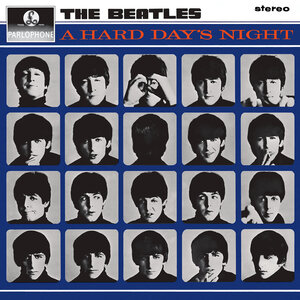
Freshness and energy in "A Hard Day's Night" (1964)

Someone once told Carl Lewis, the great Olympic athlete who at the time was peeved about some minor thing: "It doesn't get better than this." The point was to savor the moment. Savor being at the peak of whatever you're good at. Just savor the smell of fresh-cut grass around the track. Smile.
The Beatles in the mid-1960s reached the plateau they had dreamt of. All the hard work gave them fame and riches. Just watch the movie "A Hard Day's Night." This black and white gem captures the Beatles as the world first discovered and became mesmerized by them. They have boyish energy and enthusiasm. No trace of the psychedelic stuff yet. No harbingers of the counterculture, unless you consider the hair length a tad too long.
The older generation had a hard time accepting the hair length. Those oldsters of Lawrence Welk affiliation should have been relieved that the "moptops" were as restrained as they were. By 1970, even I was getting weary of some of the Beatles' excesses. I so wanted John Lennon to just look like his old self again. George Harrison had gotten creepy-looking, unnecessarily.
"A Hard Day's Night" is like a time capsule preserving the Fab 4 as we loved them the most. Lennon was 23 years old when he wrote the title song. Ringo Starr made a casual remark that gave Lennon the "hook" for the song. The film was actually quite far along before the title was coined. Lennon needed less than 24 hours to produce the song. Days later, the guys departed from their film work to record the song at Abbey Road. They needed only nine takes. I'm always happy to hear about a minimal number of takes to record a song.
The Beatles were great partly because they were never staid. They applied wrinkles that could surprise you. It was never out of pretentiousness. It expanded how the Beatles could reach you with their music, as with the French national anthem as a song's intro, or the entry of a piccolo trumpet. And on the song "It's Been a Hard Day's Night" we have that incredible chord strummed by George Harrison. It bookends the song. Who else could have thought of this? Its novelty is such, a precise description of the chord has proven to be elusive. Is it a variant of F major or G major 7th? Don't ask me.
Harrison's chord reverberates for a couple seconds before John begins his vocal. The chord returns at the end, practically casting a spell.
The "Hard Day's Night" album was the Beatles' first consisting of all original compositions. In fact, it ended up as the only album consisting entirely of Lennon-McCartney compositions. Lennon was still the dominant creative force with the group. McCartney would blossom on "Revolver."
McCartney's potential was more than evident on the album "A Hard Day's Night." He came through with "And I Love Her," "Can't Buy Me Love" and 'Things We Said Today." I'm struck by "Can't Buy Me Love" because it starts out with the chorus!
One can argue that it's pointless "keeping score" with how Lennon and McCartney did versus each other. "Lennon-McCartney" was an attribution affixed for a reason. Monitoring this "rivalry" reduces the fun of listening, I'd suggest.
 
Greater depth with words
The Beatles' lyrics took a step forward with this album. Finally they had stepped beyond the lazy rhymes and sophomoric narratives. "Love Me Do" might actually be presented as a textbook example of lazy or amateurish lyric writing. Of course, the pros always know what they're doing. Some songs take on novelty value precisely because they seem amateurish. The pros can break the rules - no doubt - but you can be sure they know what the rules are. Also, any musician with a track record is going to be taken seriously. Why? Because they know how to make money!
Lennon wrote "I'm Happy Just to Dance With You" for George as George's showcase on the album. I have always wondered to what extent John guided or gave George "boosts" through the years, more than has been documented in known histories. John was so prolific, he could have cast off an occasional song idea.
"Can't Buy Me Love" was the theme song for the Beatles cartoon series which I remember well. We see the animated guys doing the fire escape thing, just like in the movie. Such youthful bodies. Oh, to see the four of them together "on location" again, just walking up/down those steps! The cartoon series was charming with its literal interpretation of so many of the lyrics (e.g. "the face she keeps in the jar by the door").
It was producer George Martin who wanted "Can't Buy Me Love" to start with the chorus. It would never cross my mind to start a song with the chorus. The Beatles had synergy with all the creative influences. It was lightning in a bottle. It could have been snuffed out by "Beatlemania." It is a supreme testament to the Beatles' resilience that their creativity flowered, albeit minus live performance, even after the eruption of "Beatlemania."
The film "A Hard Day's Night" premiered in London in July of 1964. This was the summer when the University of Minnesota-Morris men's chorus went to New York City for the World's Fair. I was along for that trip. I remember seeing evidence of Beatlemania on Manhattan, including a street vendor who wore a Beatle wig not befitting him, but he was charming.
The movie showed what Beatlemania felt like from the inside. The wittiness of the four guys was a defining, endearing element. It's just as charming to watch today, but I'm pained watching John, not only realizing he'd be assassinated, but regretting he let so much of his original personality slip away. Just think if John had lived and eventually gone back to his 1964 appearance.
 
The Beatles come to Minnesota
It was August 21 of 1965 when Beatlemania came to our fair state of Minnesota. Bloomington's Metropolitan Stadium still seemed new. The baseball Twins were in the midst of their pennant-winning season of that era. We'd host the All-Star Game in '65. Met Stadium was nothing short of a jewel. Also in that apex year for the facility, we got the Fab 4!
Oh, to be able to step into a time machine and go back, to soak it all in. Unbelievably, only 30,000 fans were present on that Saturday night. This was the Beatles' second American tour. More than 5000 tickets were sold that evening to a casual crowd. Warm-up acts included King Curtis, Hannibal and the Headhunters and Brenda Holloway.
A stage for the Beatles was built over second base (where Jerry Kindall of the Twins played, an all-field, no-hit ballplayer, remember?). The Fab 4 came forward and launched into their 35-minute set. Unfortunately it was a typical concert of that time with fans screaming to the point of obscuring the music. "Obscuring" is a generous term.
Let's acknowledge Ray Colihan for booking the event. Nicknamed "Reggie," he was associated with Excelsior Amusement Park, and in 1964 he counted 286 present for a Rolling Stones performance. Colihan was downcast over the turnout for the Beatles. He would say "I had the hottest act in the business, and it was like people got more excited if the barn blew over in a storm."
In 1978, the year I graduated from college, the Eagles drew 65,000 to the Met. The difference? Colihan was asked this, and said kids had become "more on their own, not so conservative, not so dependent on their parents."
The Beatles were big in 1964 but the demographics suggested they couldn't make a ton of money just yet. Years later the floodgates would open for money, as the Lawrence Welk generation would give way to the hip generation. The kids of 1964 would finally be endowed with money.
Man, if all four Beatles were alive today and could tour!
I have "A Hard Day's Night" on CD. It is a distinct pleasure to listen to this and other offerings by the Fab 4 up through the mid-1960s. It should be enjoyed purely as music - forget all the other distractions. Close your eyes and listen to the Harrison chord. It transfixes. Digest all that freshness and energy, from before the counterculture began imposing too much of a distraction.
Come back to us, John.
- Brian Williams - morris mn minnesota - bwilly73@yahoo.com

Tuesday, January 6, 2015

MACA girls get win No. 4, here vs. Milbank SD

The MACA girls began the 2015 portion of their slate with an overwhelming win. Let's have a toast to the Tigers after their 65-35 win over their foe from "across the border." And then let's toast the new year.
This was a home win over Milbank SD. The Willmar newspaper continues to refer to our teams as "Morris/Chokio Alberta" instead of "Morris Area Chokio Alberta." Isn't the latter the official name? Don't I see "MACA" sewn onto warm-up shirts and the like? Is the Willmar paper taking it on itself to second-guess how we refer to ourselves?
Not that some second-guessing isn't called for. I have written on more than one occasion that we should simply go by "Morris" and "Morris High School" just like in the old days. We could begin our school song by chanting "MHS" again, just the way composer Bob Schaefer intended. Why refer to C-A when we don't refer to Cyrus or Donnelly or any other communities? Maybe a high school should just be named for where it's located. It's understood that a school our size attracts kids from a wider radius. I predict someday it will happen.
 
MACA 65, Milbank 35
The Tigers used balanced scoring in this non-conference win. Tracy Meichsner scored 12 points followed by Correy Hickman and Kayla Pring each with ten. Then came Lauren Reimers with nine, followed by: Becca Holland (7), Elizabeth Tiernan (6), Moira McNally (5), Lacee Maanum (2), Sam Henrichs (2) and Piper Gibson (2).
Holland made the only MACA three-pointer. Meichsner vacuumed the boards for 13 rebounds. Hickman dished out six assists while Gibson had five. Hickman stole the ball five times.
This was the Tigers' victory No. 4 of the season against five losses. Coach Dale Henrich will be coaxing his team to get on the right side of .500. That goal is within reach if the squad can perform like it did in the second half Monday. Coach Henrich had to smile as he watched his team outscore the South Dakotans 42-18 in the second half. At halftime the Tigers were up by just six points, 23-17. Maybe it was a display of superior conditioning.
Milbank goes by the "Bulldogs" nickname. The Bulldogs sputtered in their shooting on Monday. They had a stat of just 24 percent. The winning Tigers made 27 of 64 shot tries from the field. In freethrows our numbers were a solid ten of 15.
Caryssa Mielietz was the only double figures scorer for the visitor, with her ten points. Kaley Withers put in eight points. Then came Brittany Ackerman and McKenzie Mertens each with five points. Gretchen Beirsbach and Mackayla Schuelke each put in two, and Karlee Mertens had one. These totals add up to 33 points, not 35, but this is how the Willmar newspaper reported it. This is a common discrepancy in the Willmar newspaper.
Milbank made no 3-point shots. Mikayla Wiendland collected seven rebounds and she also had two assists. Withers had two steals.
Will victory No. 5 be quickly forthcoming for the Tigers? We're into the new calendar year now. We'll find out as soon as tonight (Tuesday).
- Brian Williams - morris mn minnesota - bwilly73@yahoo.com

Monday, December 29, 2014

Shall we bother "meditating" on Beatles' White Album?

Remember Transcendental Meditation or "TM?" It got the young boomers very excited in the 1970s. Was it religion? I remember a Congressional race in Central Minnesota where the Republican got agitated about this. He accused his opponent, the incumbent Rick Nolan, of using government resources - maybe just stationery - to promote TM. I can't remember the Republican's name. The controversy did pass.
Today Nolan is in a whole new iteration as a politician. His career has been marked by a huge gap. I find him refreshing today. In the '70s he was part of that proverbial wave of liberals who could be paternalistic and irritating.
Today the liberals are much more the underdog. They needn't fool with things like Transcendental Meditation. Oh, it was just a fad, wasn't it? It's no revelation that simply relaxing your mind can be good for concentration.
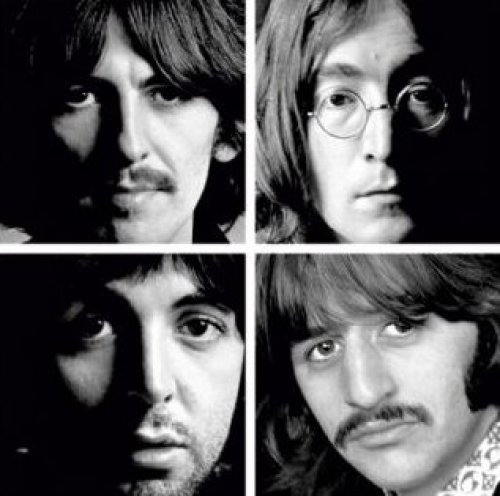
TM got its big push to the forefront thanks to the Beatles. Anything the Beatles touched or endorsed would take on a magical popular quality. Did it help their music? We have the "White Album" to judge on this criteria. The fabled White Album was a two-record set and actually had the formal title "The Beatles." I found I have these records on cassette tape. On the cassette cover we see pictures of the four guys. Boomer-age people don't need reminding of the White Album's popularity. The Beatles were riding a wave that couldn't be stopped. "Sergeant Pepper" came out a year earlier. Rock music was finding its legs on a true artistic basis. It wasn't just rhythm and intensity anymore.
When I say "double album" I'm talking about those big black vinyl records, of course. Increasingly they're museum pieces, as are cassettes. The physical product was everything back then. It cost an appreciable amount of money to buy your music and equipment. Records would wear out. They'd develop a "scratchy" sound. Record player "needles" would succumb to wear. Today I have to pinch myself to see if I'm dreaming. I can sit down at a public library computer station, put on headphones, type the name of any Beatles song into the YouTube search box and presto! It's all free. The sound will be just as sharp centuries from now.
Young people as they grow up will take these "luxuries" for granted, as well they should. We must never forget the evolutionary process behind all this technology. Boomers when young would collect the records and spin them on a turntable. A really good system cost a lot of money. We heard about "woofers" and "tweeters." Today you just listen and enjoy.
 
No "A" grade for White Album
Did I enjoy the White Album? On the whole, no. There are undoubtedly gems in there. Many of the non-hits come across as silly novelties. It's as if the Fab 4 were just toying with us. I consider a lot of it slop. Because the lyrics could be cute, a lot of boomers liked those songs anyway. Gone was the feeling of class that exuded from the Beatles' previous efforts.
Think of the album "Help!" It's obvious the guys took each of those songs totally seriously. The guys started fooling around on the White Album. We might attribute this to the need of all professional musicians to come out with a "new" sound, something unpredictable. Had the Beatles gone to the well too often? This is my interpretation. Their breakup was underway when the White Album was recorded. It was so silly for acrimony to develop. The Beatles knew they'd have no financial worries for the rest of their lives. In fact, it would be even better than that.
If all four had lived, just think of what an attraction they'd be, beginning in the go-go '90s, at which time their old fans actually had money! Can you imagine them being billed at casinos? What a gravy train that would be. They would have riches beyond what they ever could have imagined. It's like the baseball players who never could have imagined the riches coming from memorabilia and card shows. There was no point bickering about your contact in those old days - just get famous and be on a World Series team, and someday all your bills will be paid. Denny McLain didn't have to turn to crime. The Minnesota Twins under penny-pinching Calvin Griffith didn't have to sweat it, they should have just gone out and won that 1967 American League pennant. It was a demoralized team. Just win, baby. Never mind Calvin.
The Beatles knew they were a godsend to a generation. If only they had tried to set more of an example. If only they had just stayed focused on producing great music. It's the biggest "might have been" for boomers to consider, or maybe the second biggest, as the first would be: What if we had never gotten into Viet Nam?
Most of the Beatles songs for the White Album were written during a Transcendental Meditation course with Maharishi Mahesh Yogi in the spring of 1968. The year 1968 brought to a head all the tumultuous things we associate with the 1960s. Maybe that was part of the problem with the White Album. It seemed at times the world was coming apart at the seams.
The Beatles did the study "on location" in India. The band wanted a spiritual respite. They did not stay for the full TM course. The Maharishi reportedly showed his human flaws. Enough on that. The Beatles wrote about 40 songs in India. The White Album was recorded between May and October in 1968. Some songs like George Harrison's "Not Guilty" were saved for later releases, even post-breakup. If I remember that Harrison song correctly, it was lousy. So was "Here Comes the Moon," Harrison's encore to "Here comes the Sun." Harrison could be flat as a pancake as a solo artist, sadly so, with some rare exceptions that were brilliant, totally up to the Beatles' earlier standards. It's a mystery.
 
Unraveling began with White Album
The four Beatles were not a harmonious group for the White Album. They worked increasingly as individuals. Engineer Geoff Emerick got fed up and walked out. Ringo Starr actually quit for a while. "Glass Onion" was a sad song because it mocked some of the Beatles' earlier work. "Back in the USSR" was actually a parody song, of Chuck Berry's "Back in the USA." Can you imagine parody being done on the "Help!" album? Parody reflects cynicism and a feeling of resignation. The White Album was indeed that kind of endeavor, but the guys were guaranteed a high level of commercial success.
Fans took much of the stuff way too seriously. Many of these songs wouldn't see the light of day if they were presented as "demos" today. Yet music historians take the whole album seriously, even if not totally fawning over it. "Rocky Raccoon" and "The Continuing Story of Bungalow Bill" are ridiculous. One of the White Album songs was inspired by the sight of two monkeys copulating on the street. Paul McCartney wondered "why can't humans do the same?" Well. . .
In terms of class, the Beatles had devolved to a depressing degree since "A Hard Day's Night." Look at Lennon's appearance from 1964 to 1968. He should have kept that healthy weight on his body, but he got ticked off when a critic described him as "the fat Beatle." I have argued before that this incident may have affected the Beatles more than we realize. Today we have no problem accepting people who carry what might be seen as excessive weight. It was not that way in the 1960s. "Fat" was stigmatizing. Remember, it was the days before unlimited soft drink refills at fast food restaurants, and all those snack temptations (e.g. frosted rice krispie bars) at convenience stores.
It's too bad "Hey Jude" wasn't on the White Album. This total Beatles classic was recorded in July of 1968 but came out as a single three months before the White Album's release. It only ended up on a compilation album.
An alternate history: The White Album should have been titled "A Doll's House." That was the idea. This was the working title during the project. However, another group had used that title earlier that year. It seems the Beatles groped for some album titles.
We wax nostalgic about the days of vinyl record "albums," those cumbersome, perishable and expensive things. We're so much better off today - 100 per cent better off.
I love my collection of several Beatles CDs from the mid-1960s. However, I would only listen to the White Album if I were forced to do some research, not for enjoyment.
George Martin was right: It should have been a single album.
- Brian Williams - morris mn Minnesota - bwilly73@yahoo.com

Friday, December 19, 2014

"Paradigm Lost?" Whatever, "Revolver" was Beatles' gem

Many of my age lament how the Beatles ended "too soon." I'm not sure that's the true nature of the lament. I think the sadness was due more to the ill feeling among group members at the end.
Truth be told, the Fab 4 put out a tremendous quantity of work. They kept doing their thing after the breakup. You can listen to a lot of the stuff they did as solo artists and imagine that nothing really changed. Yes, "Imagine."
The Beatles' amazing run ended with the "Let It Be" album and Phil Spector's orchestral adornments, right? Or did it end with "Abbey Road?" The train wreck of the Beatles' breakup leaves us confused over what their last album was.
Beatles historians can fall over themselves fawning over the various albums. The CW (conventional wisdom) has it that "Rubber Soul" was the group's first truly artistic album, that "Revolver" took that art to a higher level, and that "Sergeant Pepper" was the true masterpiece. Historians view "Magical Mystery Tour" as flawed, and consider "Abbey Road" the final triumph. "Let It Be" just sort of floats out there as an uneven sort of denouement.
The demands of the critics probably wore on the four guys. How could the Fab 4 just keep turning out material that would have their admirers have one orgasm after another? Who needs that kind of pressure? My assertion would be that all of the Beatles' work had merit. It just went through various iterations. The four guys and their handlers did what all musical pros do: try to turn out albums that contrast with each other and offer fresh styles and ideas. Fans don't fully understand this.
Fans figure that if they really go head over heels over an album, the next album should be fundamentally the same - just "more of same." They think they want that, but they really don't. The movie "Jersey Boys" was excellent in how it peeled away the facade of the music industry and showed how creative people respond to the public's demands.
Pro music people can be very crude and abrupt with each other. I remember that producer character in "Eddie and the Cruisers" who derided some new suggestions by saying "a bunch of jerk-offs making weird sounds." There you have a taste of the music business.
In "Jersey Boys" you see the heroic characters arguing how "Can't Take My Eyes Off You" will represent that "next new thing" in pop music sounds. The highlight scene in the movie, I feel, is where we see Frankie Valli triumphantly performing this song with his backing that had horns, just like Sinatra would.
 
Climbing steps in music
What will the next "new" sound be - a sound that captivates? It's like trying to forecast the stock market - much harder than you might think.
When the Beatles departed from their "merseybeat" sound, it was genuinely risky for them. Would the public accept the group ascending to an artsy level, rather than just appealing to fawning teenage girls? We saw the latter formula work wonderfully in "A Hard Day's Night." Why not push it a littler further? Well, the Beatles wanted to stand for something different. This they asserted in "Rubber Soul" which came out at Christmas time in 1965. Author Robert Rodriguez said this album "hinted at greater ambitions." This is typical fawning with cliche-ridden talk by the group's historians, as surely "Rubber Soul" was more than a mere "hint." It was more than a stepping stone or prelude. It was a destination. So, let's admire it as a stand-alone product.
Rodriguez went on to say "Rubber Soul" challenged the "existing rock paradigm." I didn't learn the word "paradigm" until I was in college. When first hearing it, I didn't connect it to the word spelled as "paradigm." I was relieved to finally make the connection. The late author Edwin Newman indicated I wasn't the only one going through this. Edwin had a tongue-in-cheek chapter name in one of this books: "Paradigm Lost" (a takeoff on "Paradise Lost" of course).
"Revolver" was the album that followed "Rubber Soul." Artistically I think it ranks even with "Sergeant Pepper." What "Revolver" lacks, in comparison, is thematic unity.
The Beatles got a break that spurred their creativity, leading up to "Revolver." They were supposed to put out their third movie. The Fab 4 couldn't come together on what would be a good script. The movie idea was shelved. Thus, much of the time that had been opened for this got vacated. They were one month into recording for "Revolver" when they performed live in Wembley, England. A crowd of 10,000 listened. The CW is that it was an uninspired concert. We read that rumors were rampant of the guys breaking up.
Truth be told, the Beatles hadn't really lost any of their passion. What happened, was that they were writing music that was designed more for the studio than for organic live performances. It was difficult and almost futile to perform some of this stuff live.
 
McCartney finds his legs with "Revolver"
Prior to "Revolver," the Beatles were clearly John Lennon's group - his was the dominant artistic influence. Paul McCartney made his fateful ascent with "Revolver." Paul was destined to have a lifelong presence as a significant creator and performer.
George Harrison had to do something drastic to assert his own artistic presence, and this was done with an affinity to the music and culture of India. I have written before that Harrison seemed rather a mystery. He is credited with writing some of the Beatles' best songs. As a solo performer his gems were lost in a sea of forgetful, redundant-sounding material, causing one critic to say he put out "treadmill albums."
I once speculated that John probably helped George along, to the extent of even feeding him material. It comes across as conspiratorial, of course. But I have read accounts that support my theory. In one case I read where John did some "coaching" of George. A song is really such a simple creation. A classic can be written down on one sheet of manuscript paper. A classic can often be written in just minutes. This aspect of pop music has long fascinated me.
"Revolver" is known for the studio "tricks" the Beatles used. This interests me not at all - I just want to appreciate the core songs.
"Revolver" has been described as "psychedelic." That's a buzzword from the tumultuous times of the '60s, more a word of fashion than of concrete meaning. How would we define it? Perhaps as "a bunch of jerk-offs making weird sounds."
 
Writing for the human voice
McCartney goes into falsetto voice for "Here, There and Everywhere." The availability of falsetto gives a songwriter flexibility for vocal range that is highly coveted. The generally accepted vocal range is one note over one octave. That's really pretty restricting.
When I first dabbled in songwriting I had a problem staying within the accepted vocal range. I had been a trumpet player. Trumpet players have a full two octaves within which to work. Vocalists have no such luxury. Some singers can stretch the usual vocal range, an example being Ronnie Milsap. The Star Spangled Banner is notorious for how it challenges with vocal range.
"Here, There and Everywhere" was inspired by a Beach Boys song. It's a romantic ballad "about living in the here and now," according to Kenneth Womack. That's a pretty general theme. McCartney himself might smirk at such over-analysis or pseudo-interpretation.
NPR's Tim Riley falls into the typical hyperbole or cliches that can befall admiring Beatles historians. He writes that "Here, There and Everywhere" is "the most perfect song that McCartney has ever written."
Uh, the "most perfect." There's an issue with that terminology to begin with. McCartney has put out a mountain of stimulating material. I consider "Nineteen Hundred and Eighty Five" to be a diamond in the rough, coming out during the "Wings" years. I have found a live version of "1985" on YouTube that I consider one of the great musical pleasures a person can find.
I consider "Here, There and Everywhere" a showcase of how vocal range can be pushed by falsetto. Oh, it is a wonderful song.
Speaking of vocal range, Ringo Starr had a limited one, and thus we have "Yellow Submarine," written for the drummer and appealing to the kid in us.
"Tomorrow Never Knows" gives us those studio gimmicks that I shrug at. It also invites the "psychedelic" description. I question whether songs like this were really drug-influenced. The over-analyzing critics are susceptible to this bit of what I feel is myth-making. And it can be harmful, to the extent that kids get the idea that drugs and/or alcohol can enhance their creativity. All successful commercial art is created by people who have their mental faculties fully applied and unimpeded, I would assert.
I don't like the title "Revolver" as it's a pun based in part on a kind of handgun. Think of how John Lennon eventually died. Lennon wanted the title "Four Sides of the Eternal Triangle." That's an interesting alternate history.
 
"Revolver" makes its mark, like the others
"Revolver" has won its share of accolades and hyperbole. Such words are extended to several of the Fab 4's albums. Let's knock off the comparisons and the over-analysis. Each album has its niche. It's not like some "evolution progression" where we see the cave man slowly becoming the modern man. "Rubber Soul" was genius as was "Abbey Road." Let's appreciate the whole succession. There was enough to satisfy all of us.
I don't blame the Fab 4 for deciding they had simply done enough. The acrimony was sad. But remember, the Fab 4 had their run in the 1960s, when many things in our world had sad endings. Think of the Viet Nam War.
- Brian Williams - morris mn minnesota - bwilly73@yahoo.com